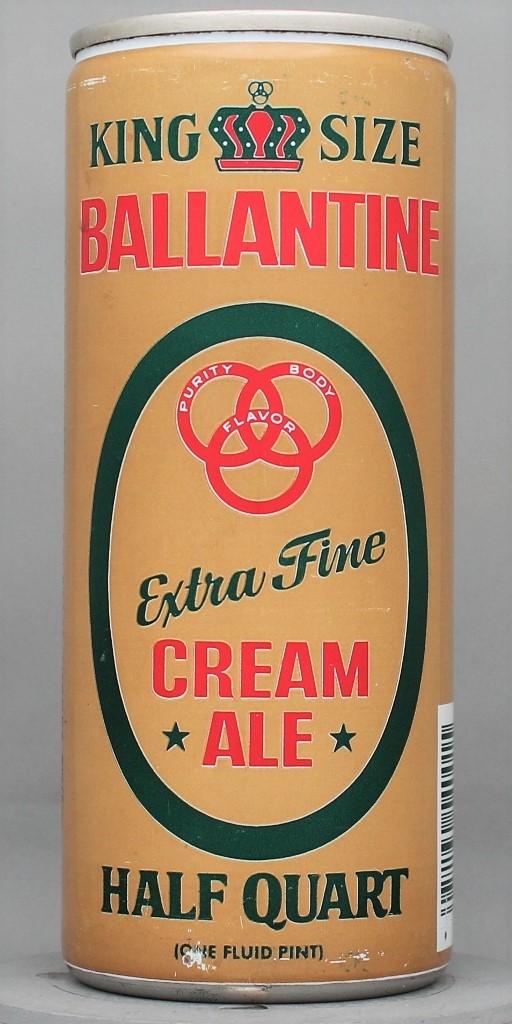
Ballantine Extra Fine Cream Ale 16 Oz Tab Top Can
Falstaff • Cranston, RI
Ballantine Cream Ale 16 Oz Can
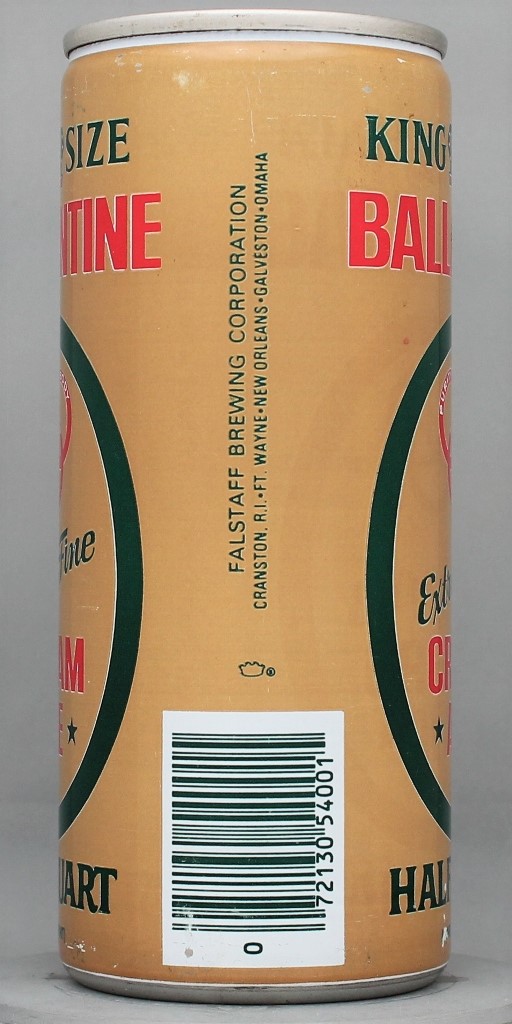
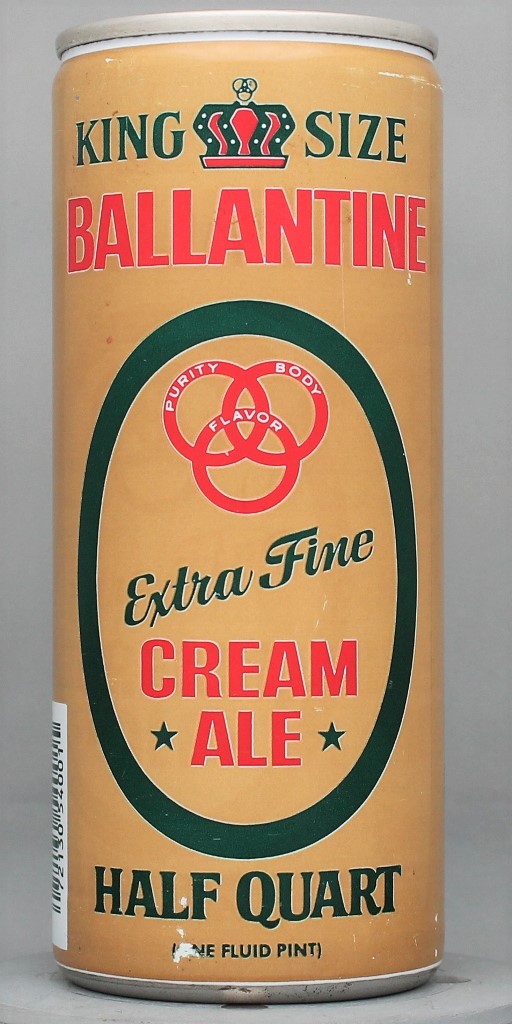
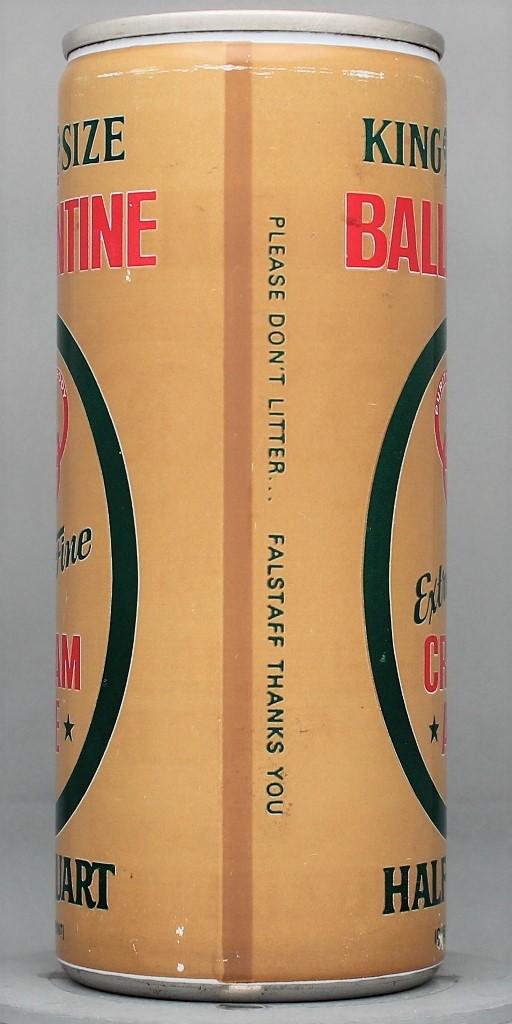
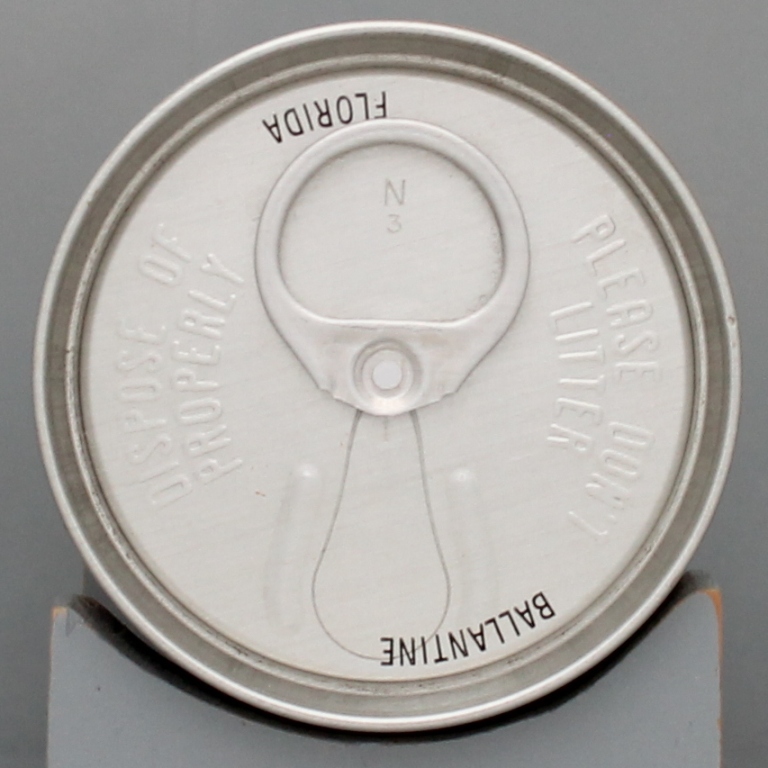
This 16-ounce drawn and ironed tab top can represents a late-1970s release of Ballantine Extra Fine Cream Ale produced under the stewardship of the Falstaff Brewing Corporation. Rendered in a light gold background, the front panel prominently showcases the brand's classic interlocking Borromean rings framing the traditional motto "Purity, Body, Flavor," set beneath "KING SIZE" lettering and a heraldic crown emblem. The lower portion highlights the "HALF QUART" volume, while the mandatory text lists five packaging cities headlined by Falstaff's Cranston, Rhode Island plant, accompanied by a side-panel Universal Product Code (UPC) barcode.
Peter Ballantine founded the Ballantine enterprise in 1840 in Newark, New Jersey. Known for its top-fermented offerings when most American brewers favored lagers, the brand grew into one of the country's largest ale producers. Its famous three-ring trademark was reportedly inspired by interlocking condensation rings left on a table as Ballantine sampled brews for purity, body, and flavor. Promoted through long-running advertising campaigns such as "Make mine a Ballantine" and major sports sponsorships, the brand remained a household staple before industry consolidation shifted production rights away from its original Newark home.
Falstaff Brewing Corporation, founded in St. Louis, Missouri, rose through the mid-20th century to become one of America's major national brewing organizations. Seeking to expand its footprint along the East Coast, Falstaff purchased Rhode Island's Narragansett Brewing Company in Cranston in 1965, and subsequently acquired the Ballantine brand portfolio in 1972 after Ballantine's Newark plant shuttered. Production of Ballantine ales moved to the Cranston plant and other network locations until Falstaff was acquired by investor Paul Kalmanovitz and later integrated into the Pabst portfolio.
Sixteen-ounce "tallboy" tab top cans from this period are appreciated by breweriana collectors for documenting a pivotal era of consolidation. This can exemplifies the late-1970s transition to drawn-and-ironed can manufacture, early barcode implementation, and multi-city licensing that defined regional brewing heritage during a time of shifting corporate ownership.
* Descriptions are AI-assisted and may include edits from our team. Verify key details.
Can Details
Similar Cans
Price History
Not enough sales data to display a chart.
Sold Listings
No recent sales data available for this can.