Ballantine Genuine Brewed Draft 12 Oz Tab Top Can
Falstaff • Cranston, RI
Ballantine Genuine Draft Tab Top
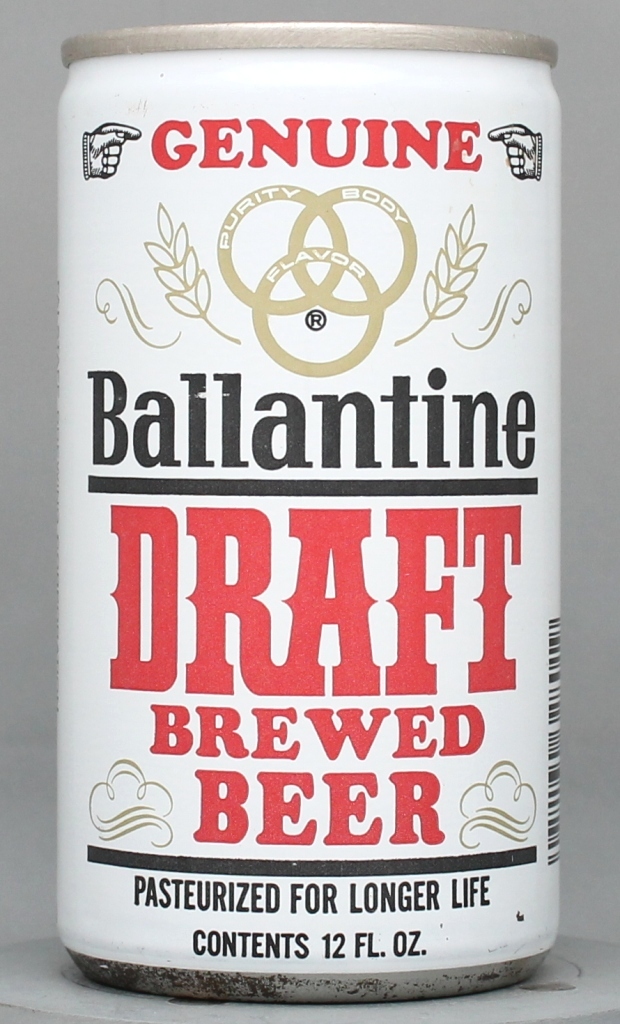
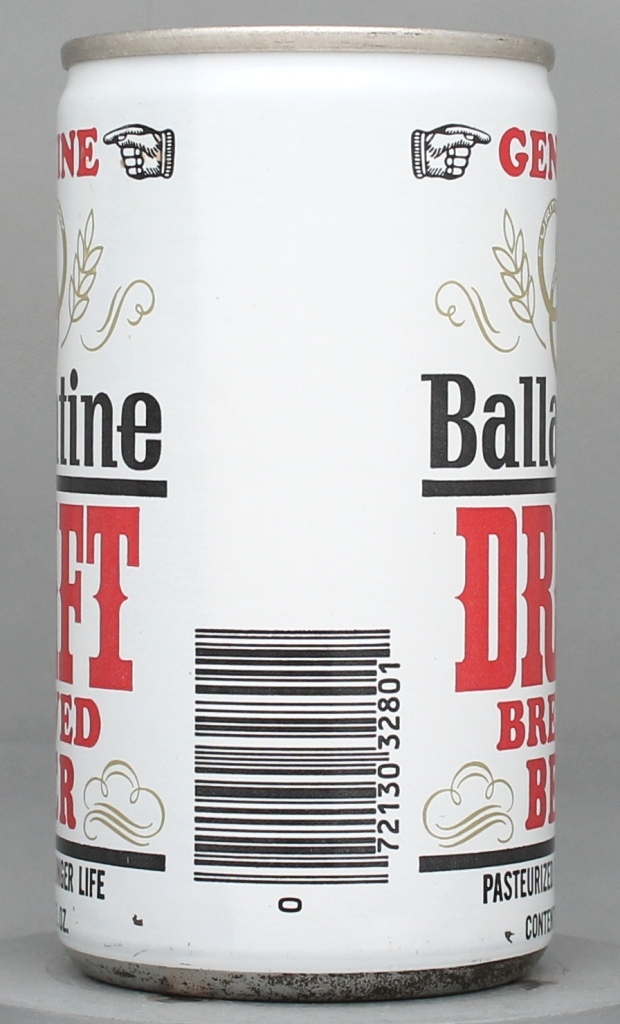
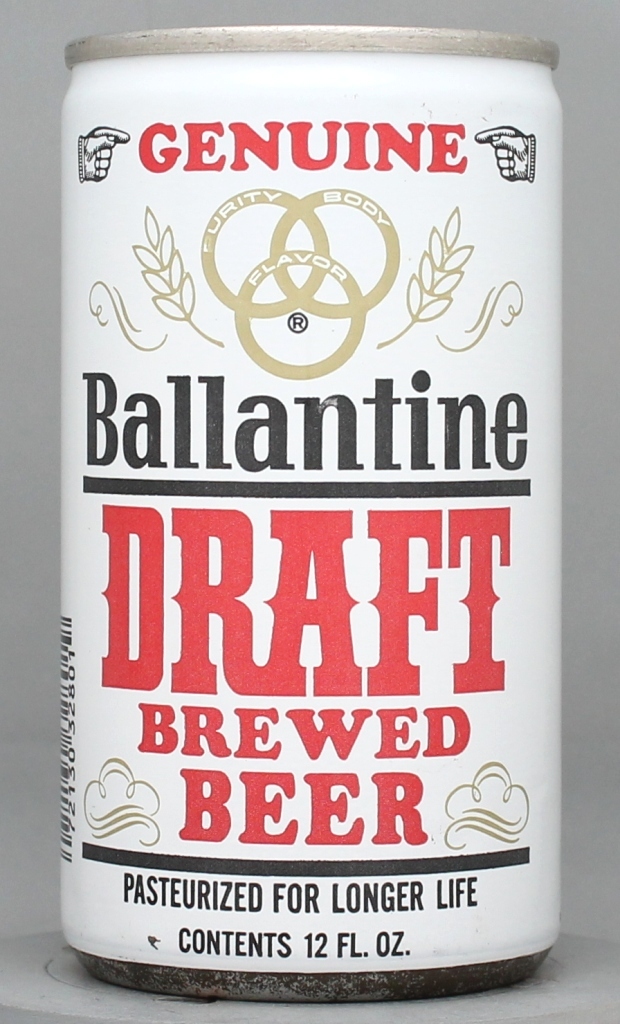
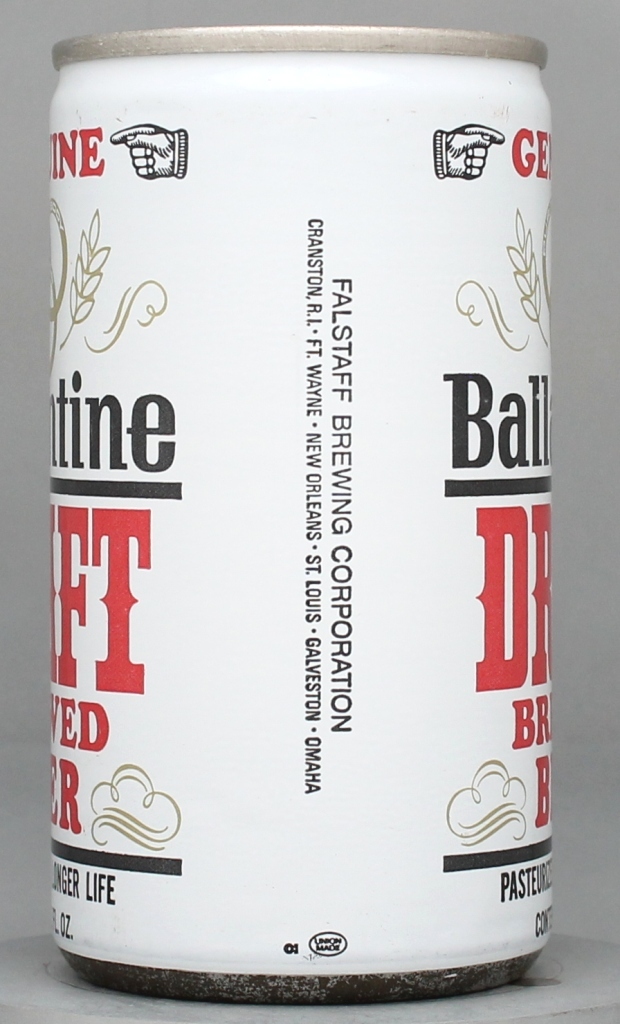
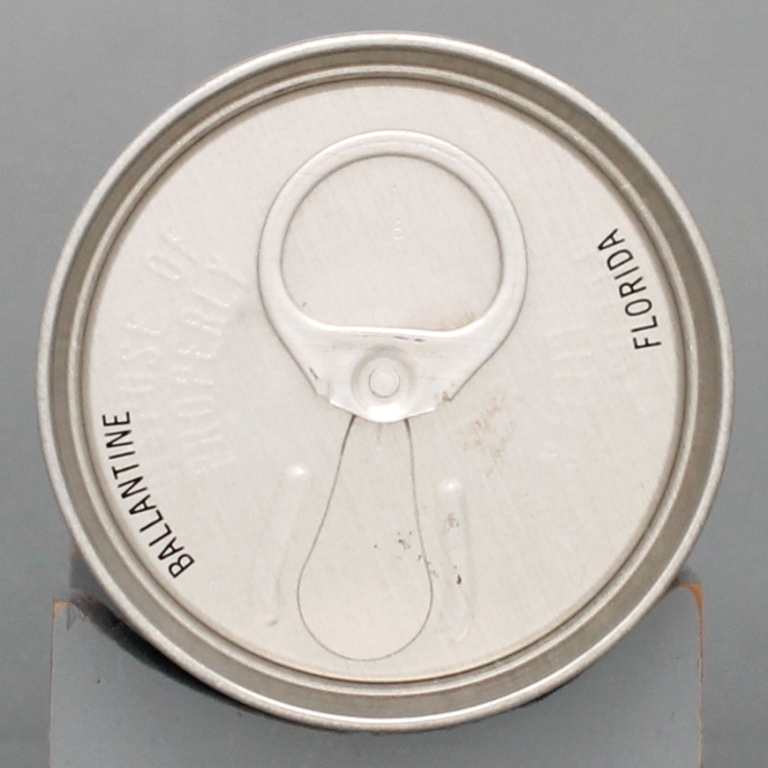
This twelve-ounce drawn and ironed aluminum tab top can showcases Ballantine Genuine Brewed Draft Beer as packaged under the Falstaff Brewing Corporation. Produced during the 1970s, the can reflects key packaging developments of the era, notably the introduction of a Universal Product Code barcode printed vertically along the side of the label. The front panel is marked by distinctive design accents, including the word "GENUINE" flanked by classic pointing hand manicules, as well as the candid statement "PASTEURIZED FOR LONGER LIFE" positioned directly beneath the bold red "DRAFT BREWED BEER" lettering. Below the central three-ring emblem, a black registered trademark symbol appears. The can lists six brewing cities on its side panel and was reclassified as its own distinct entry after previously being grouped with related issues in collector guides.
Ballantine traces its origins to 1840, when Scottish immigrant Peter Ballantine founded the company in Newark, New Jersey. The brand achieved national fame alongside its interlocking Borromean rings insignia, which symbolized "Purity, Body, Flavor"—a motif inspired by the overlapping damp rings left on a tabletop by beer glasses. Ballantine Draft was introduced to capitalize on consumer enthusiasm for draft-style beer in portable packaging. After decades as an industry powerhouse, sales slid in the 1960s, leading to the sale of Ballantine's trademarks and brand assets to Falstaff in 1972.
Falstaff Brewing Corporation, founded in St. Louis and named after Shakespeare's genial knight, grew after Prohibition into one of the largest brewing enterprises in the country. In 1965, Falstaff expanded into the Northeast by acquiring the Narragansett Brewing Company in Cranston, Rhode Island. When Falstaff acquired Ballantine's product lines in 1972, production was shifted from Newark to the Cranston plant to utilize excess capacity. Facing intense pressure from national giants, Falstaff was taken over in the mid-1970s by investor Paul Kalmanovitz, who instituted sweeping cost reductions that eventually led to the Cranston plant's shuttering in the early 1980s.
This can appeals to collectors because it documents the 1970s industry fad of packaging draft lagers into cans, while simultaneously preserving Ballantine's heritage iconography under Falstaff ownership. The small variations in manufacturing—such as city rosters, barcode inclusions, and trademark coloring—make it an engaging piece of late-twentieth-century breweriana.
* Descriptions are AI-assisted and may include edits from our team. Verify key details.
Can Details
Similar Cans
Price History
Not enough sales data to display a chart.
Sold Listings
No recent sales data available for this can.