Ballantine Premium Lager Beer 12 Oz Tab Top Can
P. Ballantine & Sons • Newark, NJ
Ballantine Premium Lager Aluminum Can
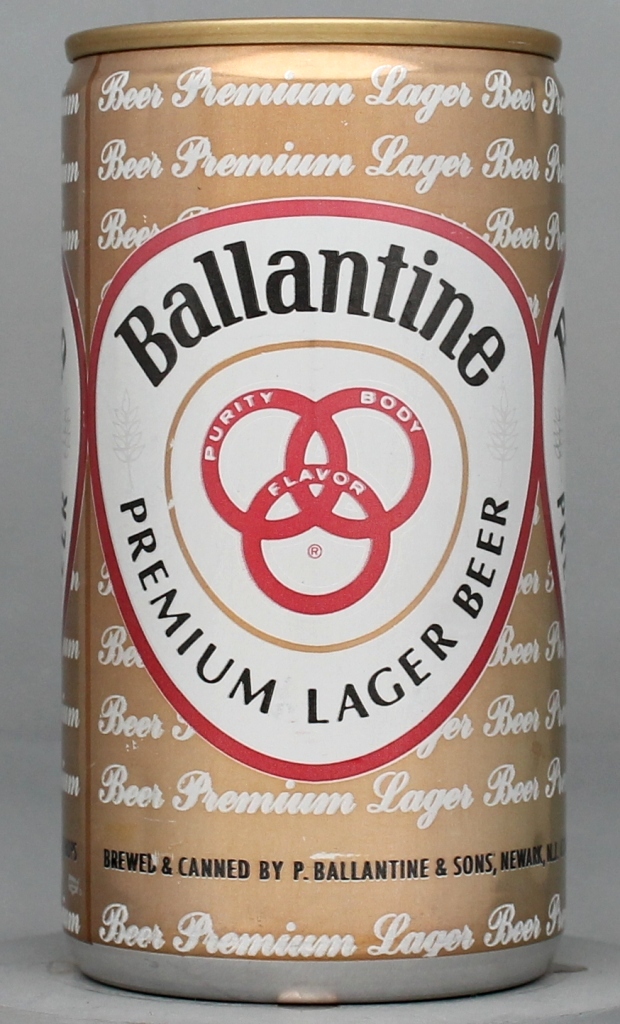
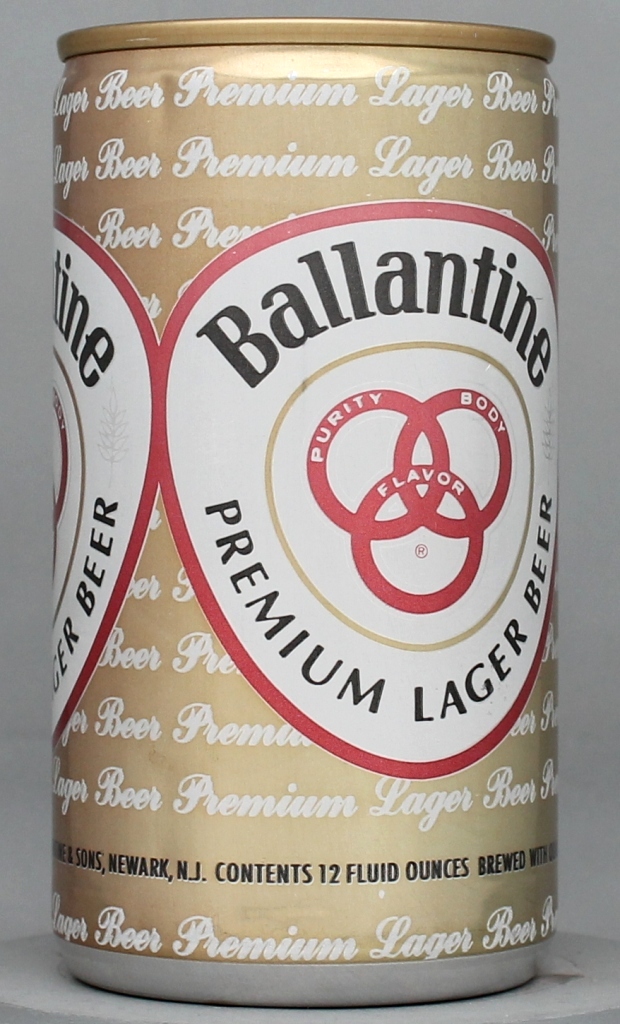
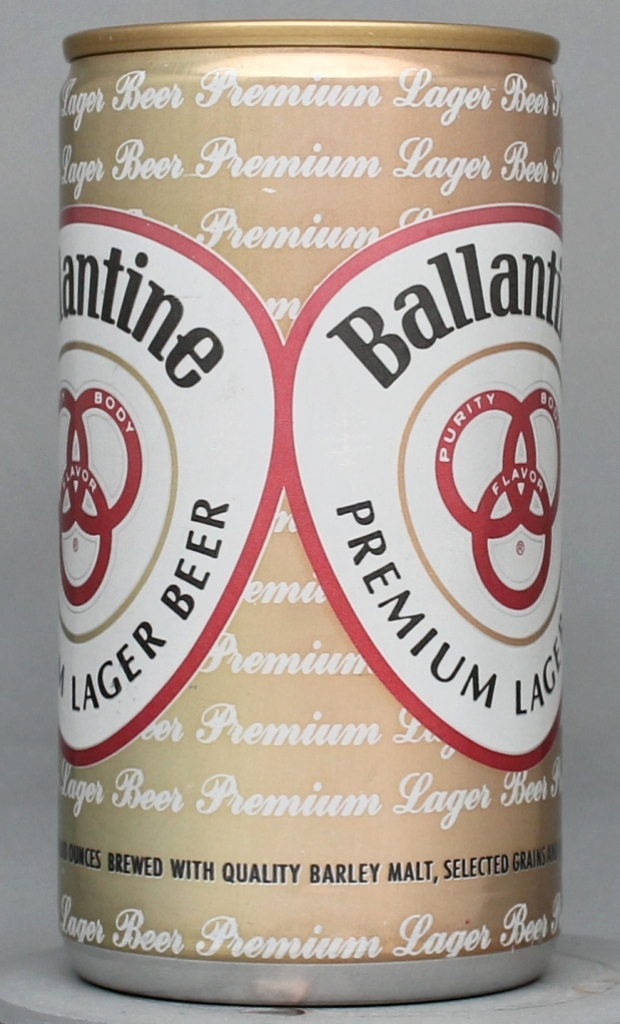
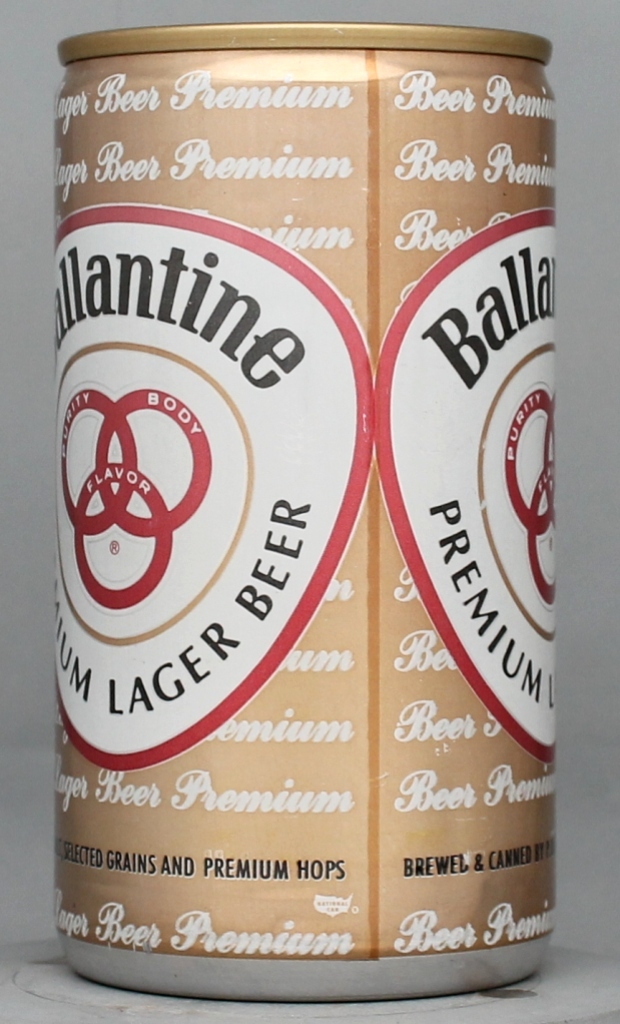
This 12-ounce tab top container represents a modern packaging phase for P. Ballantine & Sons during the late 1960s and early 1970s. Fabricated from lightweight aluminum with a seamless body and a rounded bottom, the design features a repeating cursive background reading "Beer Premium Lager" behind the primary emblem. At the base, the brewery mandatory statement appears in crisp black lettering, identifying Newark, New Jersey, as the canning origin.
Ballantine built its reputation as one of America’s most prominent domestic beer labels throughout the mid-twentieth century. Its visual identity centered on the famous three interlocking Borromean rings representing "Purity, Body, and Flavor"—a motif legendarily conceived when founder Peter Ballantine noticed overlapping wet rings left on a table by his tasting glass. The brand reached millions of households through high-profile sports sponsorships, notably serving as the long-time sponsor of the New York Yankees broadcasts, where announcer Mel Allen immortalized home runs as "Ballantine Blasts." As consumer preferences trended heavily toward golden lagers in the postwar era, the brewery marketed its Premium Lager alongside its historic ales.
Founded in 1840 by Scottish immigrant Peter Ballantine along the Passaic River in Newark, P. Ballantine & Sons expanded into an industrial brewing giant. During Prohibition, the enterprise survived by producing malt syrup and non-alcoholic beverages before being acquired by the Badenhausen brothers in 1933. Under their stewardship, Ballantine modernized its facilities, eventually rising to become the third-largest brewing company in the United States by the 1950s. However, intensified price competition from national shipping breweries and changing distribution economics placed severe financial pressure on the firm through the 1960s. Unable to reverse falling volume, Ballantine shuttered its historic Newark complex in 1972, selling its labels and recipes to the Falstaff Brewing Corporation.
For breweriana enthusiasts, this can stands as an artifact from the final chapter of independent brewing in Newark. It reflects the broader industrial transition toward two-piece aluminum cans while preserving the century-old three-ring insignia that defined mid-century East Coast brewing.
* Descriptions are AI-assisted and may include edits from our team. Verify key details.
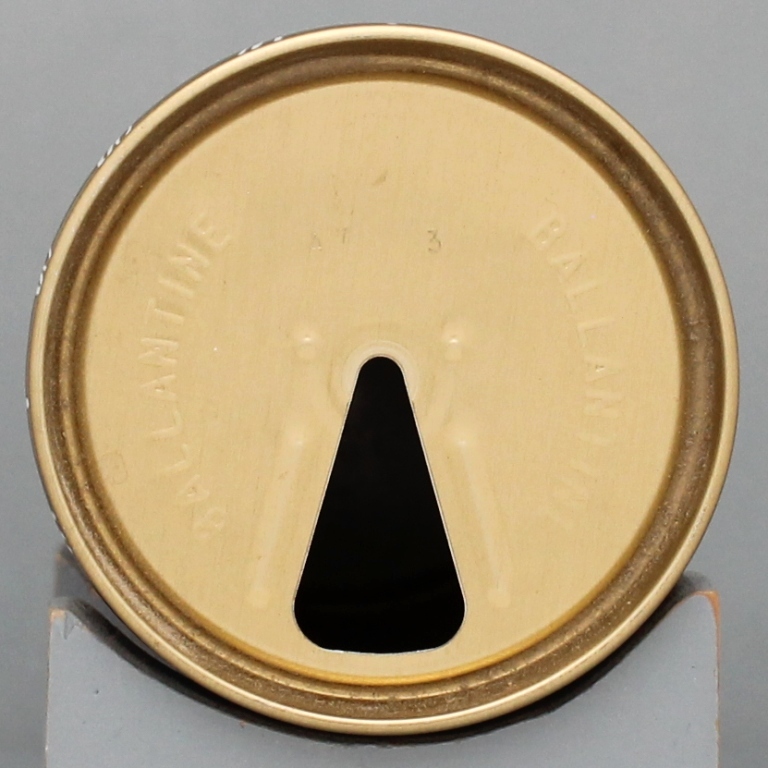
Can Details
Similar Cans
Price History
Not enough sales data to display a chart.
Sold Listings
No recent sales data available for this can.