Ballantine's Xxx Ale Flat Top Can
P. Ballantine & Sons • Newark, NJ
Ballantine's XXX Ale Flat Top
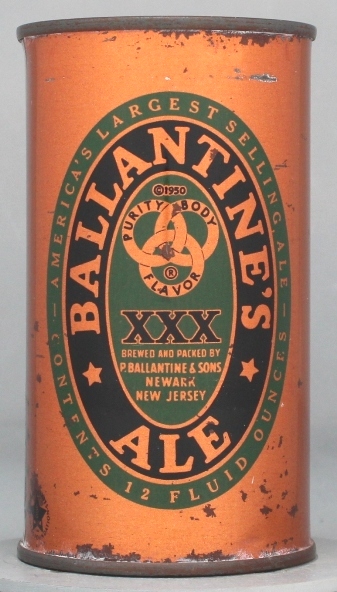
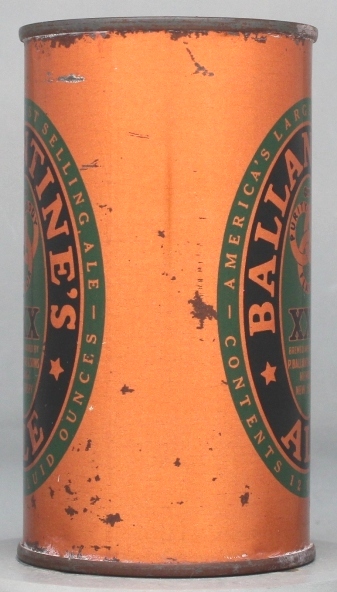
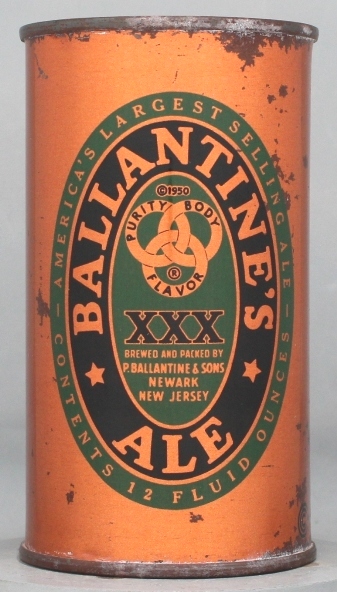
This 12-ounce flat top can from the early 1950s represents a defining era for mid-century canning design. Set against a metallic copper background, the face features a large oval medallion with the copyright text "©1950" printed in copper above the brewery's trademark. The central credit panel identifies the packaging origin with the mandatory phrasing "BREWED AND PACKED BY P. BALLANTINE & SONS NEWARK NEW JERSEY". Surrounding the inner graphic, the outer green border carries the declaration "AMERICA'S LARGEST SELLING ALE," reflecting the brand's commanding market position during the postwar period.
Ballantine's XXX Ale stood as the brewery's flagship offering, maintaining top-fermented brewing heritage at a time when American tastes overwhelmingly favored light lager styles. Its signature interlocking Borromean rings—representing "Purity, Body, Flavor"—were inspired, according to company lore, by the condensation marks left on a wooden table by founder Peter Ballantine's ale tumbler. The "XXX" designation was drawn from the centuries-old English system signifying brew strength and quality. The brand was heavily promoted through radio, television, and sports broadcasts, most notably as the long-running sponsor of the New York Yankees. Broadcaster Mel Allen famously coined the phrase "That's a Ballantine Blast!" for home runs, keeping the name at the forefront of pop culture before the label eventually transitioned into the Pabst Brewing Company portfolio.
Peter Ballantine founded the company in Newark, New Jersey, in 1840 after relocating from upstate New York. The brewery survived Prohibition by producing cereal beverages and malt syrup, after which it was acquired in 1933 by brothers Carl and Otto Badenhausen. Under the Badenhausens, Ballantine modernized its sprawling Newark operations and climbed to become the third-largest brewing company in the United States. However, intensifying competition from national mega-brewers led to decline, culminating in the closure of the Newark plant in 1972 following the brand's acquisition by Falstaff.
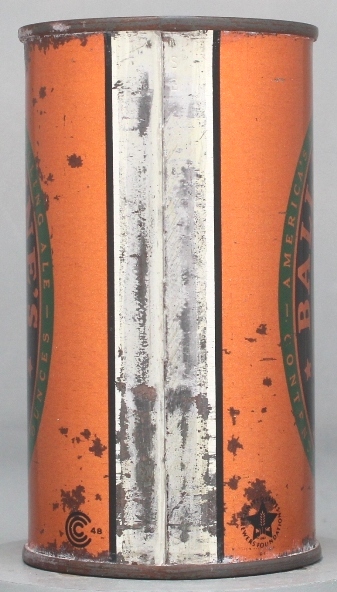
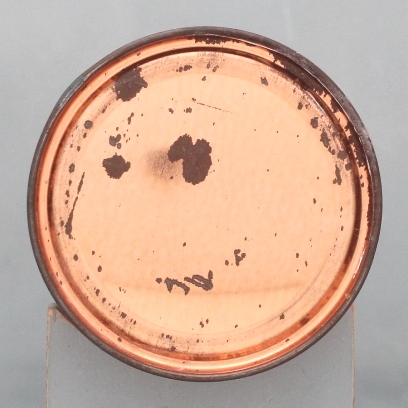
Among breweriana collectors, Ballantine cans are central artifacts of mid-century brewing history. The distinctive copper base, bold typography, and iconic three-ring emblem make this can a standout shelf piece, while subtle text and copyright variations across production runs offer collectors rich avenues for study.
* Descriptions are AI-assisted and may include edits from our team. Verify key details.
Can Details
Similar Cans
Price History
Not enough sales data to display a chart.
Sold Listings
No recent sales data available for this can.