Ballantine XXX Ale 12 Oz Tab Top Can
Falstaff • Cranston, RI
Falstaff-Era Ballantine XXX Ale
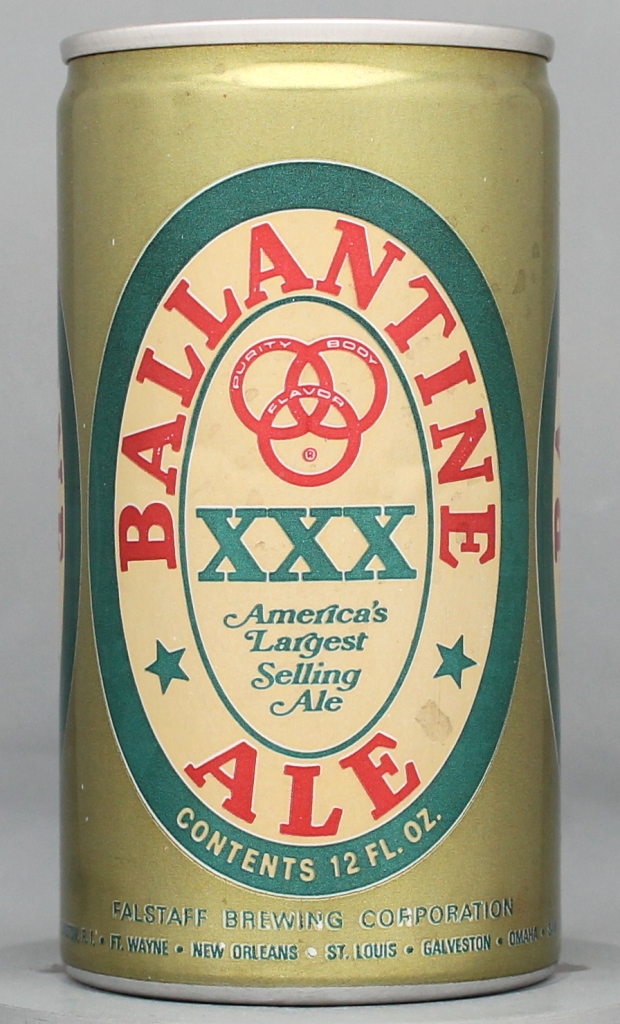
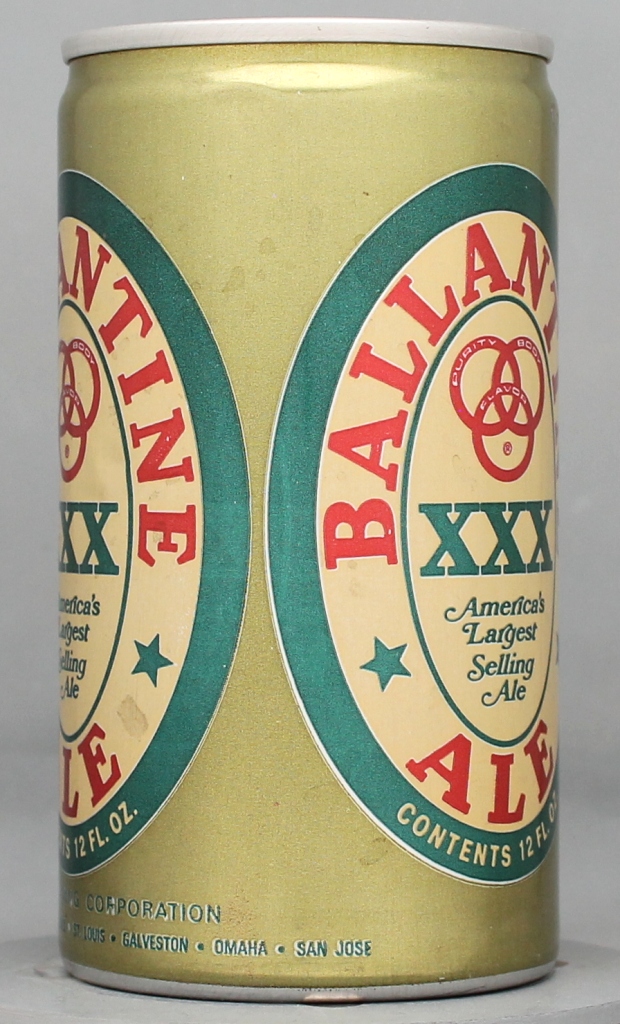
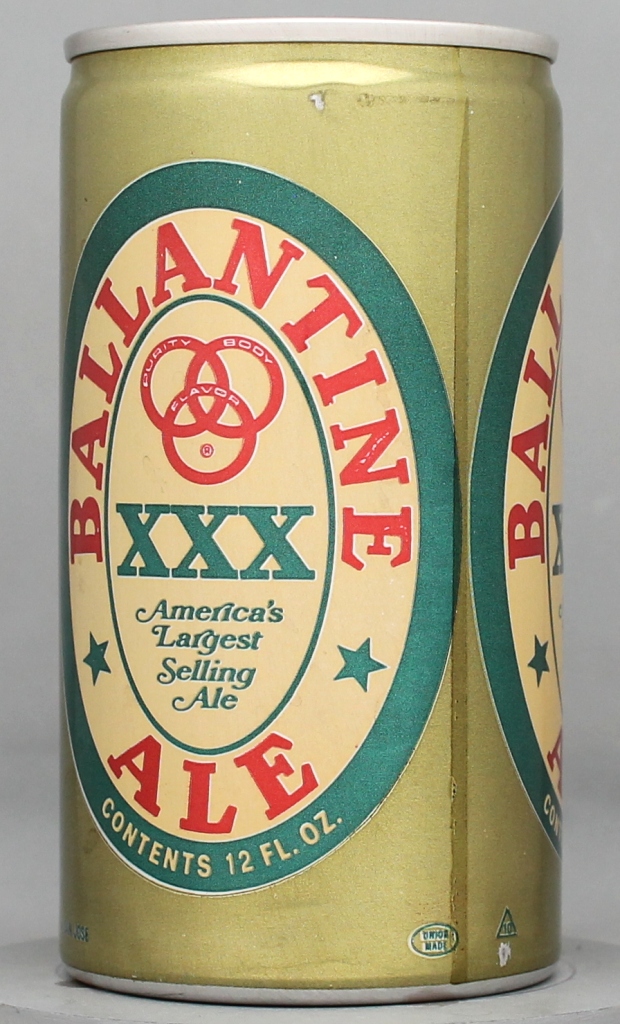
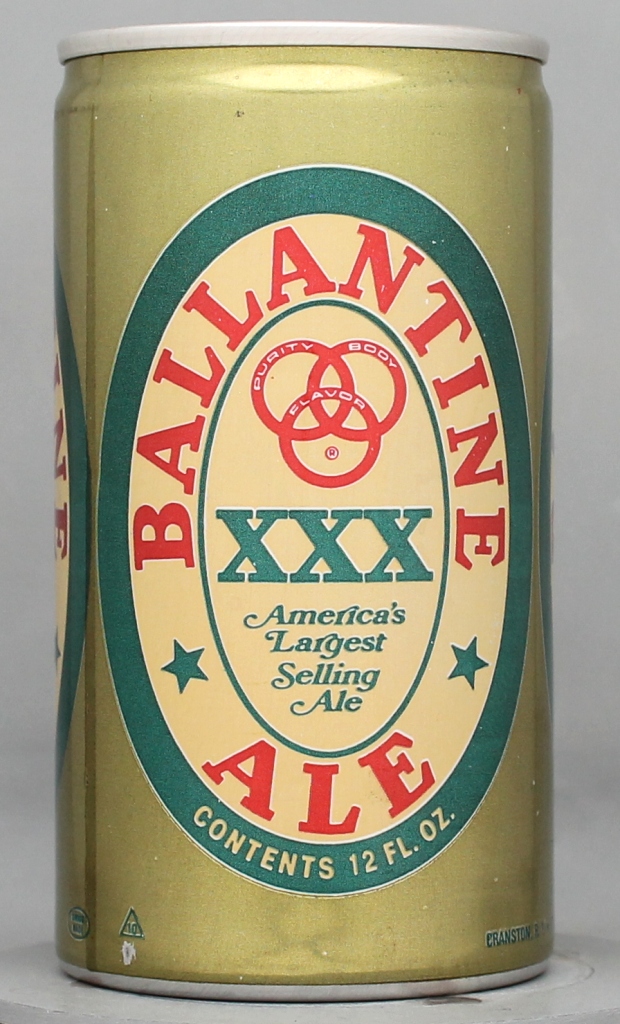
This all-aluminum 12-ounce tab top can represents the 1970s chapter of one of America's historic ale brands. Produced under the ownership of the Falstaff Brewing Corporation, the can features the brewery’s multi-plant mandatory statement along the bottom rim, listing seven production cities starting with Cranston, Rhode Island, and concluding with San Jose, California. The face prominently displays the longstanding marketing proclamation "America's Largest Selling Ale" alongside the bold "XXX" designation and the famous three-ring emblem inscribed with "Purity," "Body," and "Flavor".
Originally established in 1840 in Newark, New Jersey, by Scottish immigrant Peter Ballantine, the brand grew into a titan of American brewing. Ballantine XXX Ale was renowned for its traditional top-fermented character and distinctive hop profile. According to company lore, the trademark three interlocking rings were conceived when Peter Ballantine noticed overlapping wet circles left on a table by a drinking glass. For decades, Ballantine dominated the domestic ale market, heavily promoted through extensive print, radio, and sports broadcast sponsorships encouraging consumers to "make the three-ring sign."
Falstaff Brewing Corporation, originally founded in St. Louis by the Griesedieck brewing family and named in tribute to Shakespeare’s jovial character Sir John Falstaff, expanded into one of the country's largest national brewing enterprises through the mid-twentieth century. In 1965, Falstaff acquired the Narragansett Brewing Company facility in Cranston, Rhode Island. When P. Ballantine & Sons ran into financial distress in 1972, Falstaff purchased the brand's recipes and trademarks, transferring production to its own network of breweries, including the Cranston plant.
For breweriana enthusiasts, this can provides a tangible artifact from the wave of corporate consolidation that reshaped the American brewing landscape. Collectors of mandatory city-line variations particularly seek out cans from this era, as changes in the listed brewing hubs document the shifting operational footprint and plant closures of Falstaff during the 1970s.
* Descriptions are AI-assisted and may include edits from our team. Verify key details.
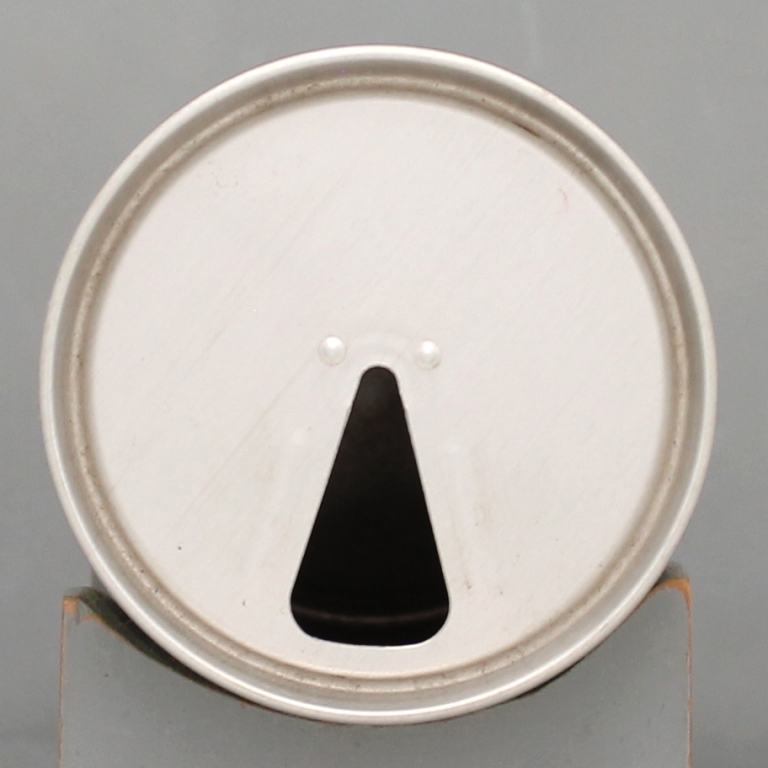
Can Details
Similar Cans
Price History
Not enough sales data to display a chart.
Sold Listings
No recent sales data available for this can.