Ballantine XXX Ale 12 Oz Tab Top Can
Falstaff • Cranston, RI
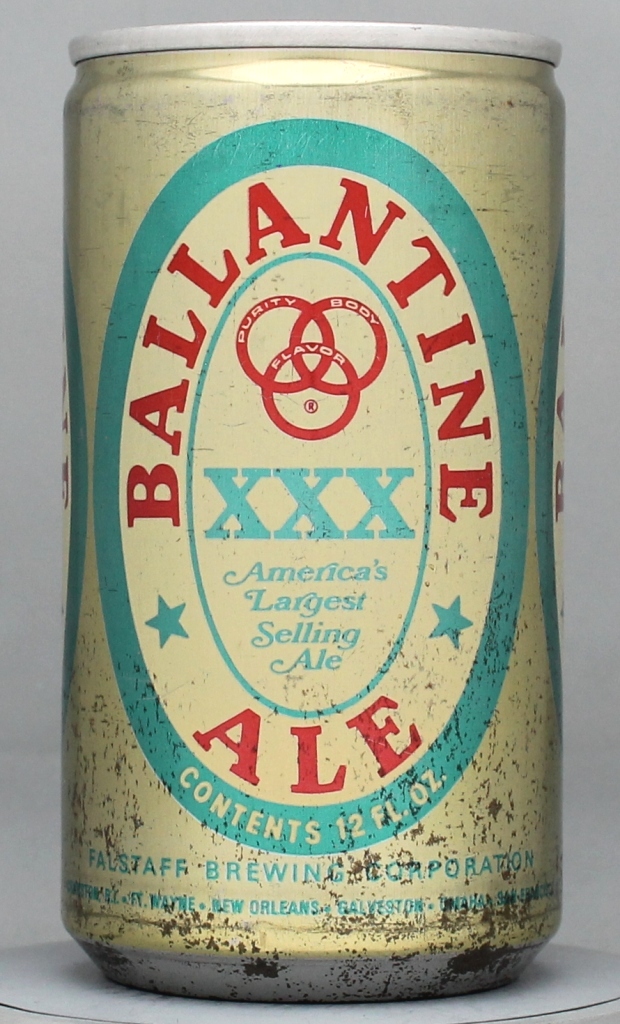
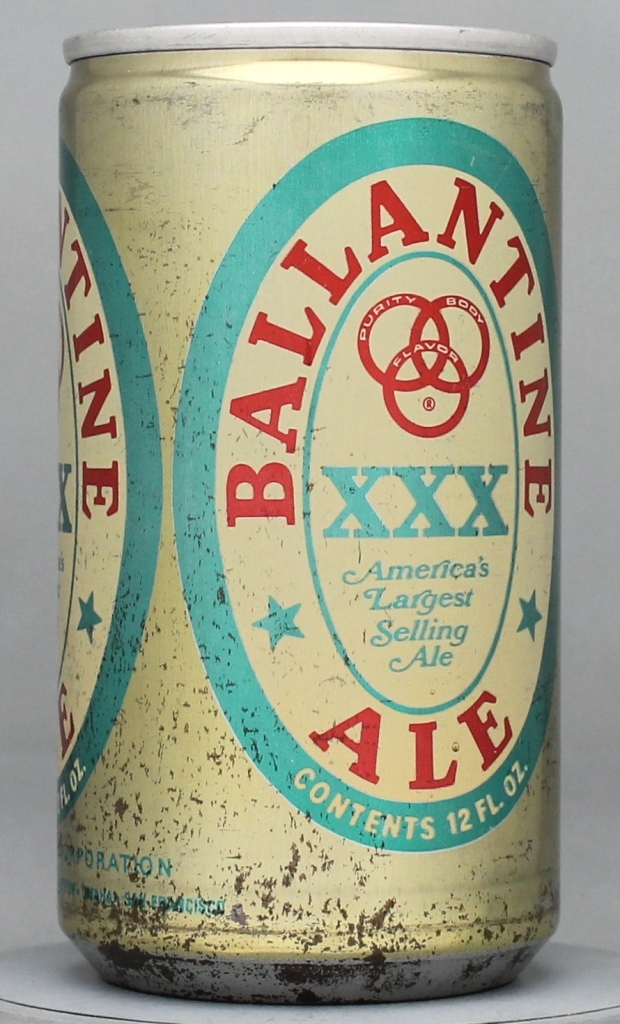
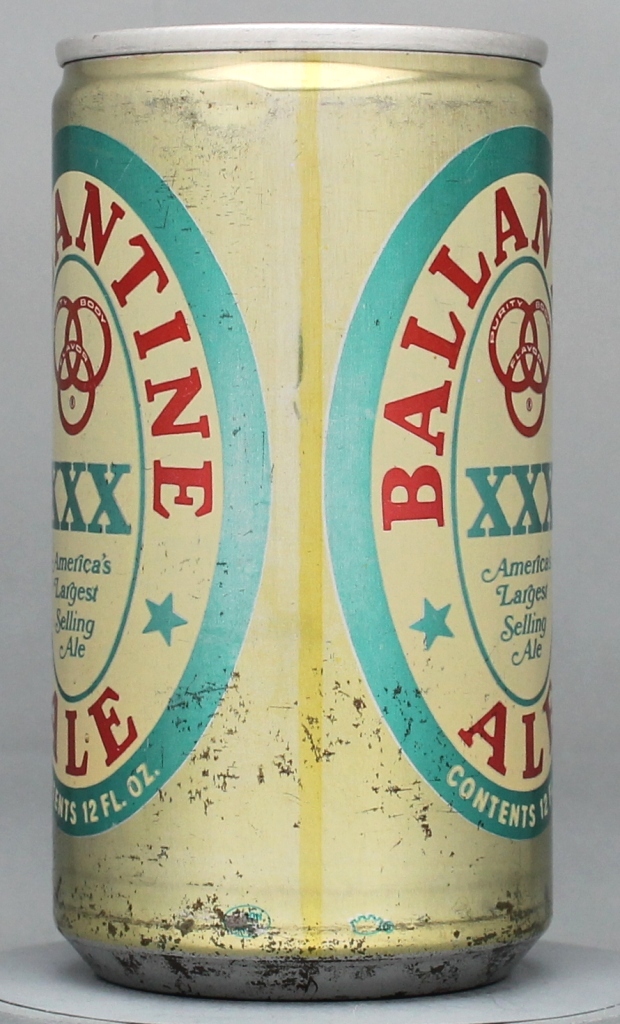
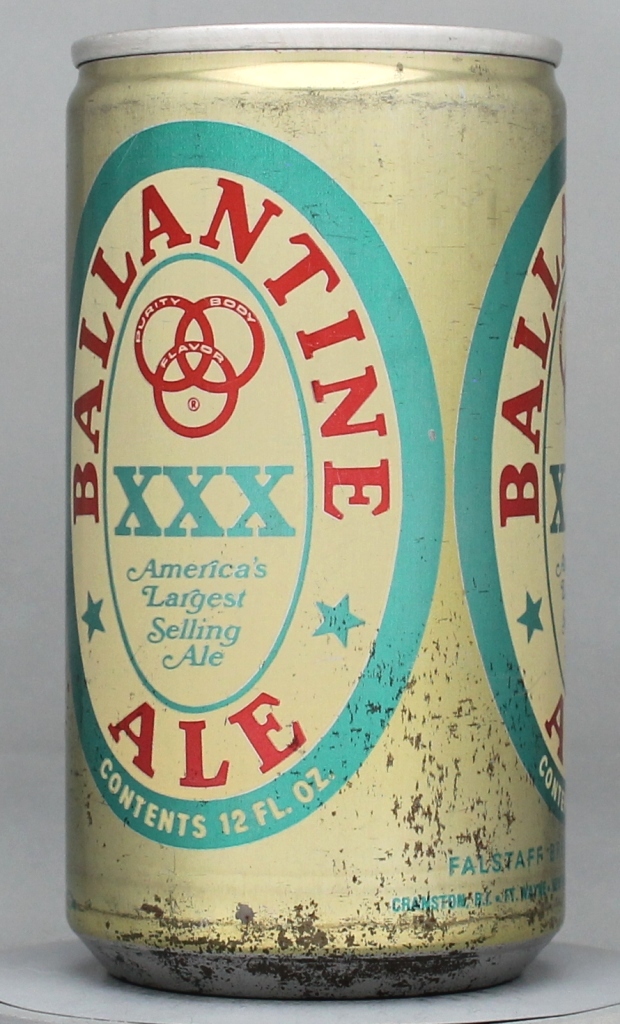
Falstaff-Era Ballantine XXX Ale Can
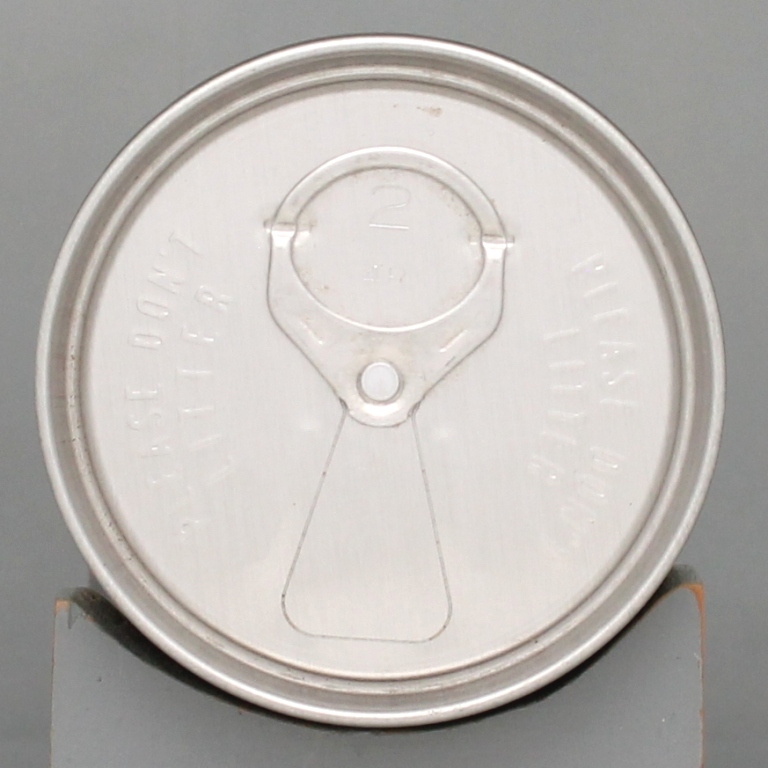
This 12-ounce drawn and ironed tab top can dates to the 1970s, produced under the Falstaff Brewing Corporation imprint. The label layout features a three-sided presentation of the central oval graphic, prominently displaying the signature interlocking rings and the proud declaration "America's Largest Selling Ale." Along the lower rim, the mandatory text records six brewing locations across the country—Cranston, Rhode Island; Fort Wayne, Indiana; New Orleans, Louisiana; Galveston, Texas; Omaha, Nebraska; and San Francisco, California—documenting Falstaff's widespread production network during this operational period.
Ballantine XXX Ale was originally developed by P. Ballantine & Sons, a brewing empire established in Newark, New Jersey, in 1840 by Scottish immigrant Peter Ballantine. Built around the famous Borromean rings trademark—symbolizing "Purity, Body, Flavor"—the ale became a benchmark American top-fermenting brew and one of the best-selling malt beverages in the country throughout the mid-20th century. Supported by widespread advertising campaigns and major sports sponsorships, Ballantine was a dominant household name. After declining sales led to the shuttering of the original Newark plant in 1972, Falstaff acquired the brand's recipes and trademarks, transferring production to its own network before the label was later absorbed by Pabst.
Falstaff Brewing Corporation originated in St. Louis, Missouri, where the Griesedieck family adopted the Shakespearean namesake character in the early 20th century. Navigating Prohibition by manufacturing near-beer and other goods, Falstaff emerged in 1933 poised for aggressive national expansion. Over the following decades, the corporation grew by purchasing regional breweries across the United States, including the Narragansett Brewing Company facility in Cranston, Rhode Island, in 1965. When Falstaff purchased the Ballantine brand portfolio in 1972, the Cranston plant became a central production site for the East Coast market until the facility was closed in the early 1980s.
For breweriana enthusiasts, this can represents a notable chapter in American brewing history when historic, independent labels transitioned into the portfolios of multi-plant national conglomerates. Multi-city mandatory listings from this period provide collectors with a direct look into the shifting manufacturing footprint of the 1970s beer industry.
* Descriptions are AI-assisted and may include edits from our team. Verify key details.
Can Details
Similar Cans
Price History
Not enough sales data to display a chart.
Sold Listings
No recent sales data available for this can.