Ballantine XXX Ale 12 Oz Tab Top Can
Falstaff • Cranston, RI
Ballantine XXX Ale Aluminum Can
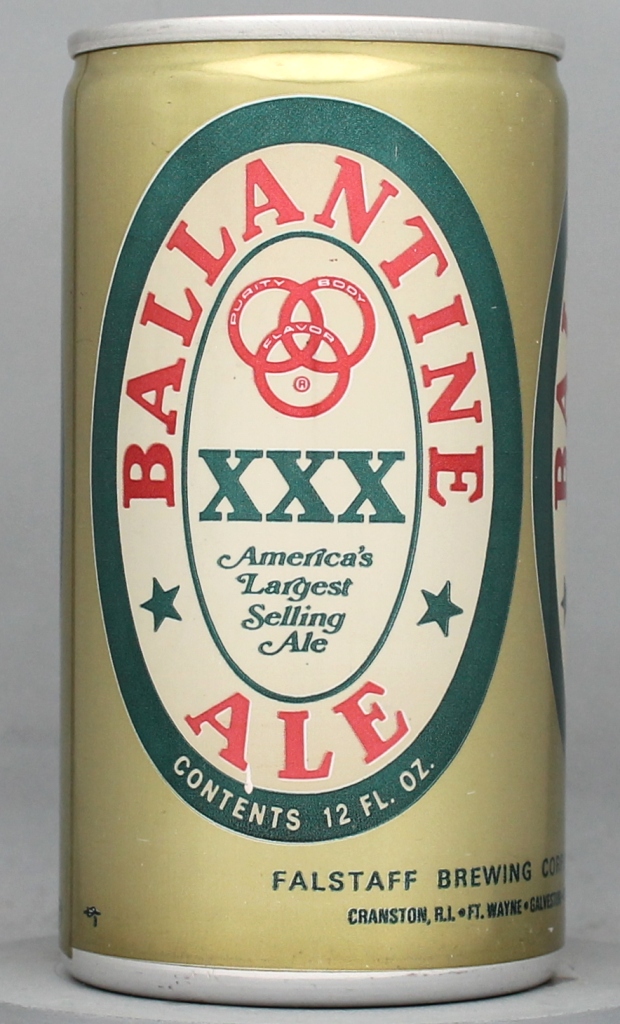
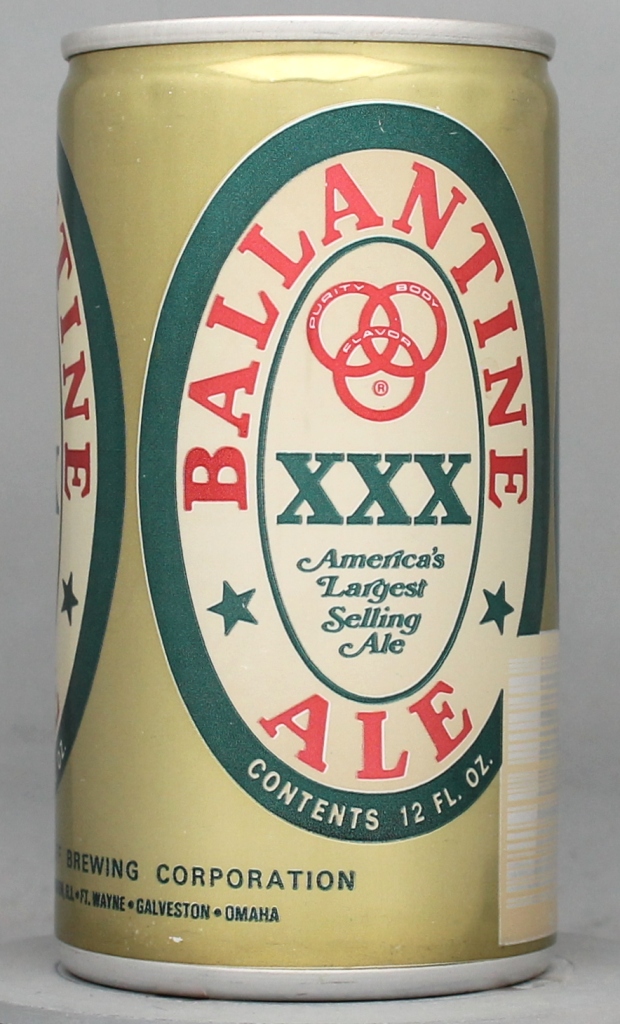
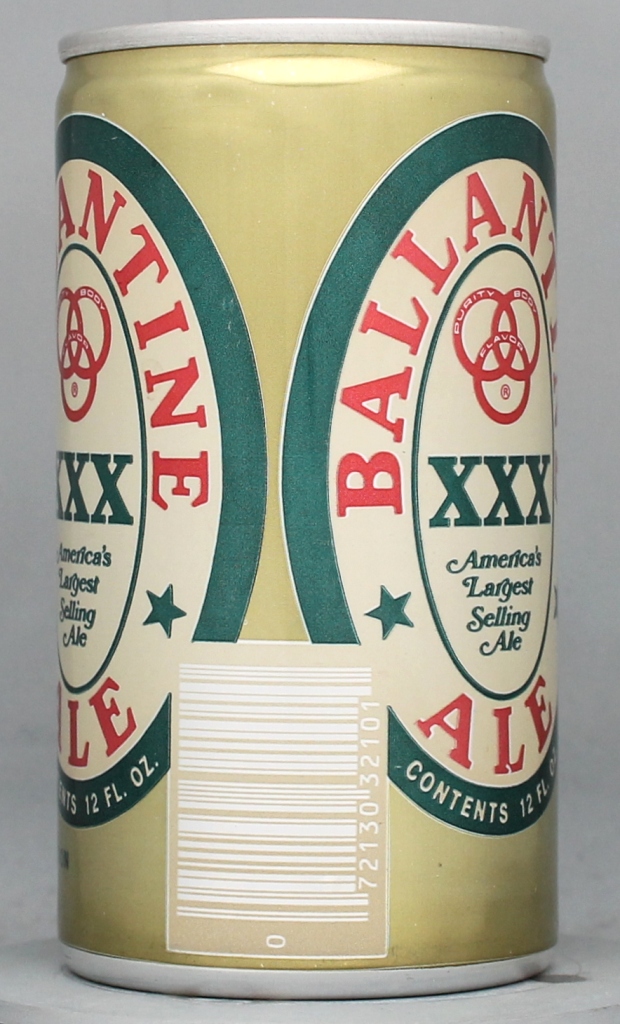
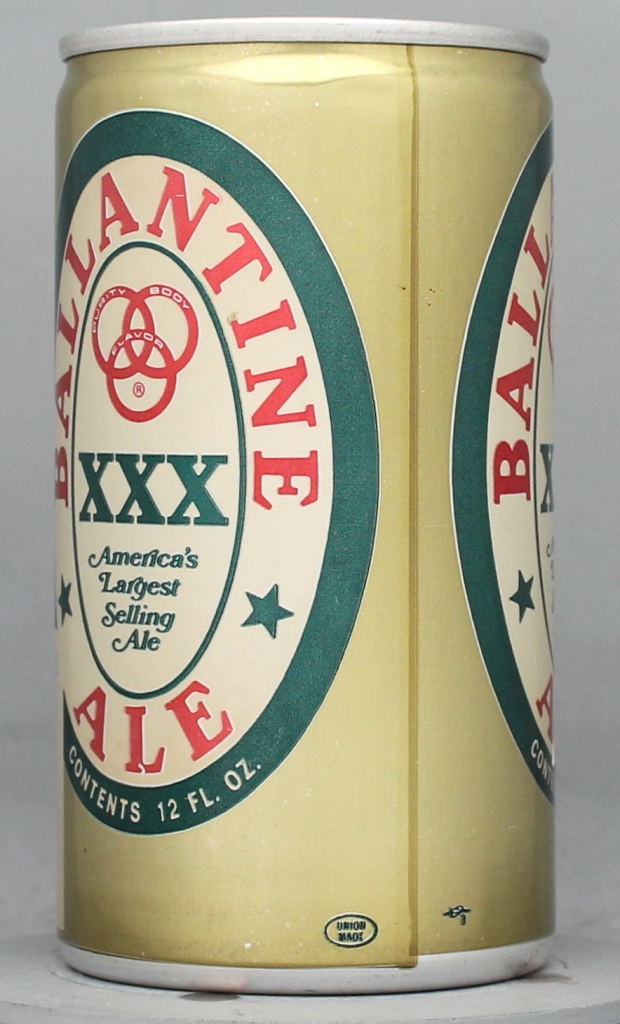
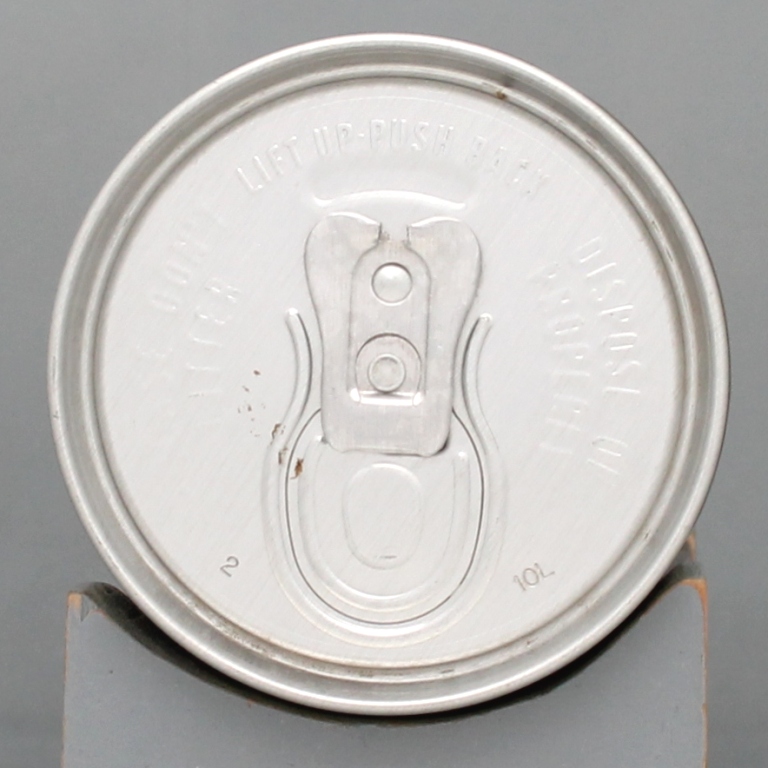
This twelve-ounce aluminum can features the classic Ballantine XXX Ale design produced under the stewardship of the Falstaff Brewing Corporation. The layout showcases a three-sided graphic presentation centered on the traditional oval insignia, highlighting the prominent green "XXX" and the claim "America's Largest Selling Ale" framed by five-pointed stars. Along the lower rim, the mandatory text identifies the Falstaff network across multiple brewing cities, led by Cranston, Rhode Island, alongside Fort Wayne and Galveston. Configured with an aluminum stay-top lid, this can reflects the industry shift toward modern opening styles during the post-1972 manufacturing era.
Ballantine XXX Ale was originally developed by P. Ballantine & Sons, founded in Newark, New Jersey, by Scottish immigrant Peter Ballantine. Rooted in robust top-fermented brewing traditions, the brand became famous for its interlocking three-ring emblem representing "Purity, Body, Flavor"—a symbol inspired by the wet rings left by a glass on a table. Marketed as America's preeminent ale, Ballantine was supported by pervasive mid-century campaigns, sports sponsorships, and slogans such as "Make the three-ring sign, ask the man for Ballantine". As consumer palates shifted heavily toward pale lagers in the 1960s, Ballantine experienced sharp declines before its brand assets were sold.
Falstaff Brewing Corporation, founded in St. Louis, Missouri, by the Griesedieck family, grew into one of the country's largest brewing powerhouses following the repeal of Prohibition. During a massive mid-century expansion drive to achieve national coverage, Falstaff purchased several regional brewing plants, including Rhode Island's Narragansett brewery in Cranston. When Falstaff acquired the Ballantine brand in 1972, production was transferred from Newark into Cranston and other Falstaff-operated facilities. Falstaff continued running the labels until the firm was absorbed into the Pabst brewing group in the mid-1980s.
To breweriana collectors, this can serves as an essential historical artifact from a period of major structural change in American brewing. Multi-city brewery imprints from the Cranston era chronicle the transition of legacy regional brands into national conglomerate production networks.
* Descriptions are AI-assisted and may include edits from our team. Verify key details.
Can Details
Similar Cans
Price History
Not enough sales data to display a chart.
Sold Listings
No recent sales data available for this can.