Ballantine XXX Ale 12 Oz Tab Top Can
Falstaff • Cranston, RI
Ballantine XXX Ale Tab Top Can
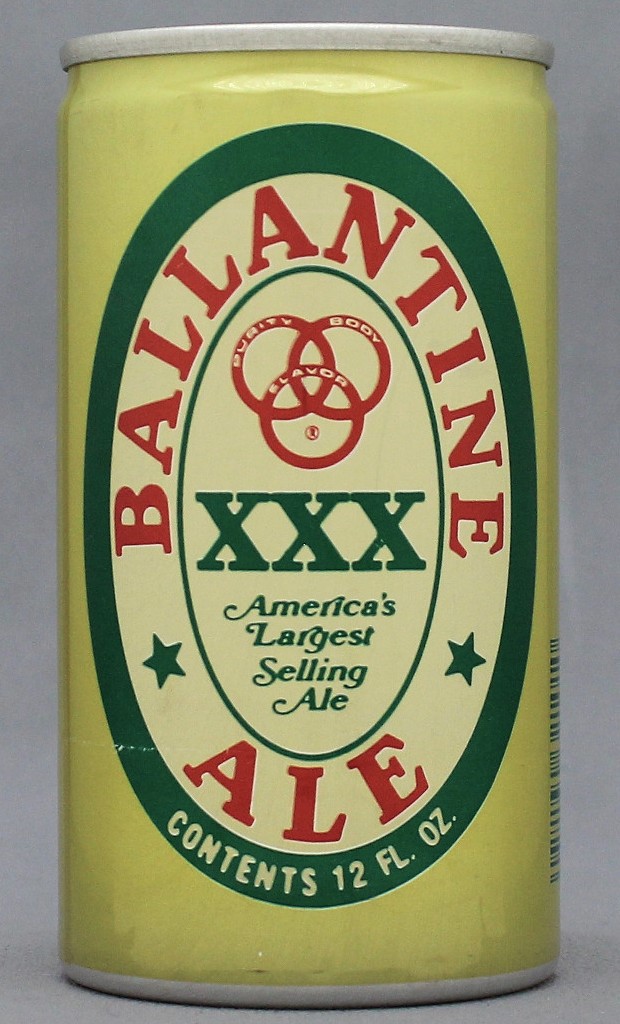
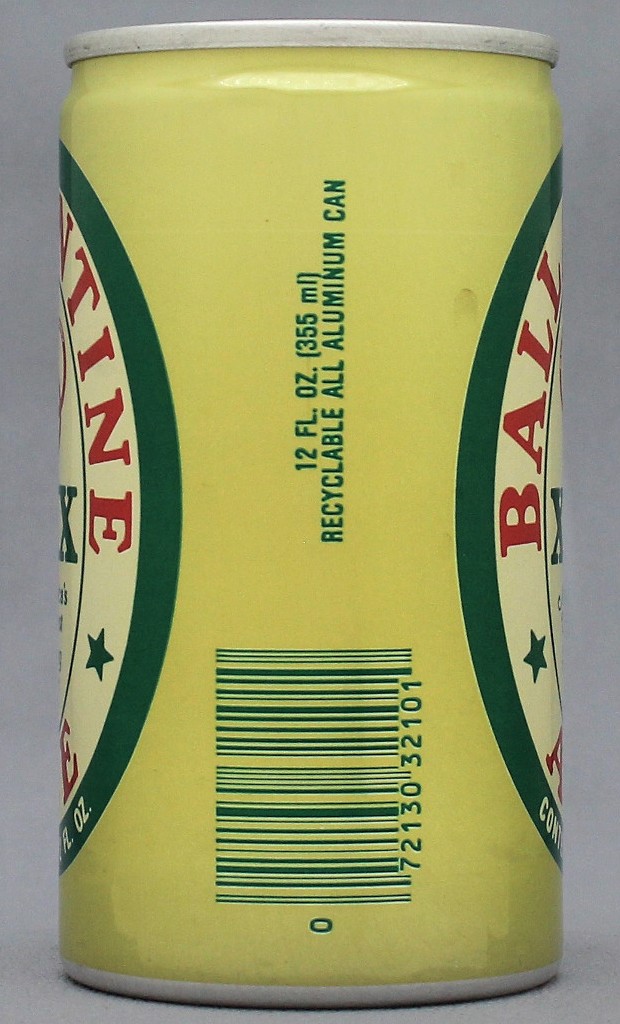
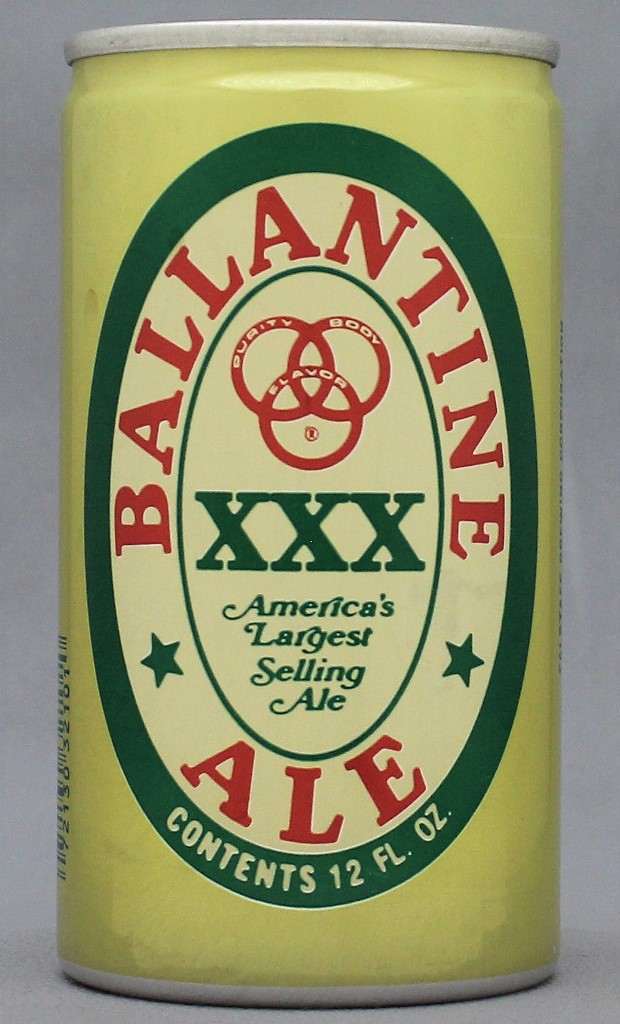
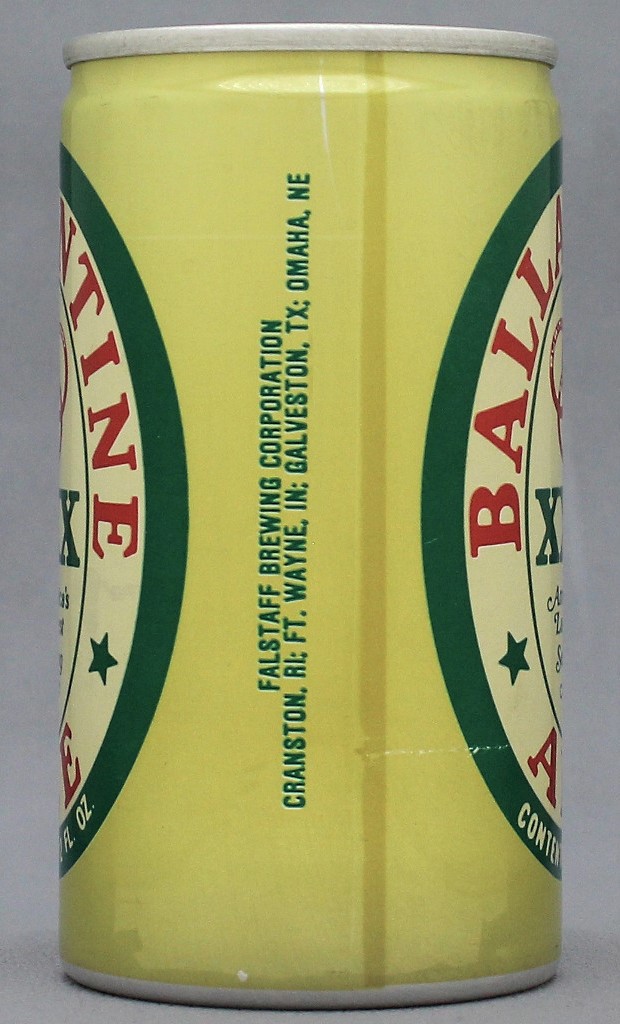
This 12-ounce aluminum tab-top can represents the late 1970s packaging era of Ballantine XXX Ale produced under Falstaff Brewing Corporation. Notable for incorporating a Universal Product Code (UPC) barcode along the side seam alongside dual standard and metric volume measurements, the can's mandatory text identifies Cranston, Rhode Island, as part of a four-city brewery listing reflecting Falstaff's operational network. The front label features the long-running central oval medallion, showcasing the interlocking three-ring trademark inscribed with "Purity," "Body," and "Flavor," flanked by stars and proclaiming the brew as "America's Largest Selling Ale".
Originally created by Scottish immigrant Peter Ballantine in Newark, New Jersey, during the 1840s, Ballantine XXX Ale grew into one of the most widely consumed ales in the United States. Propelled by pervasive mid-twentieth-century advertising that popularized the three overlapping rings—legendarily inspired by the condensation rings left by a beer glass on a wooden table—the brand commanded national recognition. Although light adjunct lagers increasingly dominated American consumer tastes after World War II, Ballantine's ale portfolio retained widespread loyalty until financial difficulties led to the sale of the brand trademarks to Falstaff in 1972.
Falstaff Brewing Corporation, founded in St. Louis, Missouri, expanded rapidly in the mid-twentieth century through aggressive acquisitions. In 1965, Falstaff purchased the Narragansett Brewing Company in Cranston, Rhode Island, to secure a foothold in the Northeast. After acquiring the Ballantine labels in 1972, Falstaff shuttered the historic Newark facility and shifted Ballantine production to Cranston to utilize spare plant capacity. Facing severe industry competition and subsequent ownership changes under financier Paul Kalmanovitz, Falstaff steadily curtailed output, ultimately closing the Cranston facility in the early 1980s.
For breweriana enthusiasts, this can provides a tangible record of late-twentieth-century industrial consolidation. As independent heritage brands were absorbed into larger brewing conglomerates, packaging underwent rapid evolution, reflecting the introduction of supermarket barcoding, metric conversion, and shifting brewery distribution lines.
* Descriptions are AI-assisted and may include edits from our team. Verify key details.

Can Details
Similar Cans
Price History
Not enough sales data to display a chart.
Sold Listings
No recent sales data available for this can.