Black Label Beer Flat Top Can
Carling • Baltimore, MD
Carling Black Label Flat Top Can
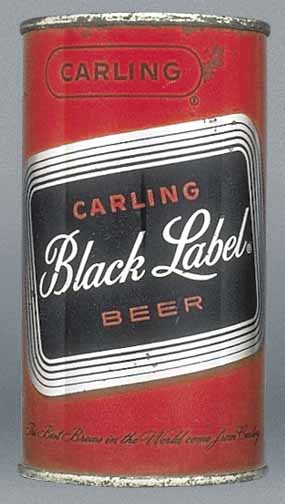
Associated with the Baltimore, Maryland facility, this 12-ounce flat top represents Carling Black Label from the early 1960s. The can's graphic layout features a rich red background highlighted by distinctive concentric silver trim bordering the central black emblem. Above the primary label rests an oval badge bearing the Carling name, while the base of the can carries the cursive corporate slogan: "The Best Brews in the World come from Carling". Flat top cans originating from the Baltimore operation date to the twilight of the flat top era, capturing the brand shortly before pull tabs became standard across the American brewing industry.
Carling Black Label originated in Ontario, Canada, when the Carling brewery introduced the name in 1927 to replace its earlier Black & White Lager. Under the stewardship of Canadian Breweries Limited and entrepreneur E. P. Taylor, Black Label evolved into an internationally recognized flagship brand. Expanding aggressively into the United States market following Repeal, Black Label was positioned as a crisp, accessible lager. The brand became ingrained in American popular culture through mid-century advertising campaigns, famous for television catchphrases such as "Hey Mabel, Black Label!" as well as the world-class brewing slogan displayed across this can's lower rim.
Carling established its primary American manufacturing presence in Cleveland, Ohio, during the early 1930s by converting a former luxury automobile factory into a state-of-the-art brewing complex. Throughout the 1950s and early 1960s, the company pursued an ambitious national strategy, opening modern regional facilities across the country to reduce shipping distances. The Baltimore plant opened in 1961 along the Baltimore Beltway to serve mid-Atlantic markets. During the industry consolidations of the 1970s, Carling merged its American division with Baltimore’s National Brewing Company to form Carling-National Breweries, which was ultimately acquired by G. Heileman.
For breweriana enthusiasts, this can represents an intriguing period in canned beer history. Because Carling distributed Black Label through multiple regional plants, cans designated with Baltimore mandatory markings illustrate the geographic decentralization of postwar brewing and stand as a classic example of early 1960s steel can lithography.
* Descriptions are AI-assisted and may include edits from our team. Verify key details.
Can Details
Similar Cans
Price History
Not enough sales data to display a chart.
Sold Listings
No recent sales data available for this can.