Black Label Beer Flat Top Can
Carling • Natick, MA
Carling Black Label 1967 Flat Top
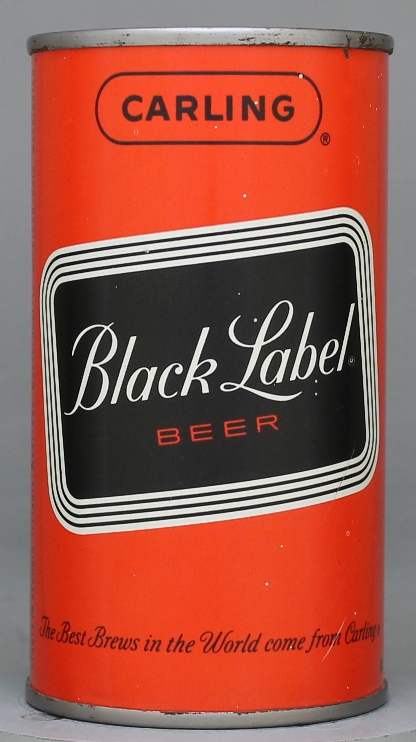
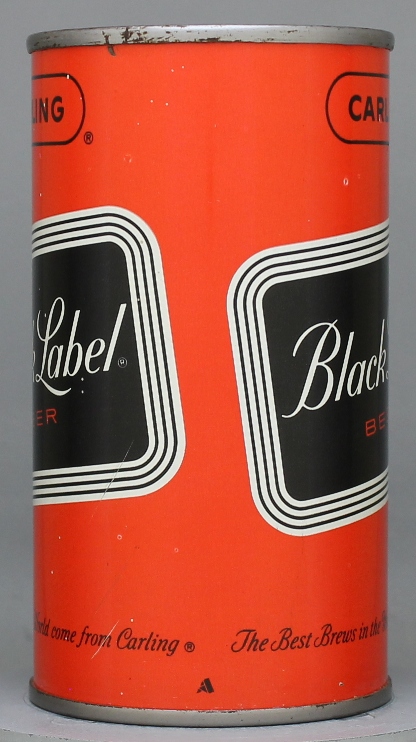
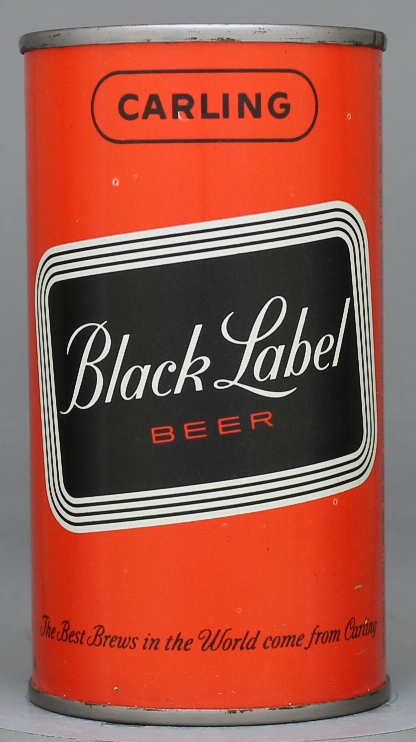
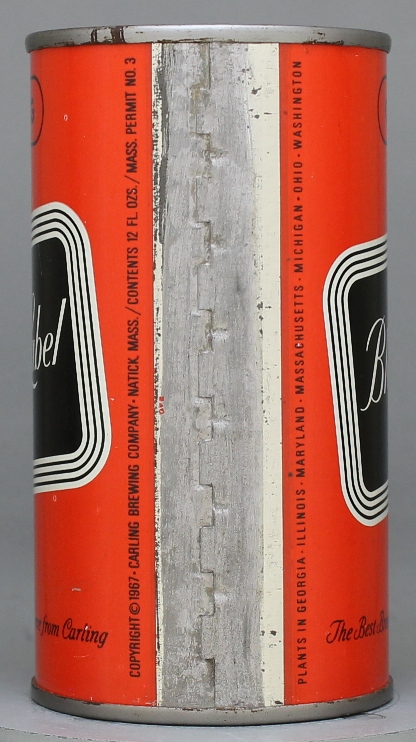
Dating to 1967, this 12-ounce flat top can represents one of the final generations of flat-top steel packaging produced for Carling's flagship lager before tab tops became ubiquitous across the industry. Canned for distribution from Carling's facility in Natick, Massachusetts, the can features the brand's bold mid-century presentation and displays the corporate slogan along the bottom rim: "The Best Brews in the World come from Carling". Mandatory side text includes a 1967 copyright alongside a list of operational brewing locations spanning Georgia, Illinois, Maryland, Massachusetts, Michigan, Ohio, and Washington, reflecting the company's extensive geographic footprint.
Carling introduced Black Label in Canada during the late 1920s, rebranding its earlier Black & White Lager to serve as a companion to its popular Red Cap Ale. Under the expansion strategy of Canadian Breweries Limited, Black Label was positioned as an accessible, high-volume standard lager and aggressively promoted internationally. The brand became a household name across mid-century America, bolstered by memorable marketing campaigns centered around the famous catchphrase, "Hey Mabel, Black Label!"
The brewery itself traces its heritage back to 1818 in London, Ontario, where Thomas Carling started brewing for local farm workers and residents. Following the repeal of Prohibition, the business established its American footing in 1934 by transforming an idled automotive plant in Cleveland into a brewery initially known as the Brewing Corporation of America. Formally adopting the Carling Brewing Company name in 1954, the company launched an ambitious nationwide expansion. In 1956, Carling opened its showpiece New England plant in Natick on the shores of Lake Cochituate, heralded upon opening as one of the country's most modern brewing facilities. Shifts in industry economics led to consolidation during the 1970s, with production centralizing elsewhere as Carling merged into Carling-National and later larger brewing conglomerates.
For breweriana collectors, this can represents a notable artifact from the final transitional years of flat-top steel beverage cans. Because Carling maintained decentralized regional facilities, collectors prize these late-era cans for documenting the network of production cities and mandatory state listings from the peak of Carling's American distribution.
* Descriptions are AI-assisted and may include edits from our team. Verify key details.
Can Details
Similar Cans
Price History
Not enough sales data to display a chart.
Sold Listings
No recent sales data available for this can.