Black Label Draft 14 Oz Insert Top Can
Carling • Atlanta, GA
Carling Black Label 14 Oz Draft Can
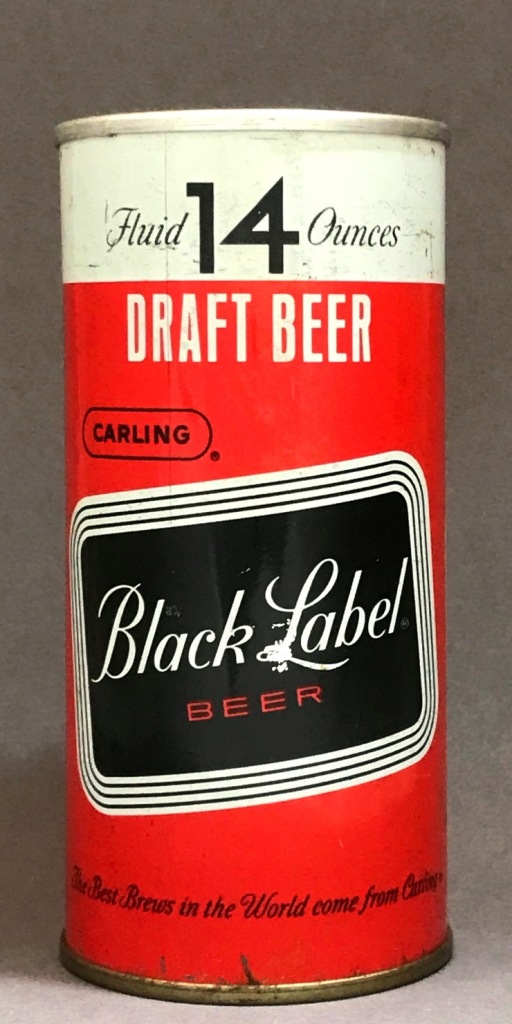
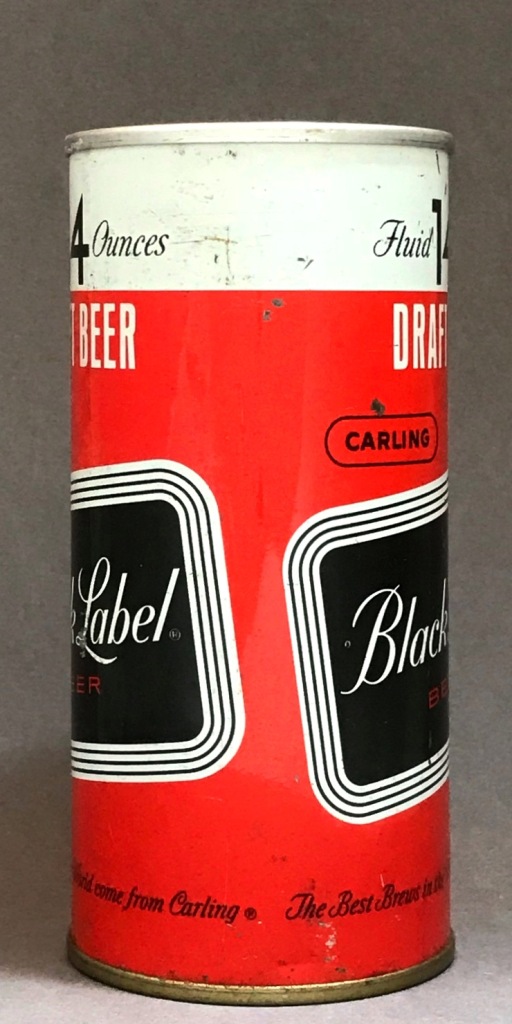
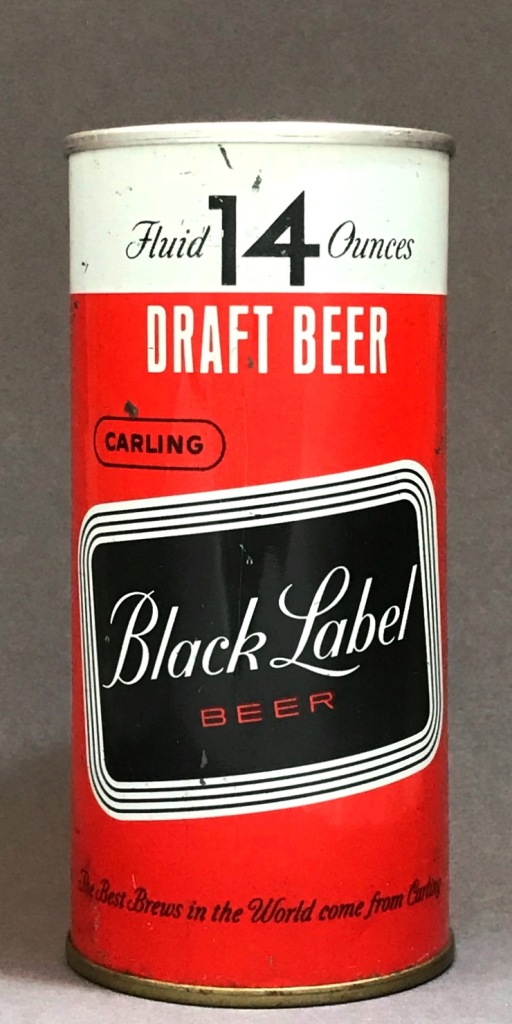
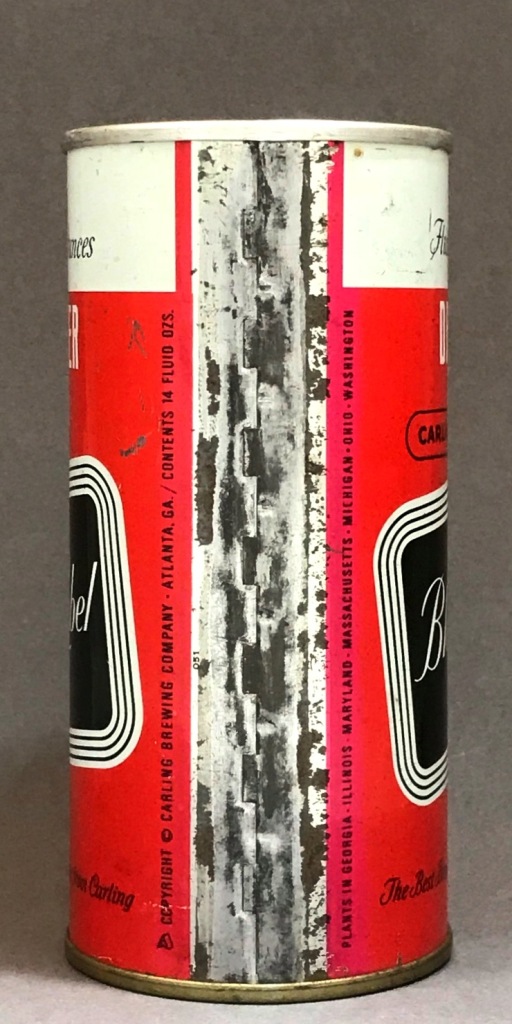
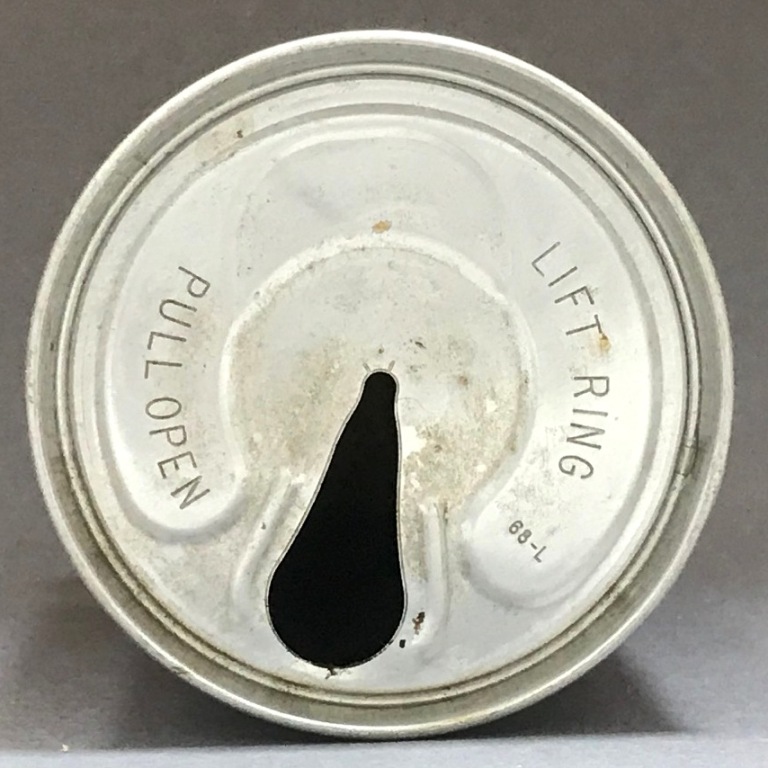
Produced during the late 1960s, this straight steel container stands out for its unusual 14-ounce capacity, prominently announced in bold lettering across the upper white band as "Fluid 14 Ounces" above "DRAFT BEER." Originating from Carling's facility in Atlanta, Georgia, the packaging features a distribution panel listing seven states. Standard catalog listings display a tab top closure, while documentation records an insert top configuration for this particular issue. The lower body showcases the company's trademark oval emblem, a stylized rectangular black label frame, and the promotional slogan along the base proclaiming, "The Best Brews in the World come from Carling."
Black Label debuted in Canada before expanding into the United States following the repeal of Prohibition. Carling positioned the lager as an approachable, quality-brewed offering for everyday working-class consumers. The brand achieved massive nationwide recognition through mid-century advertising, driven by the famous animated and live-action "Hey Mabel, Black Label!" campaign. Black Label grew into one of America's best-selling beers through the 1950s and 1960s before increased competition eroded its market share. Today, it survives under the stewardship of Molson Coors as a legacy regional label.
Carling traces its origins back to 1840, when English farmer Thomas Carling began brewing ale in London, Ontario. The business expanded into an industrial powerhouse in Canada under E.P. Taylor's Canadian Breweries Limited. Seeking aggressive post-Prohibition expansion in the United States, Carling built modern regional facilities across the country, including the Atlanta brewery opened in 1958 to supply southeastern markets. Facing fierce industry consolidation and competition from national mega-brewers, the Atlanta plant closed in the early 1970s. Carling later merged with National Brewing Company before being acquired by G. Heileman and ultimately absorbed into Pabst and Molson Coors networks.
For breweriana enthusiasts, this can holds special appeal within the realm of non-standard container sizes. While 12-ounce cans and 16-ounce pints dominated the era, the 14-ounce format represents a short-lived packaging experiment favored by select regional distributors. Paired with its Southern provenance and insert top lineage, the can remains a sought-after piece of mid-century brewing history.
* Descriptions are AI-assisted and may include edits from our team. Verify key details.
Can Details
Similar Cans
Price History
Not enough sales data to display a chart.
Sold Listings
No recent sales data available for this can.