Budweiser Beer 12 Oz Tab/Stay Top Can
Anheuser-Busch • St. Louis, MO
Budweiser 12 Oz Aluminum Can
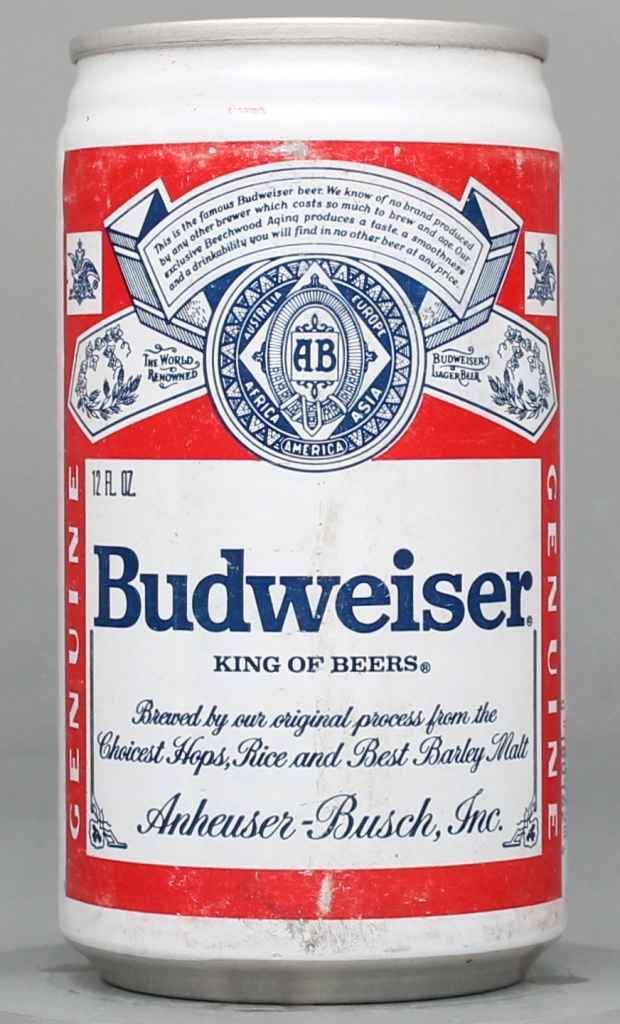
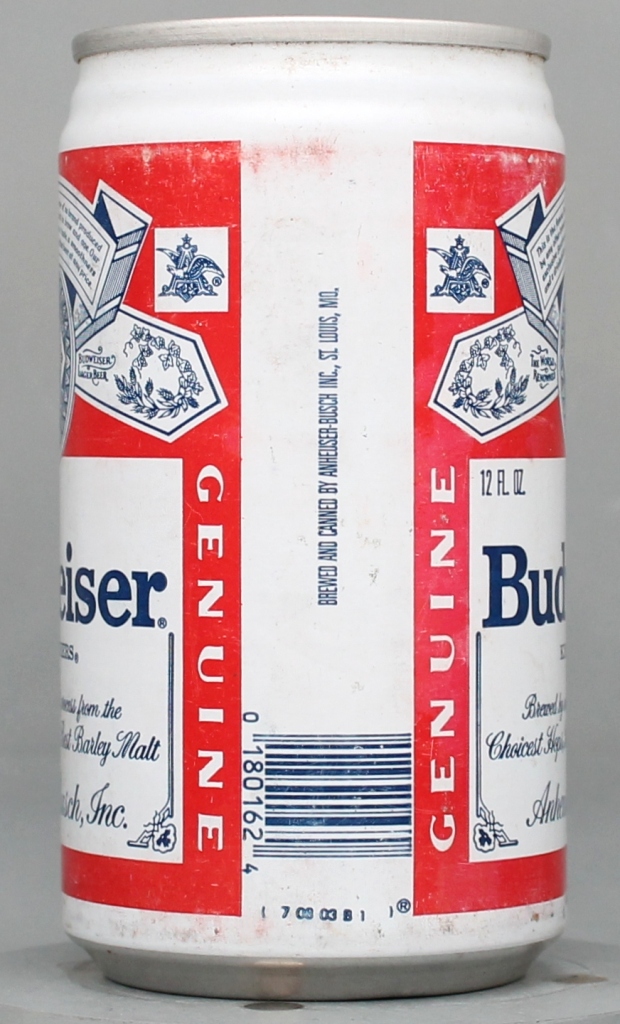
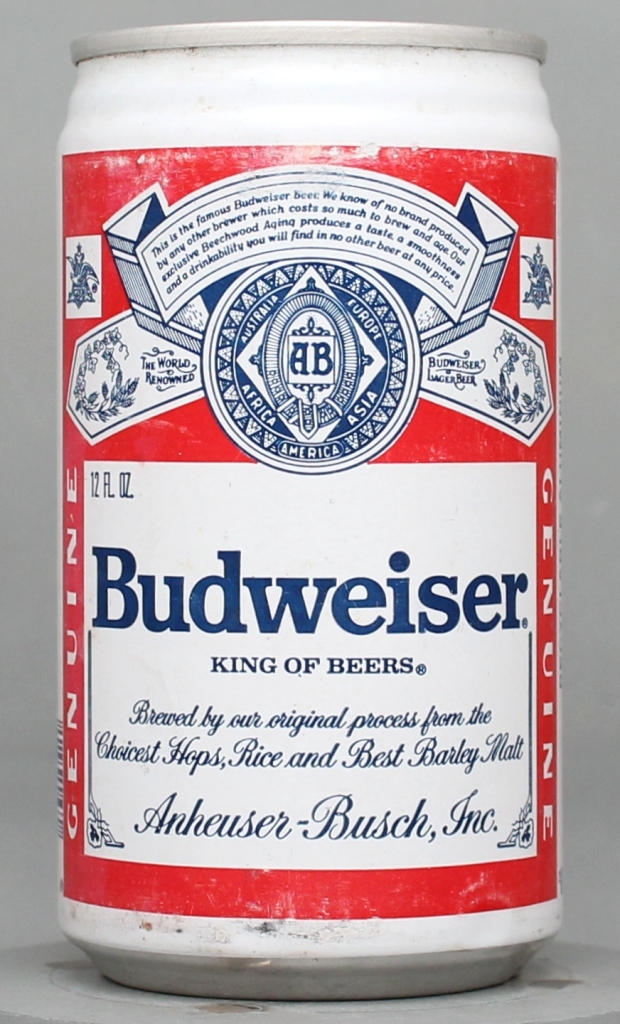
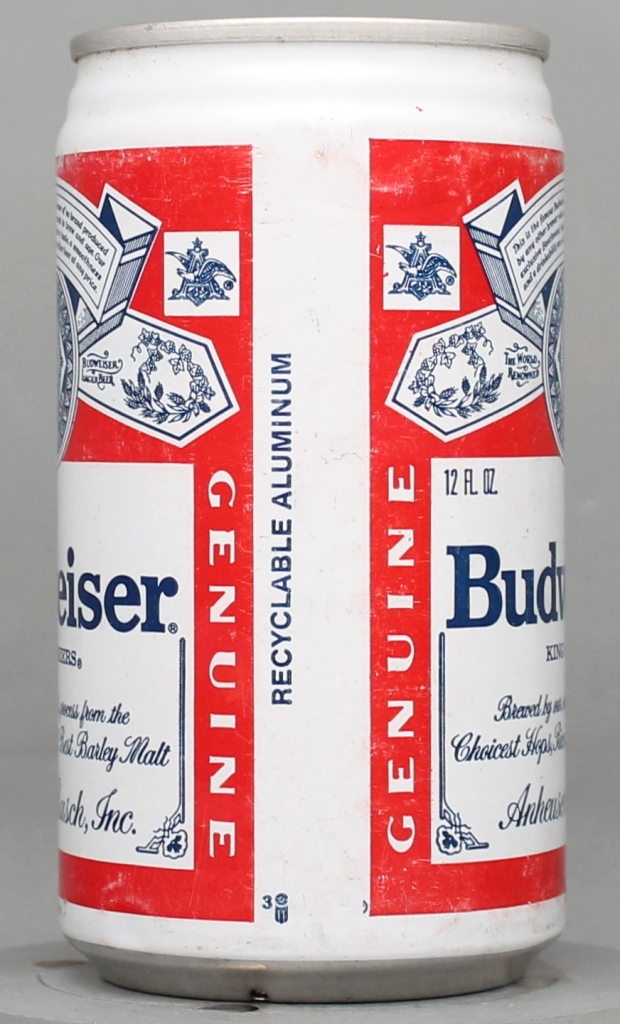
This all-aluminum 12-ounce Budweiser can represents a notable period in modern beverage packaging, featuring the addition of a Universal Product Code (UPC) alongside mandatory brewery statements positioned directly on the side panel. The classic red, white, and blue label prominently showcases the traditional Anheuser-Busch trademark crest, the famous "King of Beers" slogan, and the traditional beechwood aging narrative scroll across the upper tier. While illustrated in records with a pull tab closure, examples are also documented with stay top ends as packaging standards evolved toward non-detachable openers.
Budweiser was introduced in 1876 by Adolphus Busch and St. Louis wine merchant Carl Conrad. Busch set out to create a pale, crisp Bohemian-style lager that offered a lighter, more refreshing alternative to the heavy ales commonly brewed in the United States at the time. Formulated with barley malt, rice, and select hops, Budweiser expanded nationwide through the early adoption of pasteurization and refrigerated rail cars. Supported by major advertising initiatives, famous Clydesdale horse hitches, and enduring promotional slogans, Budweiser grew into one of the most widely recognized commercial beers in the world.
The brewing company traces its origins to 1852 with the founding of the Bavarian Brewery in St. Louis, Missouri. Soap manufacturer Eberhard Anheuser acquired the struggling facility in 1860, soon joined by his son-in-law Adolphus Busch. Under Busch's guidance, Anheuser-Busch pioneered national beer distribution. The brewery survived the dry years of Prohibition by diversifying into near beer, baker's yeast, truck bodies, and refrigeration equipment. Following repeal in 1933, the company embarked on aggressive nationwide plant expansion, eventually establishing itself as the world's largest brewing corporation before joining InBev in 2008.
For breweriana collectors, twentieth-century Budweiser issues provide an engaging look into the evolution of industrial canning. Enthusiasts value these issues for documenting the transition to barcode inventory tracking and modern opening tabs, serving as key reference pieces for mid-to-late century American brewing history.
* Descriptions are AI-assisted and may include edits from our team. Verify key details.

Can Details
Similar Cans
Price History
Not enough sales data to display a chart.
Sold Listings
No recent sales data available for this can.