Budweiser Lager Beer 12 Oz Tab Top Can
Anheuser-Busch • Newark, NJ
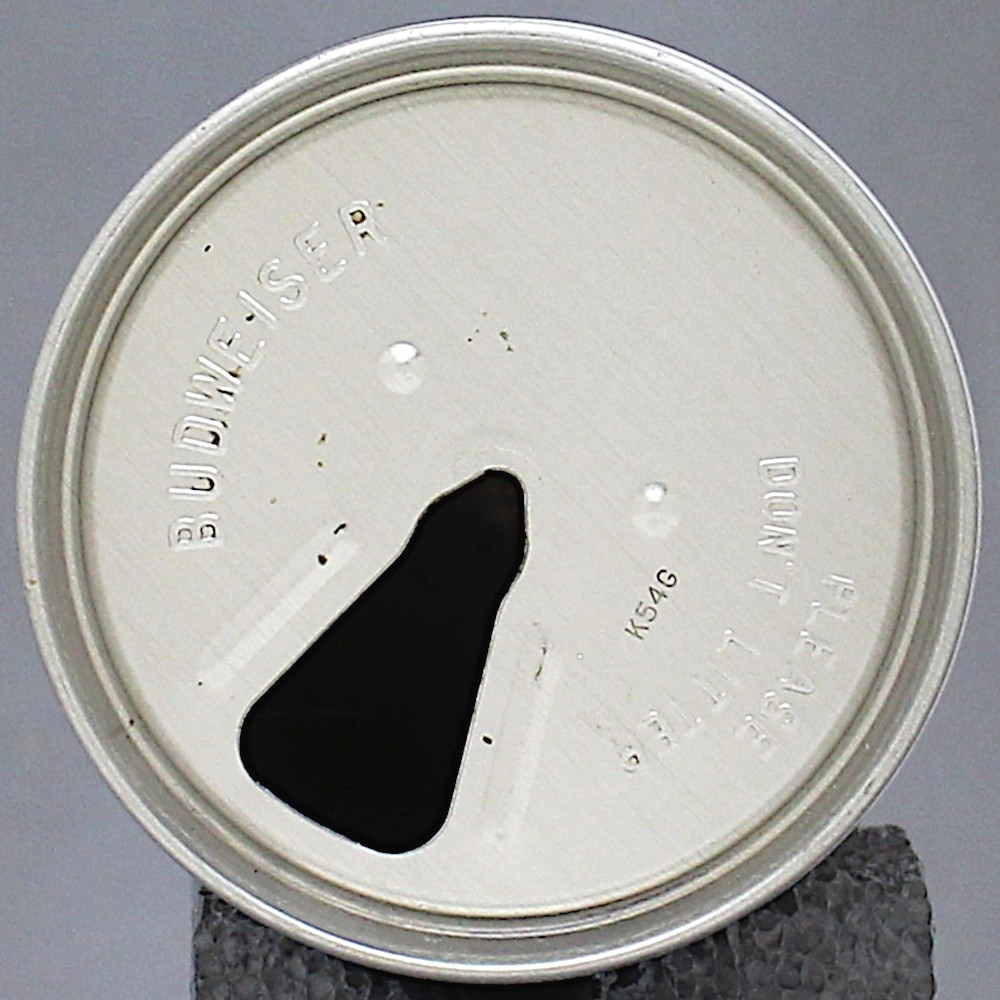
Budweiser Nine-City Aluminum Tab Top
The Can
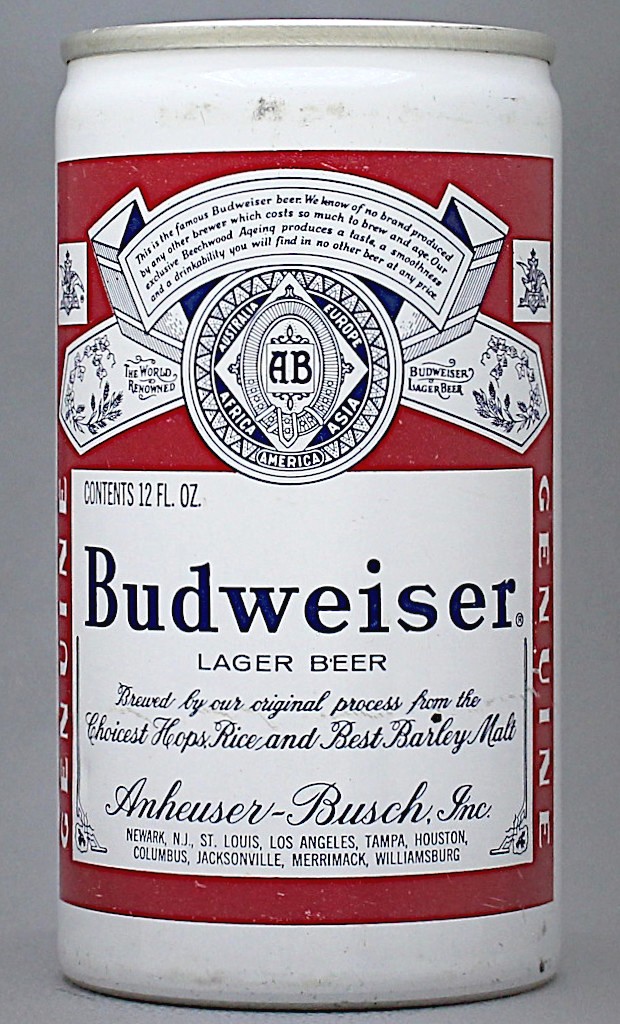
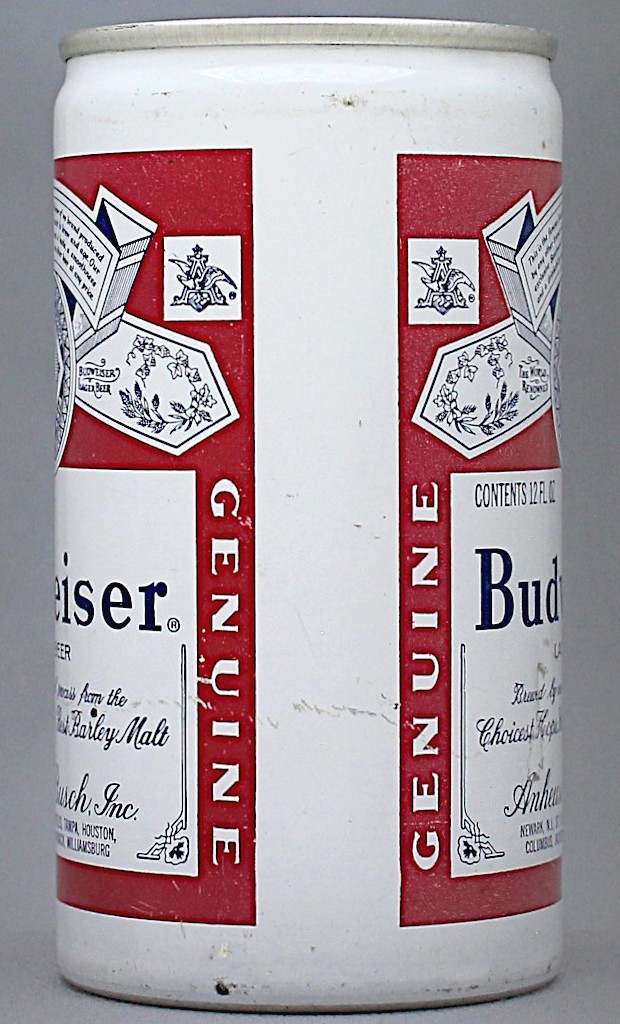
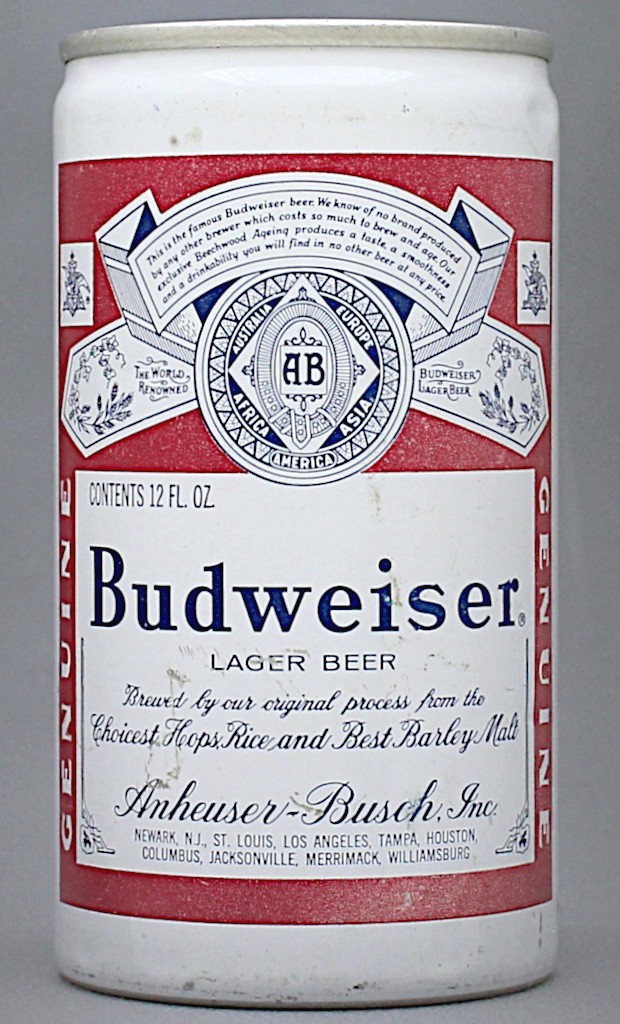
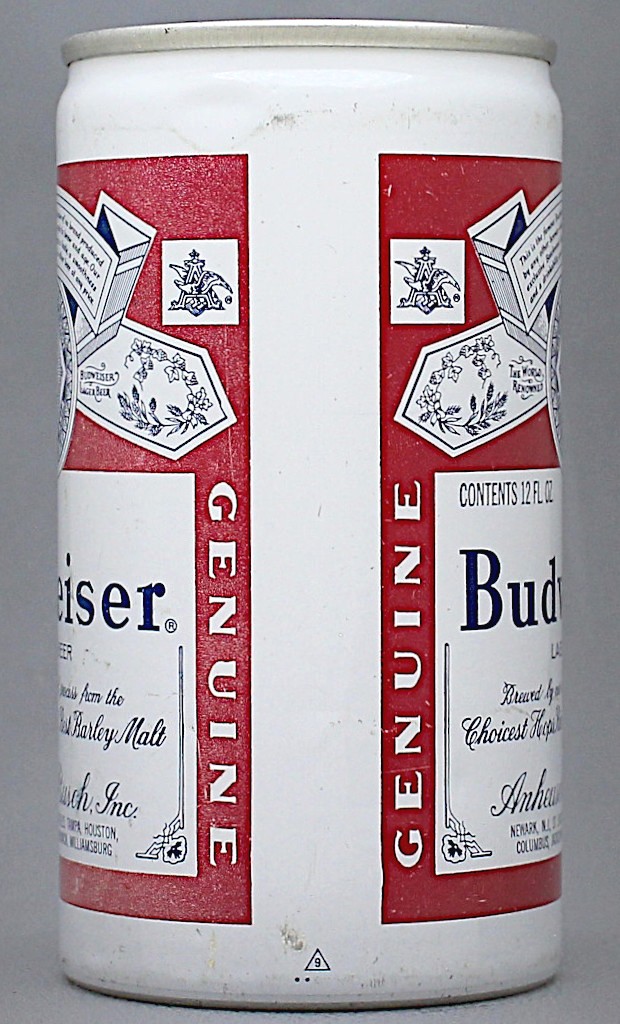
This 12-ounce Budweiser Lager Beer aluminum tab top can dates from the 1970s and is distinguished by its mandatory brewery text listing nine production locations. Leading with Newark, New Jersey, the list reflects the operational footprint of Anheuser-Busch during this period, naming Newark alongside St. Louis, Los Angeles, Tampa, Houston, Columbus, Jacksonville, Merrimack, and Williamsburg. The label features the brand's traditional heraldic crest, trademark scrollwork, and the classic beechwood aging statement flanked by vertical "GENUINE" side banners.
The Brand
Introduced in 1876 by Adolphus Busch and his associate Carl Conrad, Budweiser was conceived as an American interpretation of a Bohemian-style pale lager. Crafted using a blend of barley malt, hops, and rice to produce a clean, crisp character, the brand was marketed under the enduring slogan "The King of Beers." Promoted through nationwide distribution, high-profile sports marketing, and the famous Budweiser Clydesdales, the brand became the dominant flagship label of the American brewing industry throughout the twentieth century.
The Brewery
Anheuser-Busch originated in St. Louis, Missouri, evolving from the Bavarian Brewery acquired by Eberhard Anheuser in 1860. Partnering with his son-in-law Adolphus Busch, the company pioneered technological innovations such as refrigerated railcars and pasteurization to build one of the first truly national beer brands. The enterprise successfully weathered Prohibition by diversifying into corn products, baker's yeast, and near-beer. Following repeal, the brewer expanded aggressively, opening its major Newark, New Jersey, facility in 1951 to serve the northeastern market. Continued construction of regional facilities across the country through the 1960s and 1970s solidified Anheuser-Busch's position as the largest brewing company in the world.
Collecting Context
Budweiser packaging from the pull tab era is widely sought by breweriana collectors who track the historical growth of macro-brewing in the United States. Variations in mandatory brewery lines—such as city ordering that places branch plants like Newark at the start, or changes reflecting newly opened facilities—provide a tangible timeline of the brewer's mid-century modernization and geographic expansion during the shift to all-aluminum can construction.
* Descriptions are AI-assisted and may include edits from our team. Verify key details.
Can Details
Similar Cans
Price History
Not enough sales data to display a chart.
Sold Listings
No recent sales data available for this can.