Budweiser Lager Beer 12 Oz Tab Top Can
Anheuser-Busch • Columbus, OH
Budweiser 12 Oz Columbus Tab Top Can
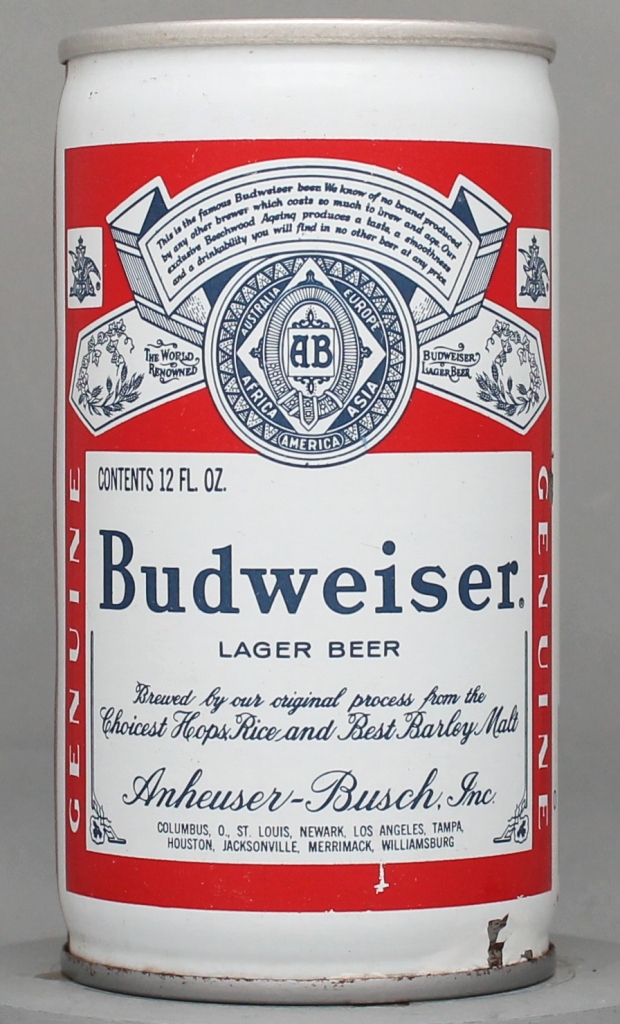
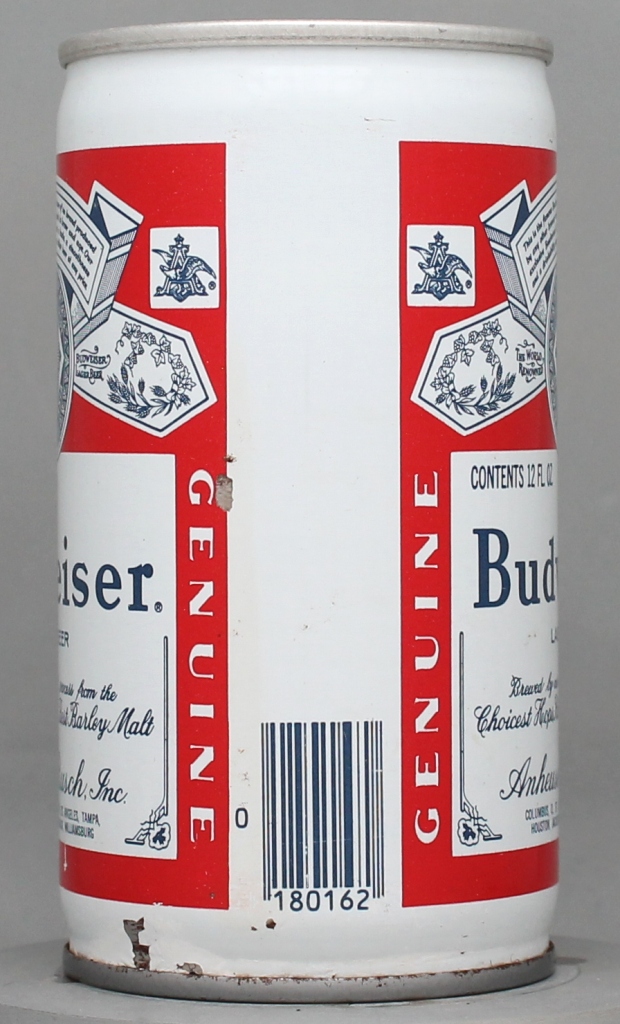
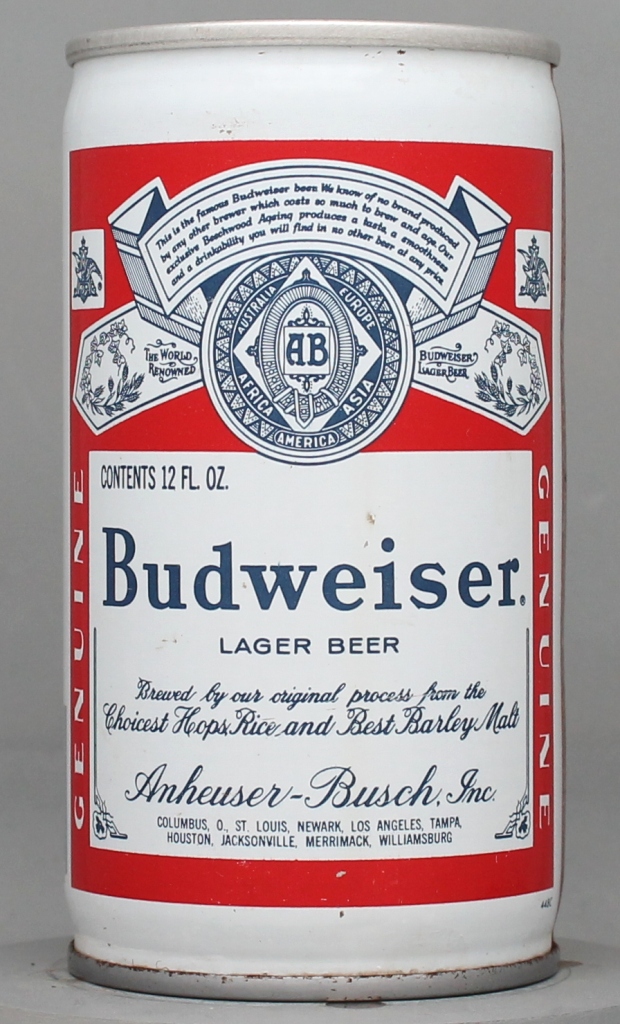
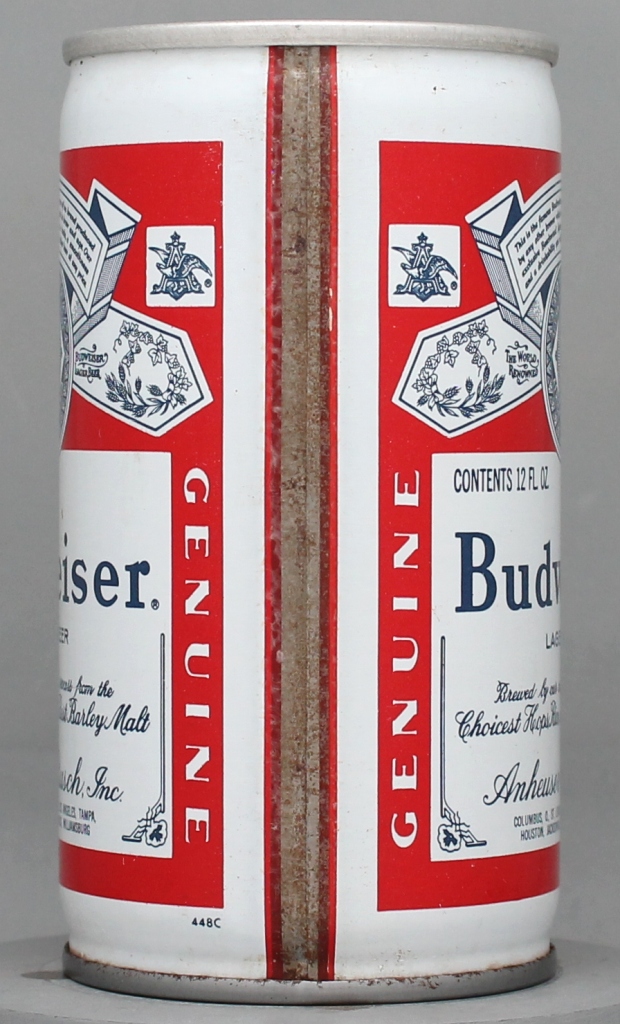
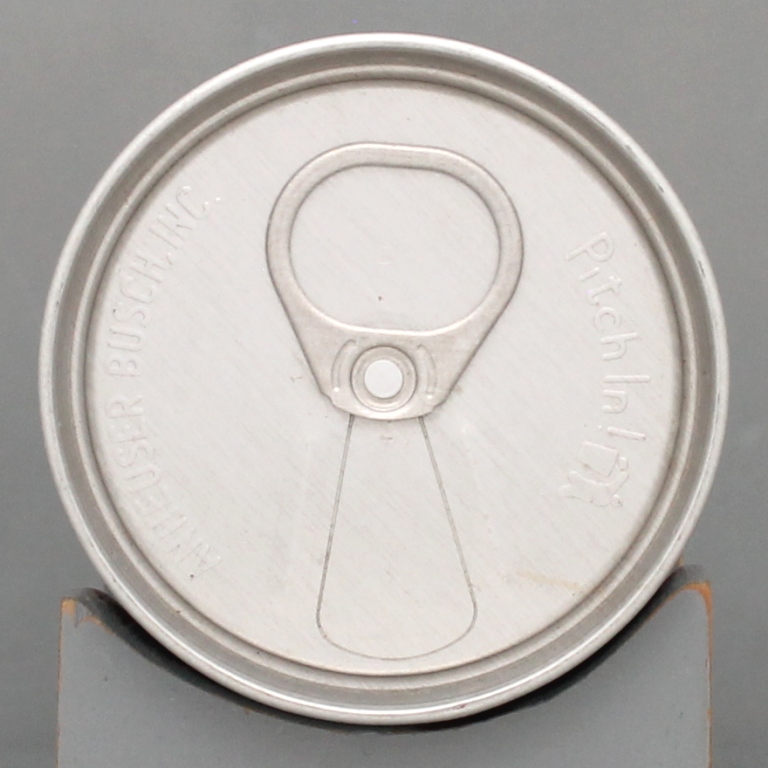
This 12-ounce crimped steel tab top can represents a classic mid-1970s packaging run for Budweiser Lager Beer. Featuring the brand's iconic red, white, and blue label design, the front panel showcases the traditional Anheuser-Busch crest, the creed scroll, and the signature "Genuine" side ribbons. Along the lower margin, the mandatory text lists nine brewing hubs with Columbus, Ohio, positioned first, followed by St. Louis, Newark, Los Angeles, Tampa, Houston, Jacksonville, Merrimack, and Williamsburg. The production run includes narrow red seam alignment lines along the can's seam and incorporates a printed Universal Product Code (UPC) barcode on the side panel.
The Brand
Introduced in 1876 by Adolphus Busch and Carl Conrad, Budweiser was developed as a crisp, Bohemian-style lager engineered for broad appeal across the United States. Branded as the "King of Beers," it became the nation's premier flagship beer through innovative marketing, widespread distribution, and trademark claims such as its proprietary beechwood aging process. Over subsequent decades, extensive national advertising campaigns cemented the label as one of the most recognizable consumer brands in American history.
The Brewery
Anheuser-Busch traces its origins to the mid-19th century in St. Louis, Missouri, when Eberhard Anheuser partnered with his son-in-law Adolphus Busch. The company pioneered the use of refrigerated railcars and pasteurization to distribute beer nationwide, rapidly growing into an industrial powerhouse. During Prohibition, the brewery survived by producing non-alcoholic beverages, malt syrup, and yeast. Post-repeal expansion saw the company construct modern regional facilities across the country, including opening the high-capacity Columbus, Ohio, brewery in 1968 to serve Midwestern and Mid-Atlantic markets.
Collecting Context
For breweriana enthusiasts, mid-century and 1970s Budweiser cans present an engaging field of study due to Anheuser-Busch's evolving manufacturing footprint. As new breweries opened, mandatory brewery city lists expanded and changed order depending on the canning plant. Cans from this era with city variations, seam color markings, and early barcode transitions document an important period in industrial can manufacturing and packaging modernization.
* Descriptions are AI-assisted and may include edits from our team. Verify key details.
Can Details
Similar Cans
Price History
Not enough sales data to display a chart.
Sold Listings
No recent sales data available for this can.