Budweiser Lager Beer 8 Oz Tab Top Can
Anheuser-Busch • Columbus, OH
Columbus 8 Oz Budweiser Tab Top
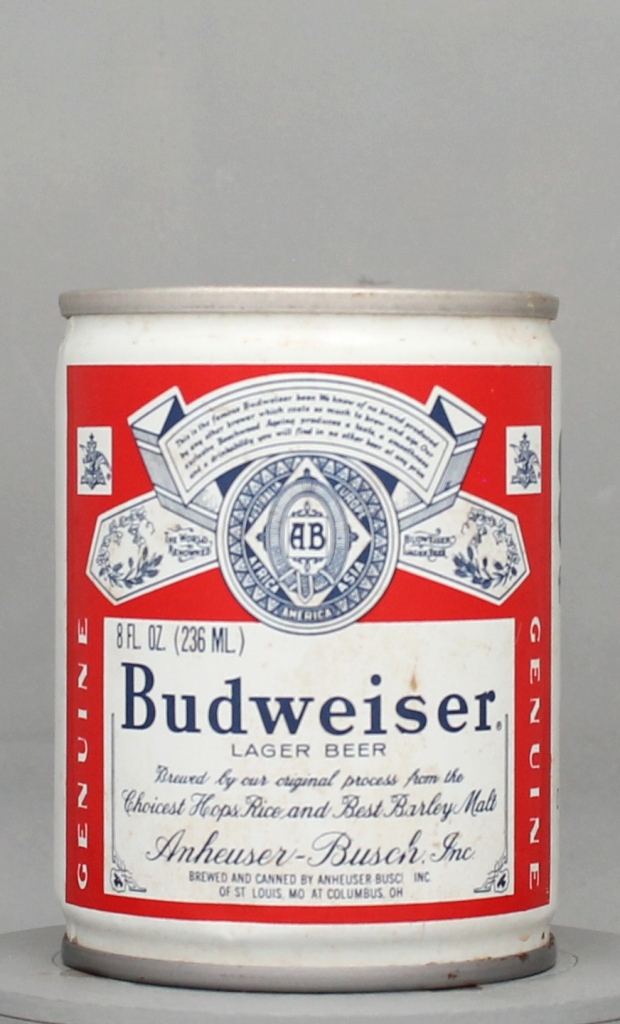
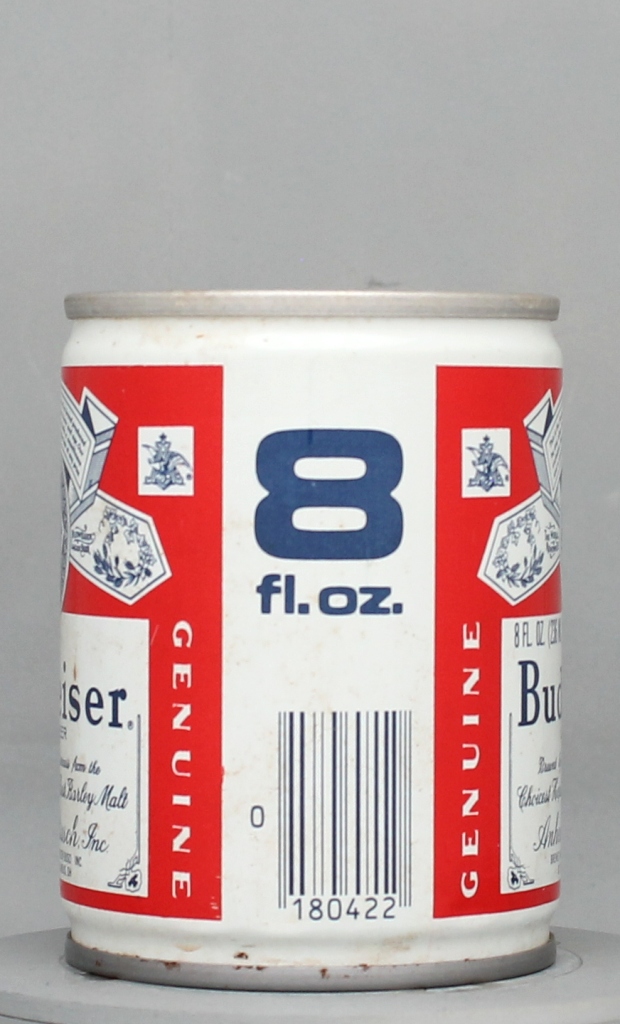
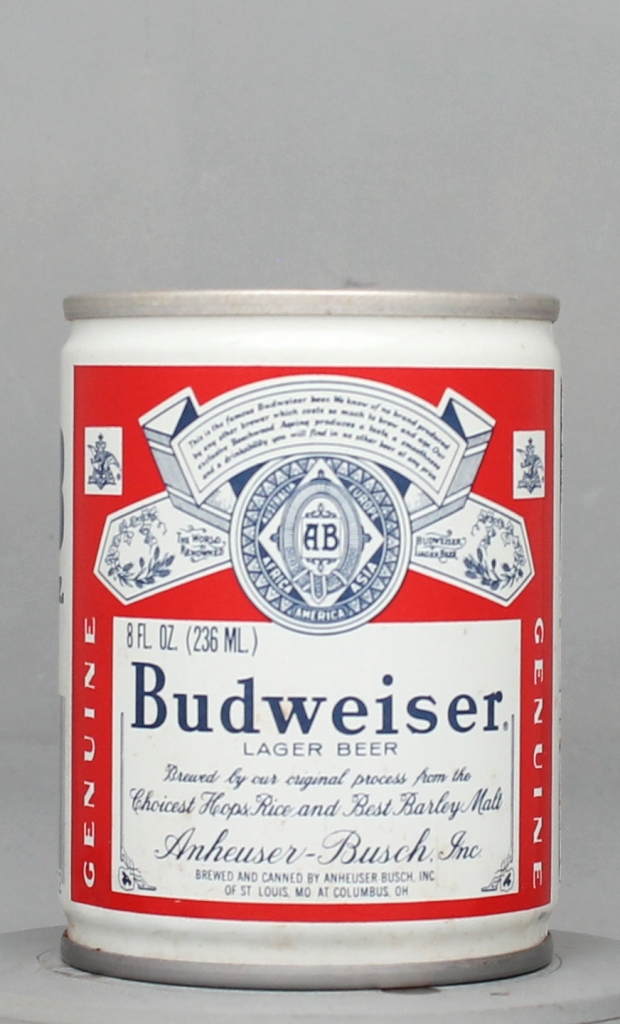
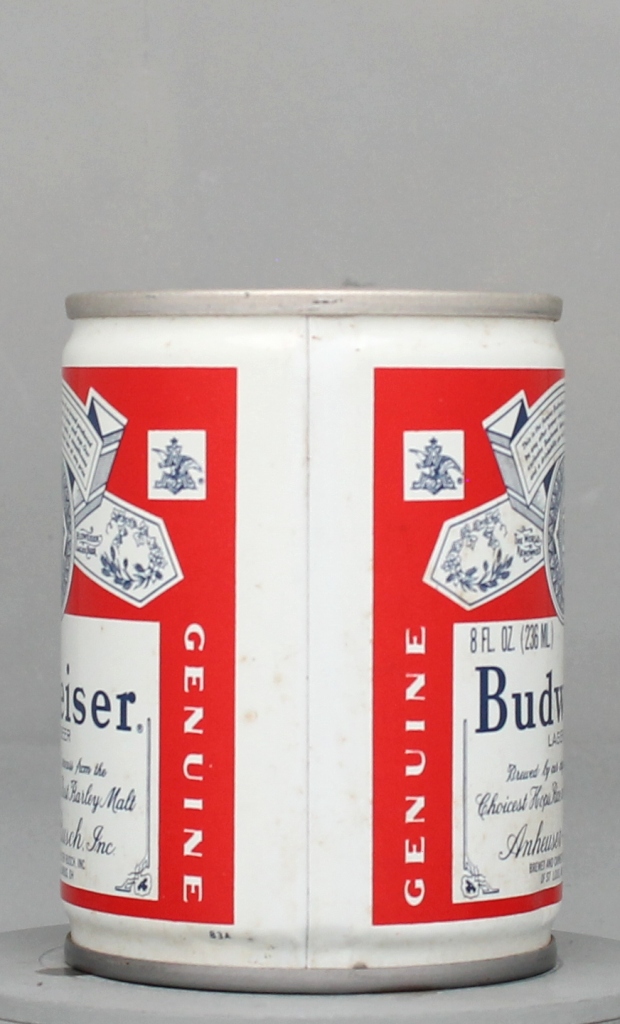
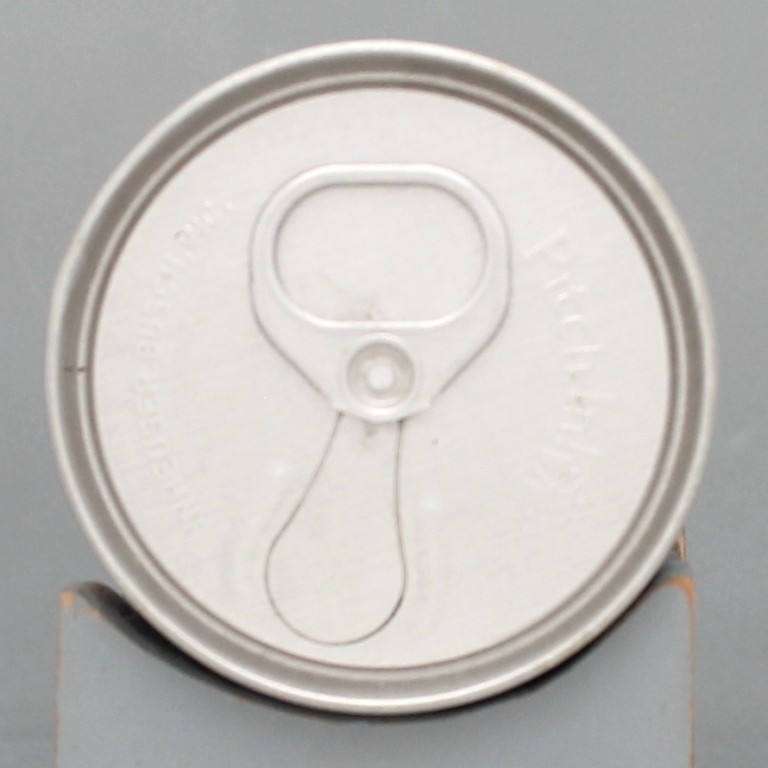
This eight-ounce crimped steel tab top can represents a compact packaging format produced during the late pull tab era. The label features the traditional Budweiser insignia, presenting both standard ounces and metric fluid volume. The lower mandatory text indicates that the beer was brewed and canned by Anheuser-Busch, Inc. of St. Louis, Missouri, at its facility in Columbus, Ohio. This particular production run is defined by its two-city brewery designation, the incorporation of a UPC barcode, and a glued seam that features no colored border lines.
Introduced in 1876 by Adolphus Busch and his associate Carl Conrad, Budweiser was developed as a clean, Bohemian-style lager crafted with barley malt and rice. Busch embraced groundbreaking innovations such as artificial refrigeration and refrigerated rail cars, enabling Budweiser to become America’s first widely distributed national beer brand. Billed under the long-standing slogan "The King of Beers" and heavily promoted for its beechwood aging process, the brand established itself as a cultural touchstone through prominent advertising, including its famous Clydesdale team. Budweiser remained the nation's premier flagship lager throughout the twentieth century.
The brewery traces its heritage to 1852 in St. Louis, Missouri, originally founded as the Bavarian Brewery before being acquired by Eberhard Anheuser in 1860. Partnering with son-in-law Adolphus Busch, the enterprise rapidly modernized and adopted the Anheuser-Busch name. The company navigated the challenges of Prohibition by producing near-beer, malt syrup, soft drinks, and commercial yeast. Following repeal, the brewer expanded aggressively, building large-scale regional manufacturing plants to meet national demand. The Columbus, Ohio brewery commenced operations in 1968, serving as a vital Midwestern production hub.
Small-format cans, often called "ponies," represent a popular niche within breweriana collecting. Because high-volume national beers were produced across numerous facilities using differing manufacturing specifications, collectors focus on subtle production variations such as city mandatory lines, seam styles, and the introduction of universal barcodes. This Columbus issue provides a tangible snapshot of industrial packaging changes and brewery decentralization in the late twentieth century.
* Descriptions are AI-assisted and may include edits from our team. Verify key details.
Can Details
Similar Cans
Price History
Not enough sales data to display a chart.
Sold Listings
No recent sales data available for this can.