Budweiser Lager Beer Test Can
Anheuser-Busch • Los Angeles, CA
Budweiser 9-City Test Can
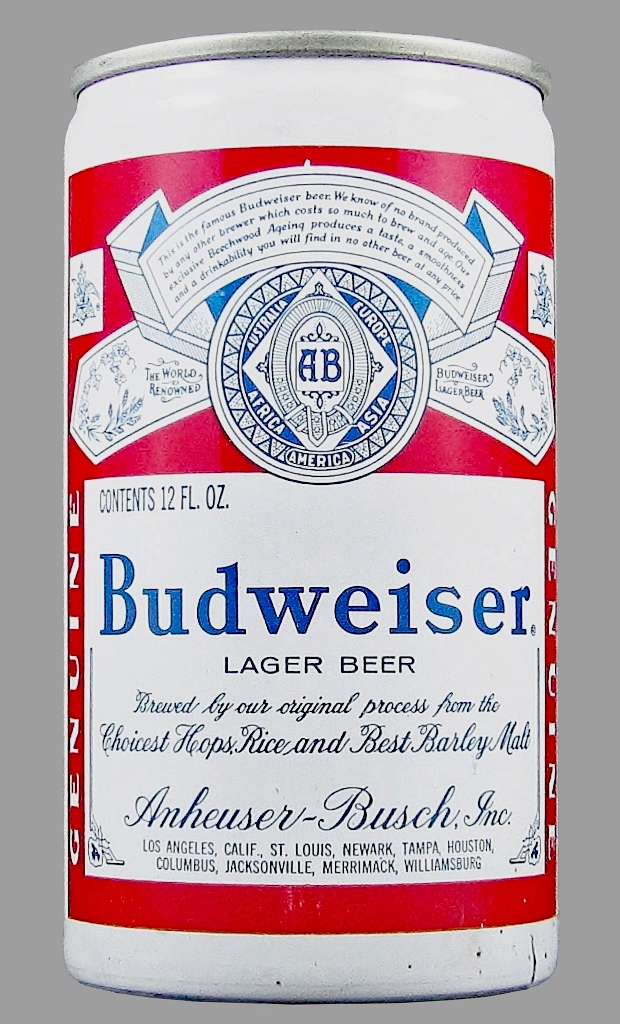
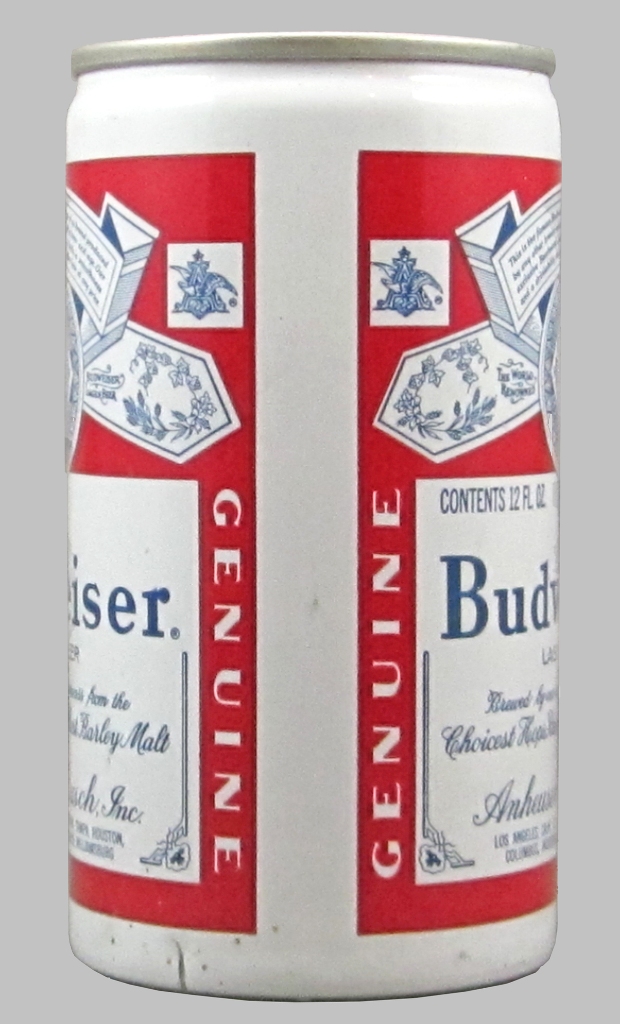
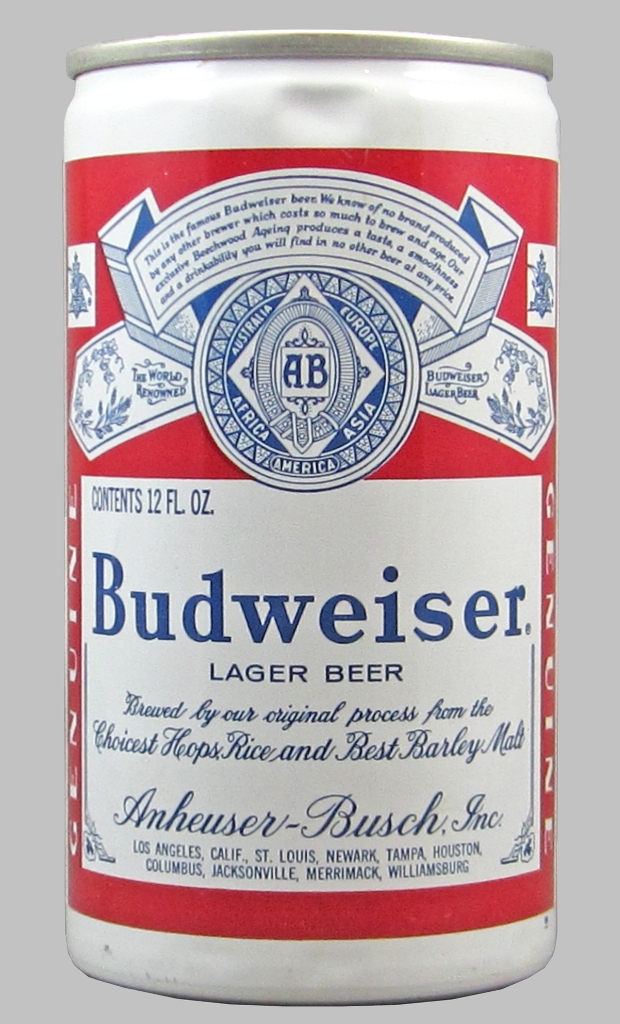
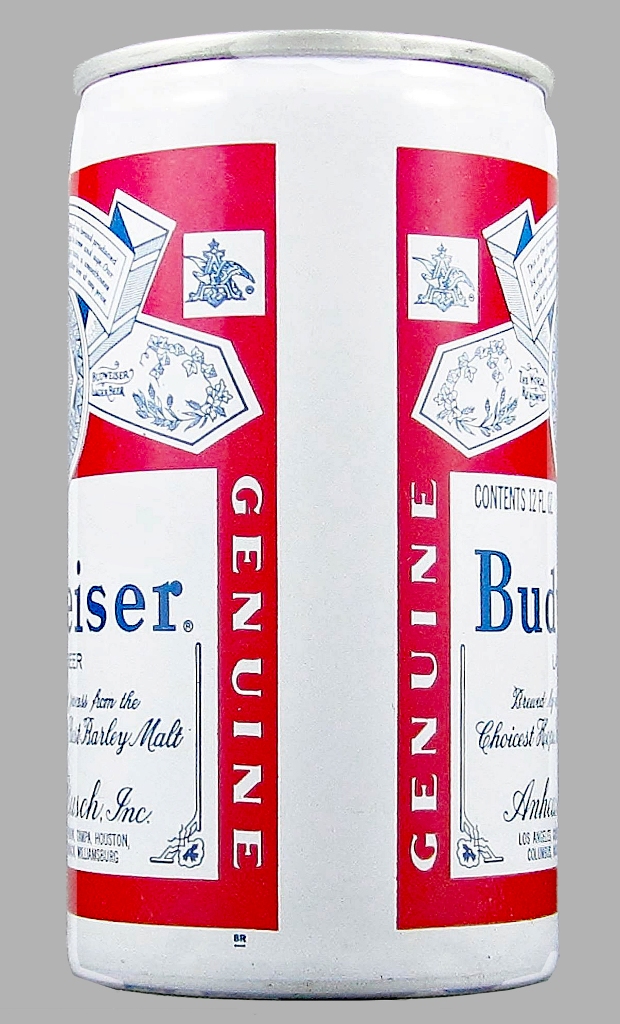
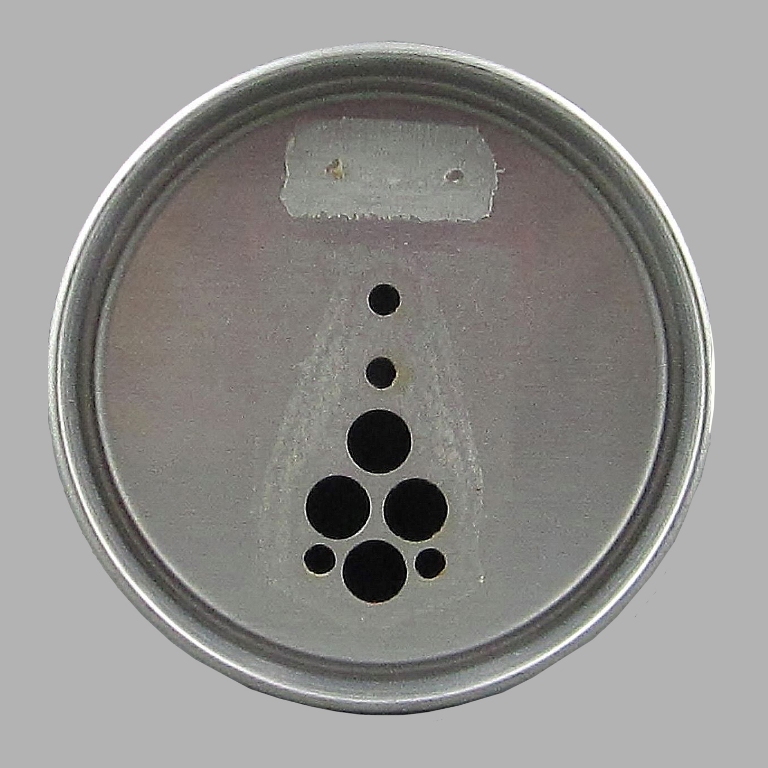
This twelve-ounce aluminum Budweiser Lager Beer can represents an experimental test issue fitted with a non-standard experimental lid. Produced during an era of active packaging innovation by Anheuser-Busch, the container features the company's traditional red, white, and blue label design alongside a nine-city mandatory brewery roster. The bottom text highlights Los Angeles, California as the leading facility, followed by St. Louis, Newark, Tampa, Houston, Columbus, Jacksonville, Merrimack, and Williamsburg. Test cans such as this were filled and sealed to evaluate alternative closure designs, lid seal integrity, and manufacturing performance before widespread commercial deployment.
Budweiser was introduced in 1876 by Adolphus Busch and his associate Carl Conrad as a clean, refreshing Bohemian-style lager engineered for broad national appeal. Distinctive for its blend of barley malt, rice, and proprietary beechwood aging, Budweiser was promoted as "The King of Beers." Through iconic promotional campaigns, distinctive typography, and pervasive national marketing, the label grew into one of the best-selling and most recognizable commercial lagers in global brewing history.
Anheuser-Busch originated in the 1850s in St. Louis, Missouri, beginning when Eberhard Anheuser acquired a struggling local brewery and subsequently partnered with his son-in-law, Adolphus Busch. The enterprise pioneered the use of pasteurization and refrigerated railcars to achieve nationwide distribution. During Prohibition, the company sustained operations by manufacturing non-alcoholic malt beverages, corn syrup, baker's yeast, and commercial refrigeration units. Following repeal in 1933, Anheuser-Busch modernized and built a network of massive regional brewing plants across the country to maintain supply for its expanding consumer base.
Test cans and prototype closures from major national breweries are an engaging focus area for breweriana collectors. Because experimental containers were produced in controlled quantities for factory trials and engineering assessments rather than standard retail distribution, they document the technical evolution of modern canning methods. The combination of experimental lid engineering and mid-century multi-plant city listings makes this piece a notable artifact of brewing history.
* Descriptions are AI-assisted and may include edits from our team. Verify key details.
Can Details
Similar Cans
Price History
Not enough sales data to display a chart.
Sold Listings
No recent sales data available for this can.