Busch Bavarian Beer 12 Oz Tab Top Can
Anheuser-Busch • St. Louis, MO
Busch Bavarian Tab Top Steel Can
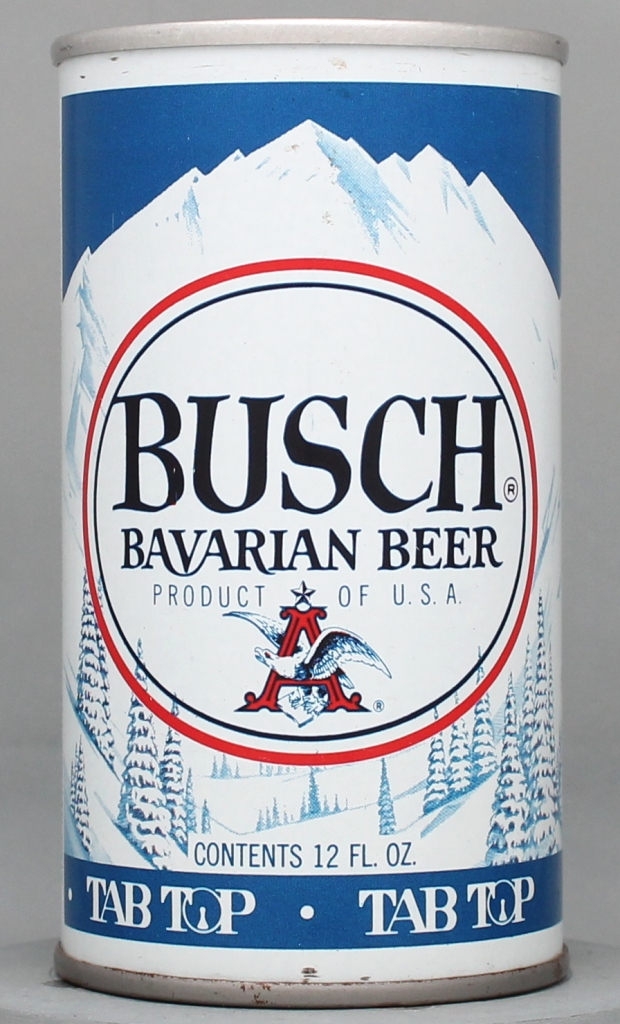
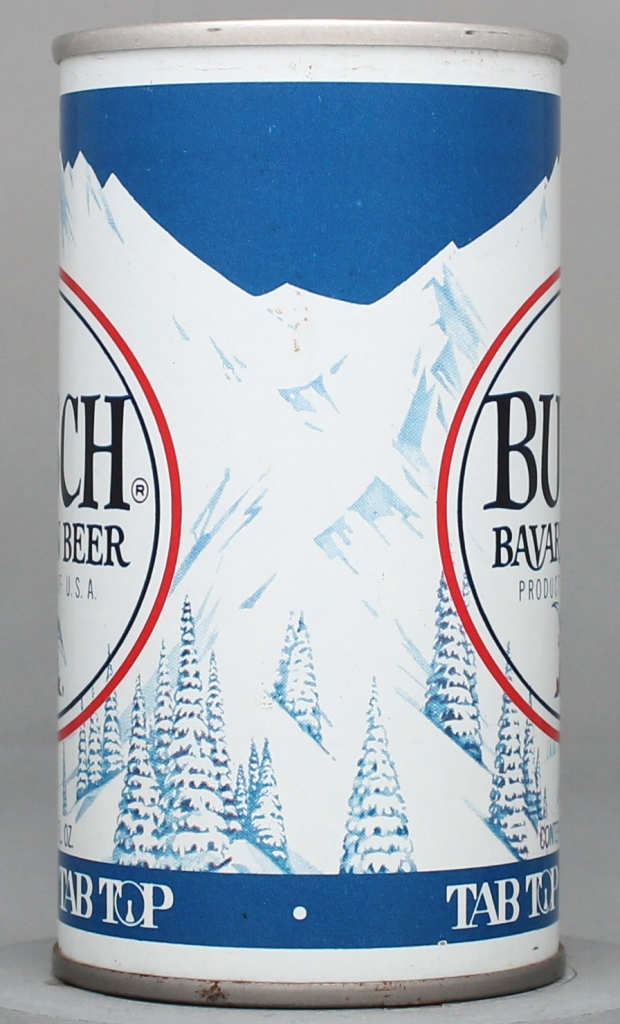
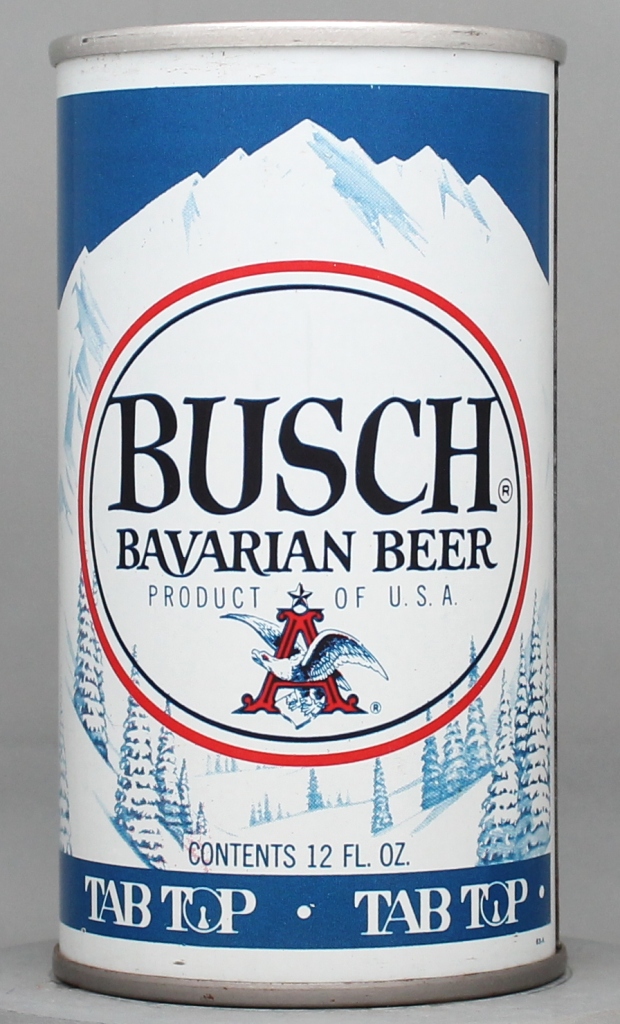
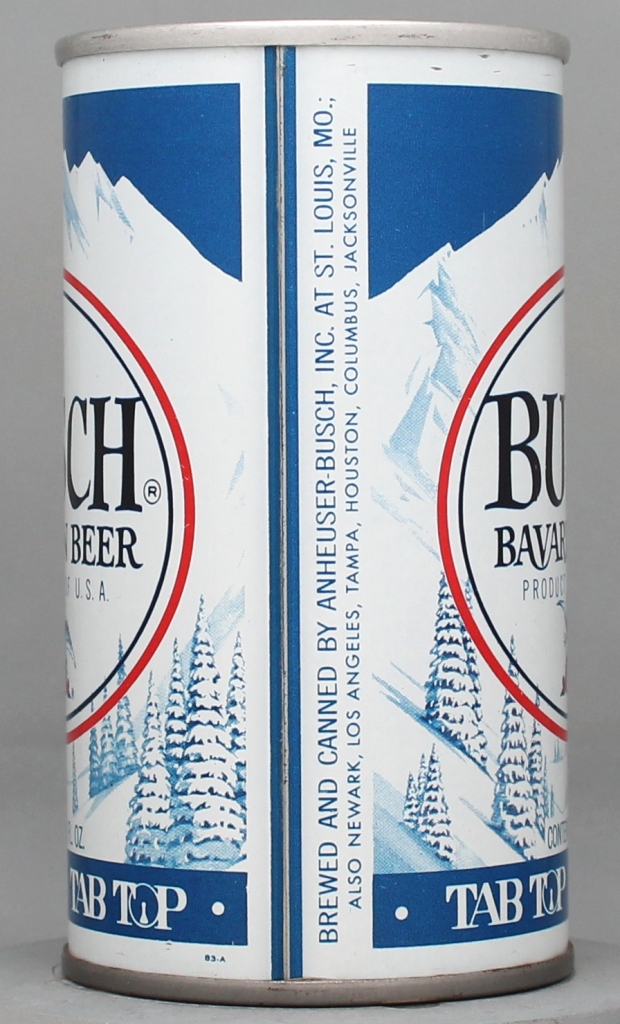
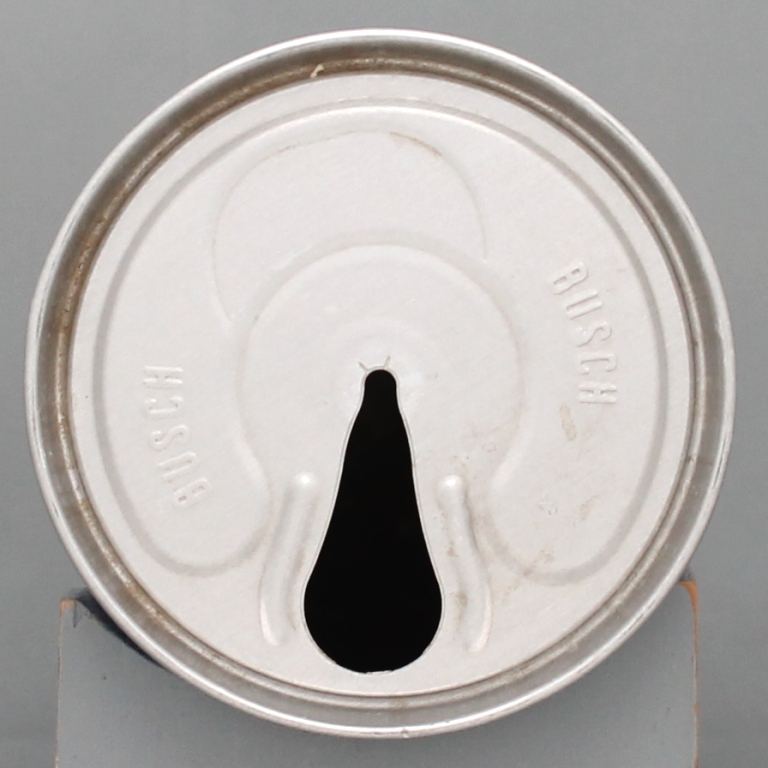
Produced during the mid-1960s packaging revolution, this twelve-ounce straight steel can exemplifies the transition to self-opening beverage containers. Engineered with a glued side seam—a manufacturing advancement that eliminated traditional soldered joints and enabled continuous wrap-around lithography—the can features a prominent blue bottom band advertising "TAB TOP" alongside printed dots. Notably, the letter "O" in each "TAB TOP" incorporates a clever silhouette graphic of the pull tab itself. The label showcases the brand's classic alpine scenery, depicting a snow-dusted mountain summit rising above a dense forest of evergreen trees, all centering around a circular medallion bearing the red Anheuser-Busch "A and Eagle" trademark. Mandatory text on this variation documents the company's expanding regional operations by listing seven production cities.
Anheuser-Busch introduced Busch Bavarian Beer in 1955 as its first major new product line launched following the repeal of Prohibition. Developed to compete against popular-priced regional brews, the brand drew its name both from the Busch family and from the company's nineteenth-century corporate predecessor, the Bavarian Brewery. Marketed with crisp alpine visuals and slogans such as "Clear and Bright as Mountain Air," the beer gave Anheuser-Busch a firm foothold in the economy segment. In 1979, the moniker was streamlined simply to Busch Beer, which later gave rise to Busch Light and established the label as an enduring American value-beer institution.
The brewery itself originated in St. Louis, Missouri, where soap manufacturer Eberhard Anheuser acquired the struggling Bavarian Brewery in 1860. Joined by his son-in-law Adolphus Busch, the company pioneered brewing innovations including pasteurization and a proprietary fleet of refrigerated railcars, transforming their flagship Budweiser into a nationwide phenomenon. The firm survived Prohibition through clever diversification into near-beer, corn products, and refrigerated cabinets. Following World War II, aggressive regional plant construction solidified Anheuser-Busch as the dominant brewing force in the United States before its 2008 combination into AB InBev.
For breweriana collectors, this can provides a vivid snapshot of early pull-tab marketing. During the initial rollout of tab tops, breweries routinely printed explanatory text directly on can bodies to educate consumers on the new convenience feature. The can remains a favorite among collectors who appreciate transitional can-making technology, mid-century graphic design, and the subtle variations in city listings and forestry artwork.
* Descriptions are AI-assisted and may include edits from our team. Verify key details.
Can Details
Similar Cans
Price History
Not enough sales data to display a chart.
Sold Listings
No recent sales data available for this can.