Cremo Beer Flat Top Can
Grace Bros. • Santa Rosa, CA IRTP era, 1935 to 1950
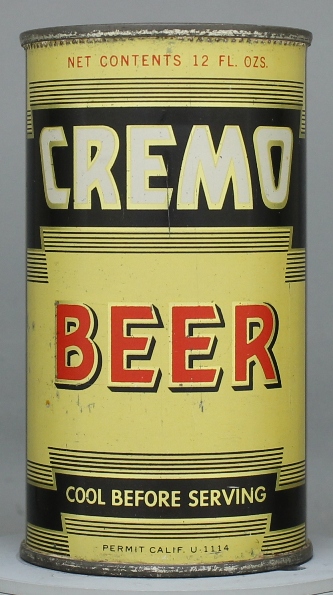
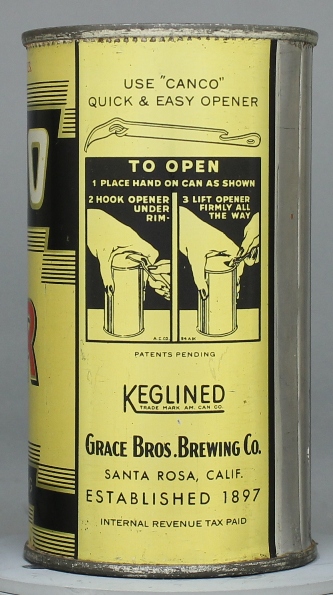
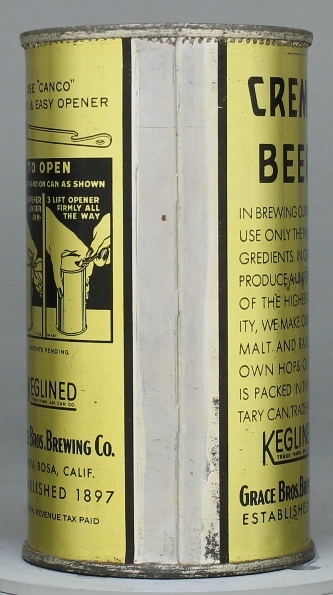
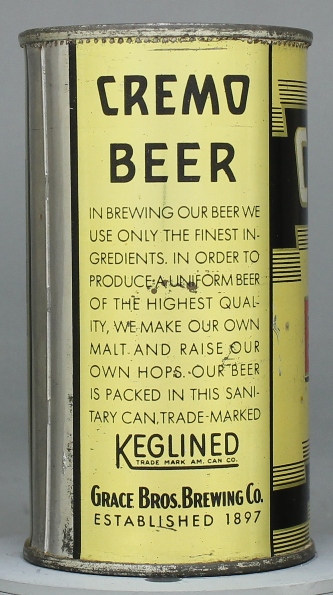
Grace Bros. Cremo Beer Flat Top Can
This 12-ounce flat top container represents an early chapter in American canned brewing history, documented under entry 189 in opening instruction reference literature. Carrying an Off-Tax designation, the can prominently displays its mandatory federal permit marking, "PERMIT CALIF. U-1114," printed along the lower rim. The front face incorporates bold Art Deco-inspired horizontal banding and highlights the instructional prompt "COOL BEFORE SERVING" directly beneath the centered red brand lettering.
Cremo was introduced by Grace Bros. in the post-Prohibition era as part of a diversified stable of value-driven brands tailored to West Coast consumers. Packaged alongside stablemates such as Excel, Nu-Deal, and Monogram, Cremo was marketed as an approachable, dependable everyday brew. It circulated through regional distributors and neighborhood liquor stores throughout California before the brewery gradually streamlined its portfolio around its flagship lines.
The origins of Grace Bros. Brewing Company date back to 1872 in Santa Rosa, California, originally founded as the Santa Rosa Steam Brewery. Brothers Joseph T. and Frank P. Grace took over operations in 1897, establishing a powerful regional brewing enterprise deeply tied to Sonoma County's agricultural community. The company weathered the dry years of Prohibition by pivoting into cold storage, ice manufacturing, and fruit packing, which allowed it to swiftly re-enter commercial brewing upon Repeal in 1933. Grace Bros. was among the first breweries in the region to adopt canning lines, securing a strong foothold in the pre-war canned beer market. However, postwar consolidation and pressure from large national shipping breweries ultimately forced the original Santa Rosa plant to close in the late 1950s.
Among breweriana collectors, early West Coast instructional flat tops occupy a revered place. The bold red typography distinguishes this particular variation from dark-lettered printings, making it an essential and celebrated artifact of early California canning history.
* Descriptions are AI-assisted and may include edits from our team. Verify key details.
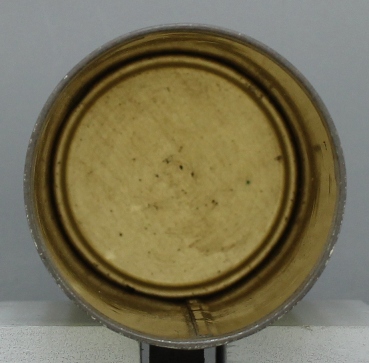
Can Details
Similar Cans
Price History
Not enough sales data to display a chart.
Sold Listings
No recent sales data available for this can.