Duke Beer 12 Oz Tab Top Can
C. Schmidt & Sons • Philadelphia, PA
Duke Beer: The Prince of Pilseners
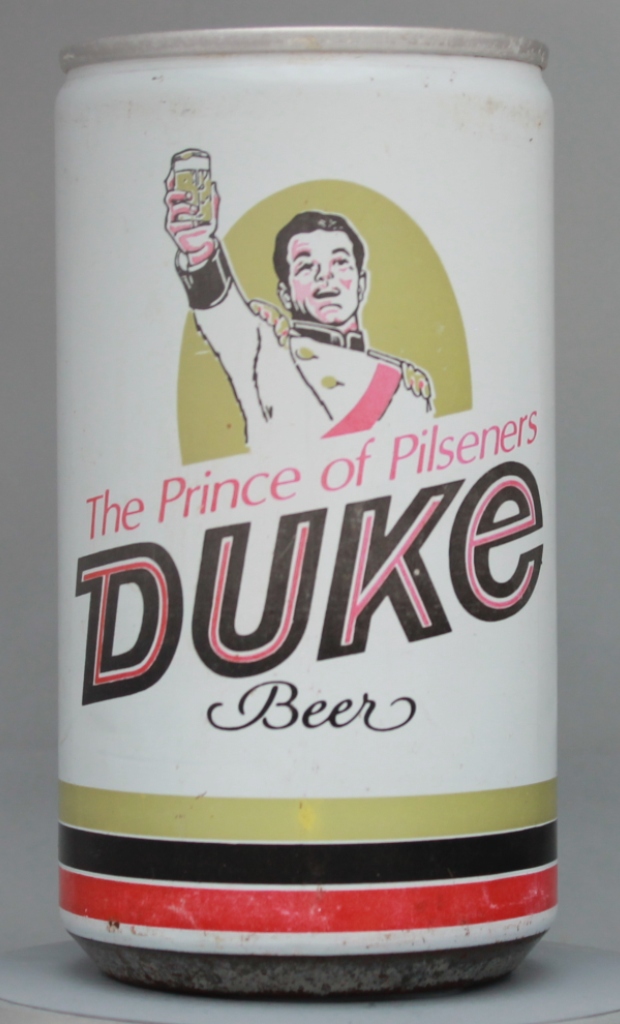
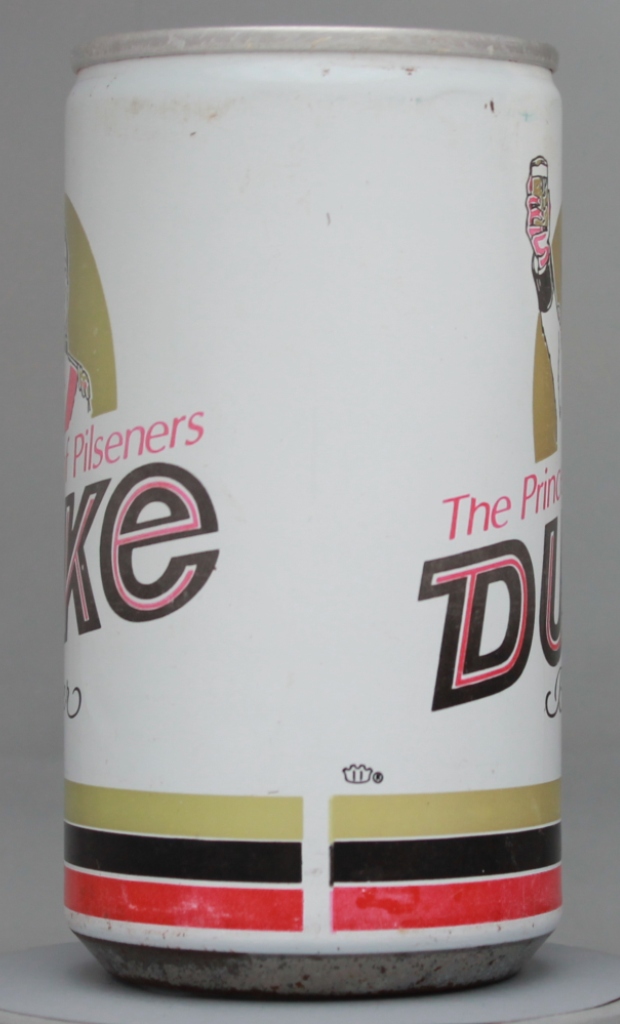
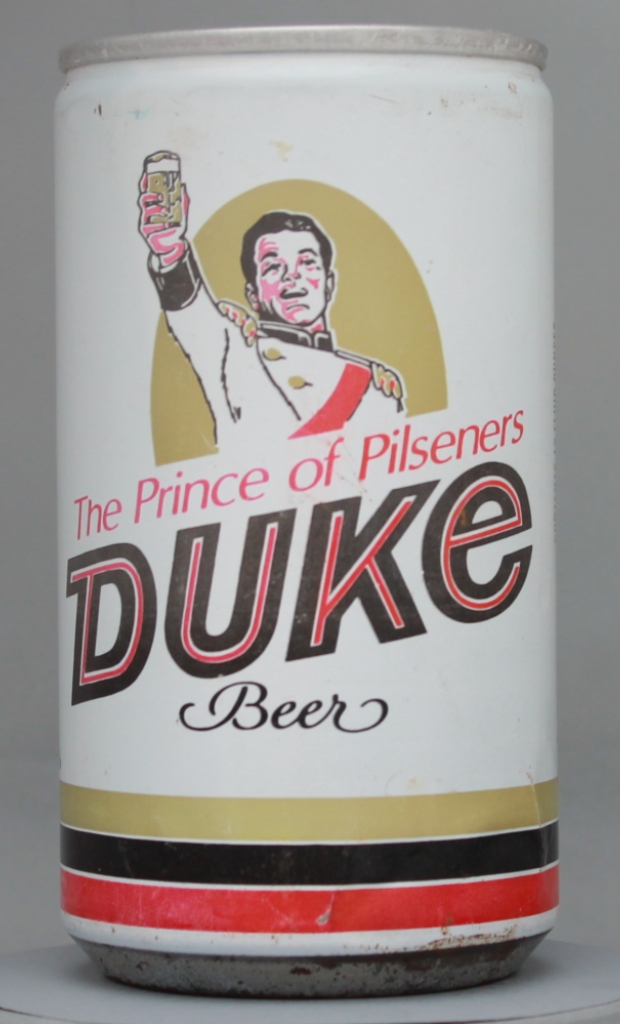
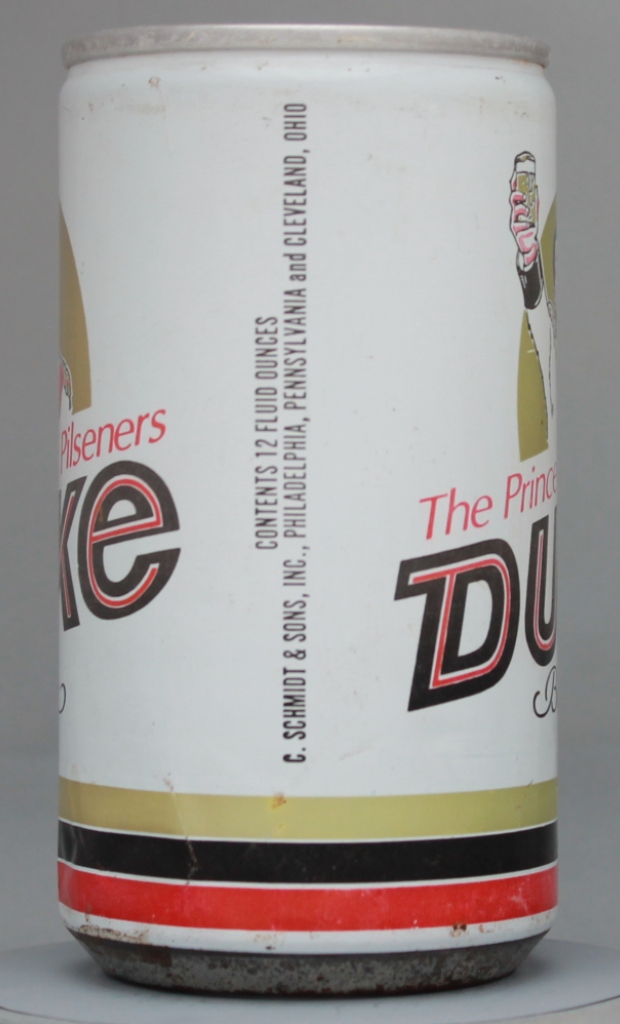
This 12-ounce drawn-and-ironed tab top container represents the post-acquisition era of Duke Beer under Philadelphia's C. Schmidt & Sons. Featuring a two-city mandatory statement, this particular issue predates the adoption of the Universal Product Code, distinguishing it from later print runs that incorporated a UPC barcode. The graphic design showcases the brand's iconic mascot—a uniformed duke raising a foaming glass in salute against an arched backdrop—paired with the classic slogan "The Prince of Pilseners" above bold, horizontal lower striping.
Duke Beer originated as the flagship pilsner of Pittsburgh’s Duquesne Brewing Company. First introduced during the post-Prohibition era with the "Prince of Pilseners" moniker and the memorable "Have a Duke!" marketing campaign, the brew grew into a beloved working-class staple throughout western Pennsylvania and beyond. Duquesne expanded rapidly to become one of the region's largest brewers, but severe competition from national brands and labor disputes forced the company to cease South Side Pittsburgh brewing operations in late 1972. The Duke brand and formulas were subsequently sold to C. Schmidt & Sons, which kept the recognizable label in production.
Founded in Philadelphia in 1860 by German immigrant Christian Schmidt, C. Schmidt & Sons developed into one of Pennsylvania's most prolific brewing establishments. The company successfully weathered Prohibition by producing soft drinks and near beer, later expanding significantly during the mid-twentieth century. As industry consolidation intensified in the 1970s, Schmidt survived by purchasing a portfolio of legacy regional brands—including Duquesne, Reading, and Rheingold—and producing them across multiple facilities. Despite aggressive efforts to compete against national giants, Schmidt ultimately ceased all brewing operations in 1987.
For breweriana collectors, this can serves as an important artifact of late-twentieth-century regional consolidation. Packaging from this era documents how enduring regional brand identities were preserved and adapted across modern manufacturing lines during a transformative period in American brewing history.
* Descriptions are AI-assisted and may include edits from our team. Verify key details.

Can Details
Similar Cans
Price History
Not enough sales data to display a chart.
Sold Listings
No recent sales data available for this can.