Falstaff 96 Beer 12 Oz Other Can
Pearl • San Antonio, TX
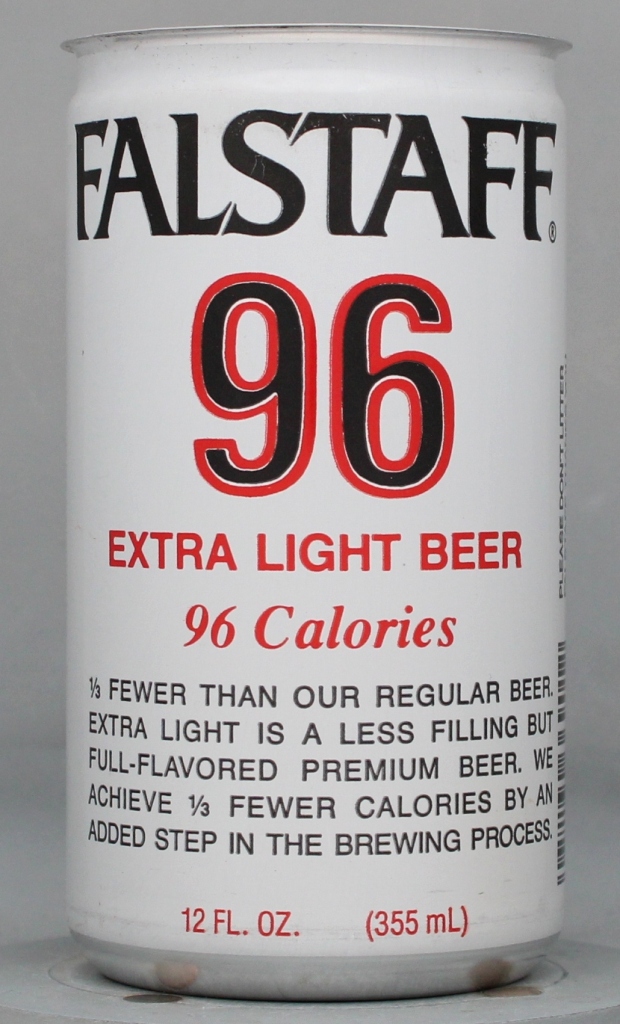
Falstaff 96 Extra Light Beer Can
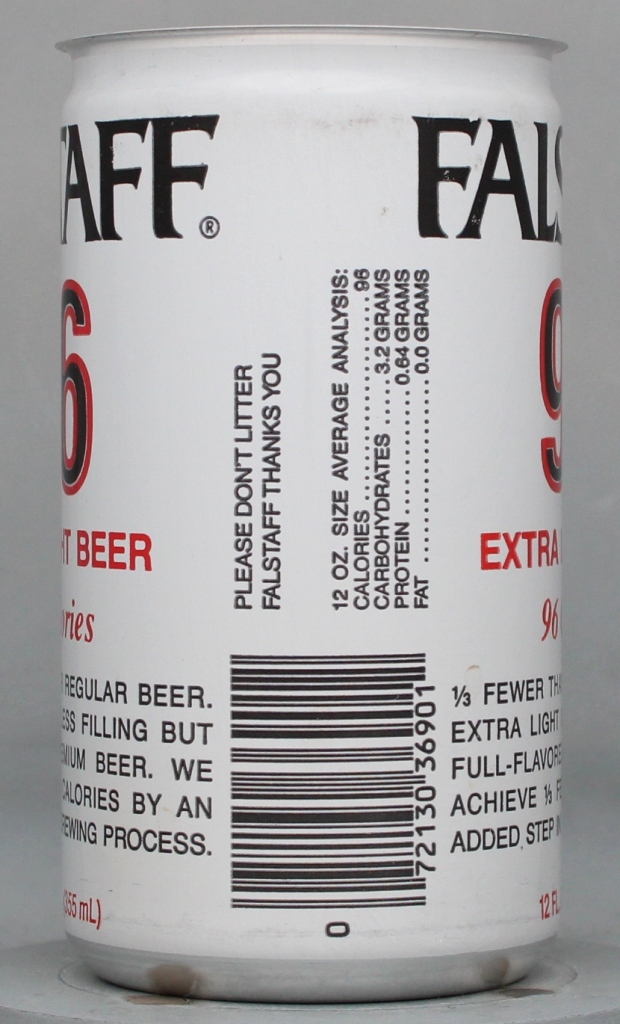
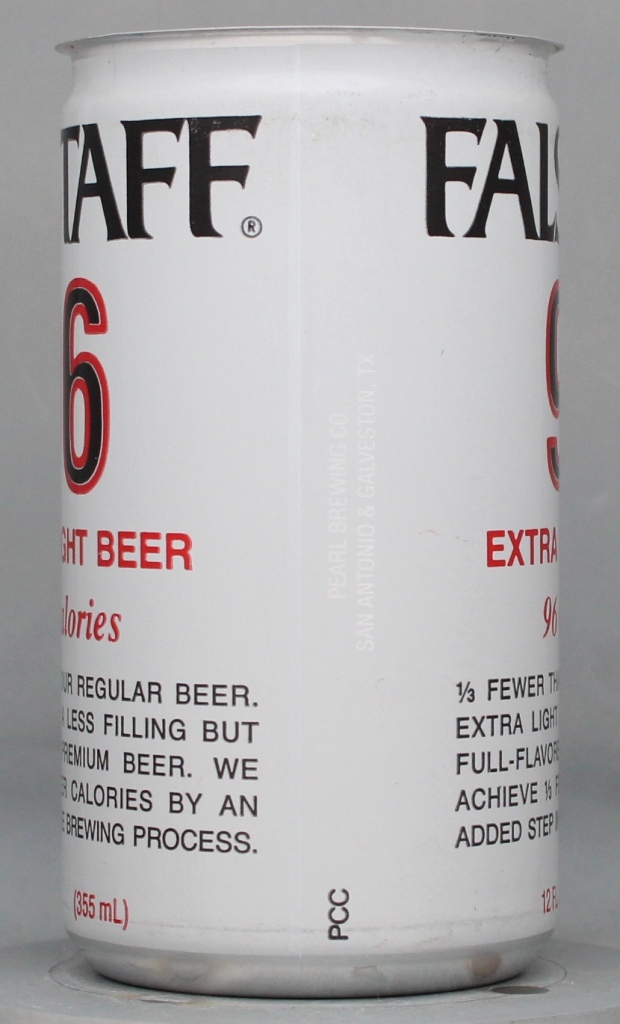
This 12-ounce aluminum can represents the era when calorie-conscious marketing reshaped the American brewing landscape during the late 1970s and early 1980s. Produced with a two-city brewery mandatory statement, the container features key packaging developments of the period, including a vertical Universal Product Code (UPC) barcode and dual English and metric volume indicators. Preserved without an attached lid, the container survives as an unlidded can body from the manufacturing and canning supply stream.
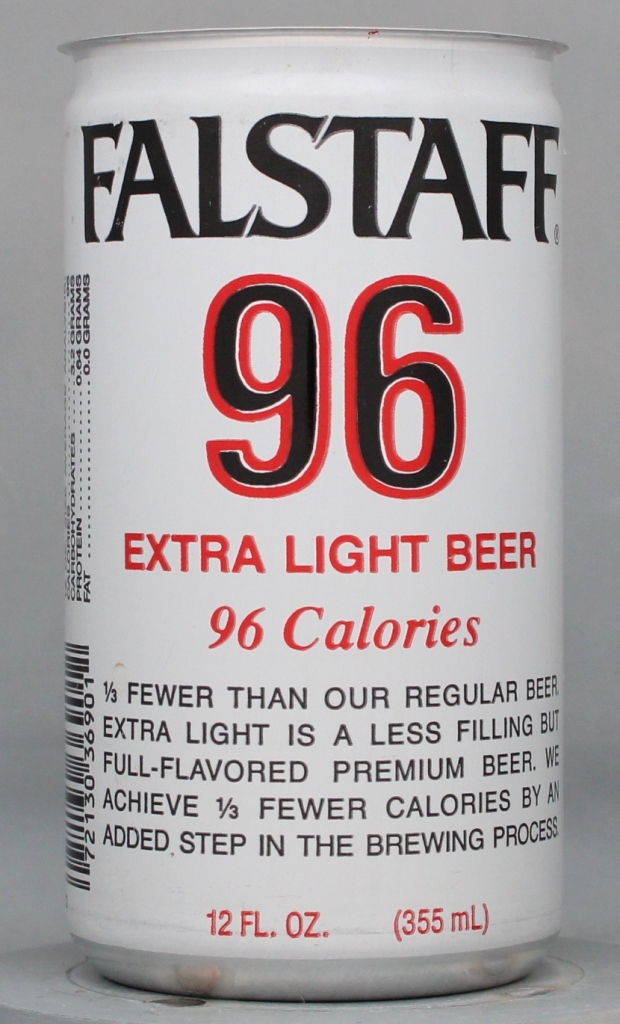
Falstaff introduced Falstaff 96 to compete directly against the explosive growth of early low-calorie brews like Miller Lite. The brand made its calorie count the focal point of the product identity, displaying a prominent red-and-black outlined "96" on the label. Text on the can body reinforced the pitch, explaining that the beer contained one-third fewer calories than the regular formulation and framing it as a less filling yet full-flavored premium beer achieved through an extra step in the brewing process. As market pressures and intense advertising battles squeezed regional producers, Falstaff's market presence diminished, and the 96 label was eventually discontinued.
The can originates from the Pearl Brewing Company in San Antonio, Texas. Tracing its roots back to 1883 as the San Antonio Brewing Association, the plant grew into one of the largest and most recognizable breweries in the American Southwest. Pearl navigated the Prohibition era by diversifying into commercial ice, dry cleaning, and near-beer production, positioning itself for immediate success upon repeal in 1933. In the late 1970s, industrialist Paul Kalmanovitz acquired Pearl and integrated its operations with other historic brewing assets under his control, including the Falstaff Brewing Corporation. Under this consolidated network, the San Antonio facility regularly packaged Falstaff brands.
For breweriana enthusiasts, cans from the light beer explosion of the 1970s document an essential transitional phase in commercial beverage history. The Falstaff 96 label remains an engaging piece for collectors who follow the corporate mergers, mandatory city listings, and packaging evolution of legacy American brewing giants.
* Descriptions are AI-assisted and may include edits from our team. Verify key details.
Can Details
Similar Cans
Price History
Not enough sales data to display a chart.
Sold Listings
No recent sales data available for this can.