Falstaff 96 Extra Light Beer 12 Oz Tab Top Can
Falstaff • Ft. Wayne, IN
Falstaff 96 Extra Light Beer Can
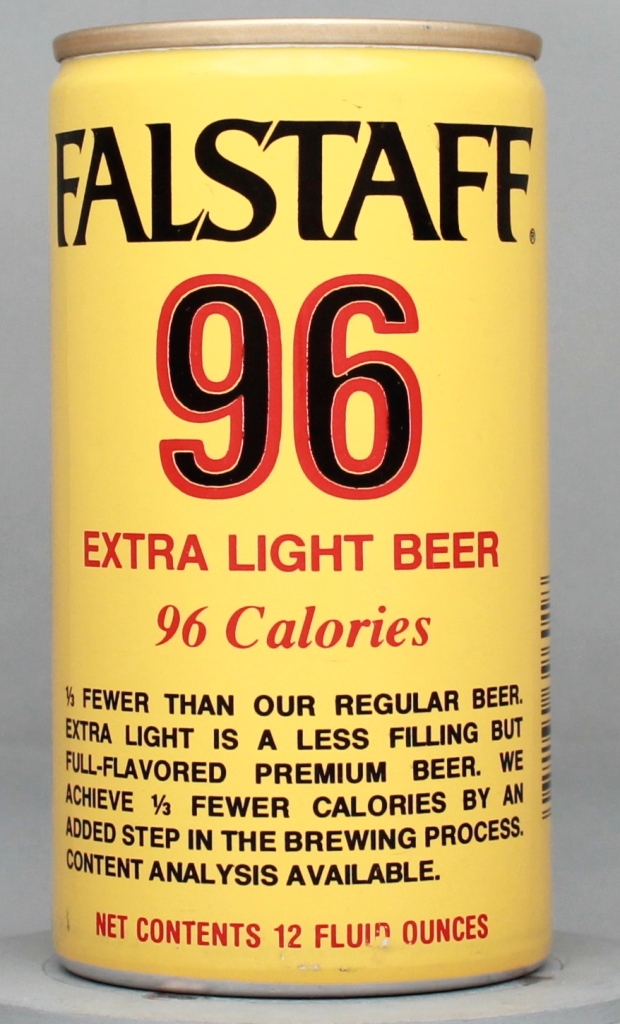
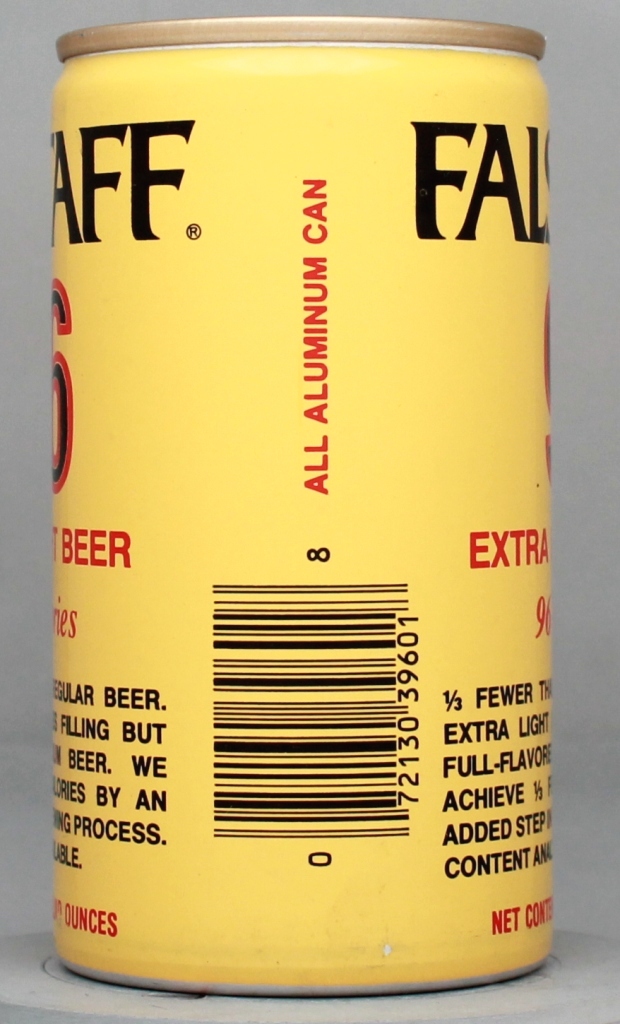
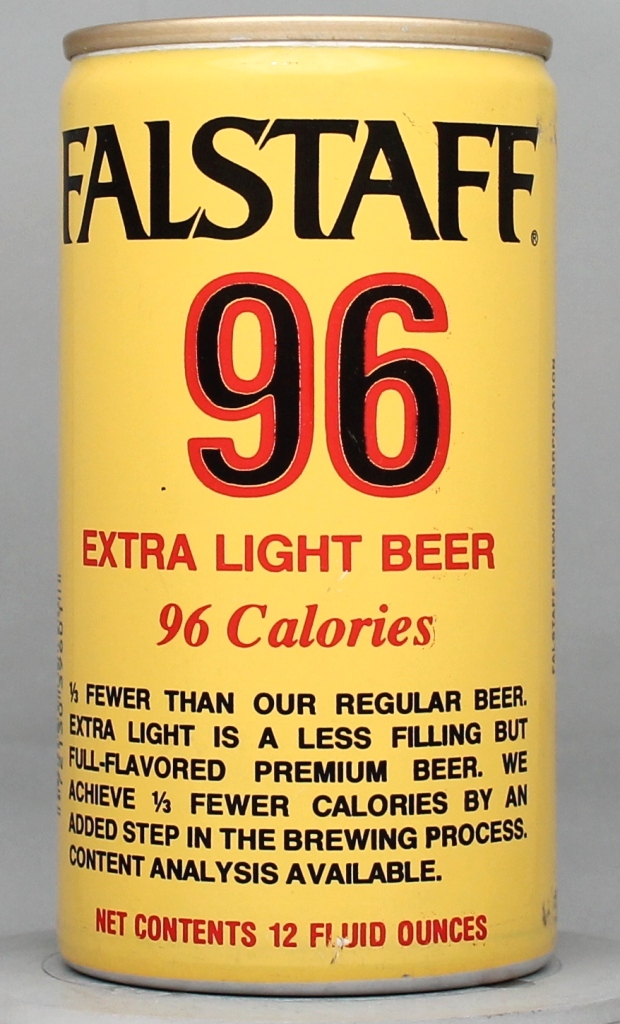
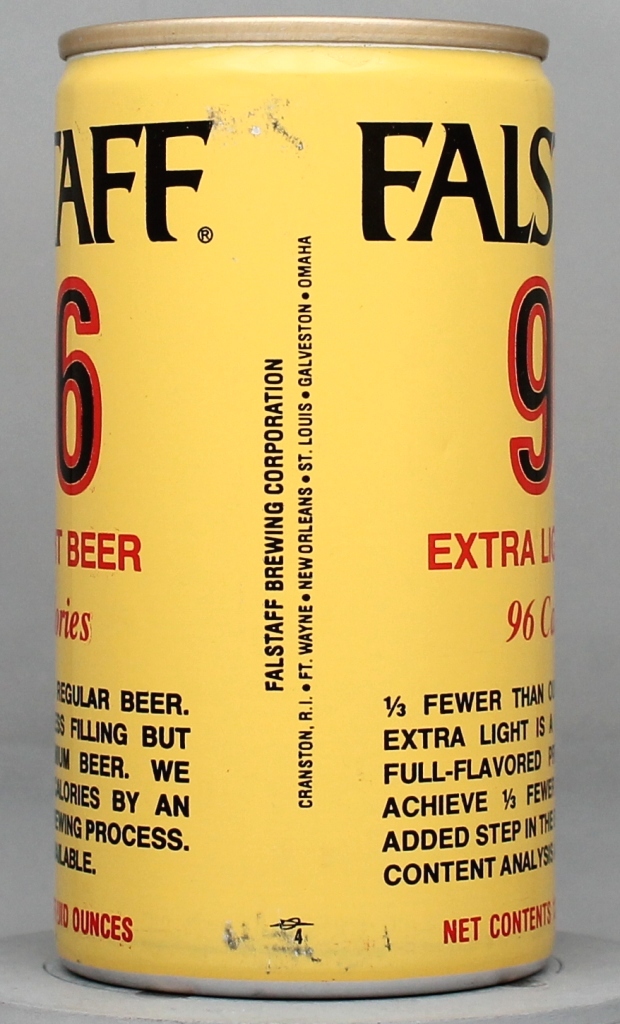
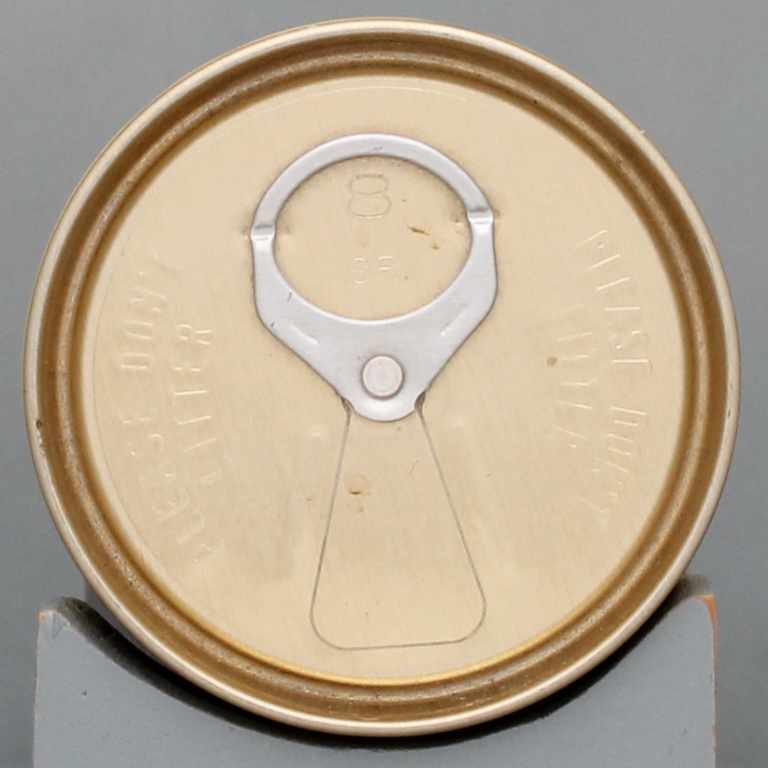
Produced during the late 1970s, this all-aluminum 12-ounce tab top can features a bright yellow background accented by bold black and red typography. The front panel is dominated by an oversized red numeral "96" outlined in black and white, flanked by the classic serif Falstaff trademark and promotional copy detailing the reduced calorie count. On the side, a vertical Universal Product Code (UPC) barcode reflects retail modernization of the era, while the mandatory text incorporates a listing of six brewing cities associated with the company's operations headquartered out of Fort Wayne, Indiana.
Falstaff 96 Extra Light Beer was introduced during the late 1970s as regional and national brewing companies scrambled to compete against the runaway success of Miller Lite. Positioned around its specific count of 96 calories, the can boldly touts containing one-third fewer calories than the company's regular beer, achieved through an added step in the brewing process. Marketing positioned the product as a full-flavored yet less filling premium offering. As the light beer segment evolved in the early 1980s, Falstaff eventually simplified its low-calorie branding into standard light and lite label variants before production ceased.
The Falstaff name dates back to nineteenth-century St. Louis brewing history and was acquired by the Griesedieck Beverage Company after Prohibition began. Following Repeal, the firm expanded nationwide, becoming one of the first multi-state brewing operations in the United States and climbing to the position of third-largest brewer in the country by the 1960s. In 1954, Falstaff purchased Fort Wayne's Berghoff Brewing Company to establish its Indiana footprint. By 1975, facing mounting financial pressure, the company was bought by Paul Kalmanovitz's S&P conglomerate. Falstaff relocated its headquarters to Fort Wayne in 1977, and that facility remained the company's last operational plant until it closed in 1990.
For breweriana collectors, this can represents the fiercely competitive "light beer wars" of the 1970s. It highlights an important evolutionary moment in beverage packaging, marking the transition to all-aluminum tab tops, UPC barcoding, and shifting multi-city brewery mandates as regional brewing giants consolidated.
* Descriptions are AI-assisted and may include edits from our team. Verify key details.
Can Details
Similar Cans
Price History
Not enough sales data to display a chart.
Sold Listings
No recent sales data available for this can.