Falstaff Beer 12 Oz Tab Top Can
Falstaff • St. Louis, MO
Falstaff Metallic Gold Tab Top Can
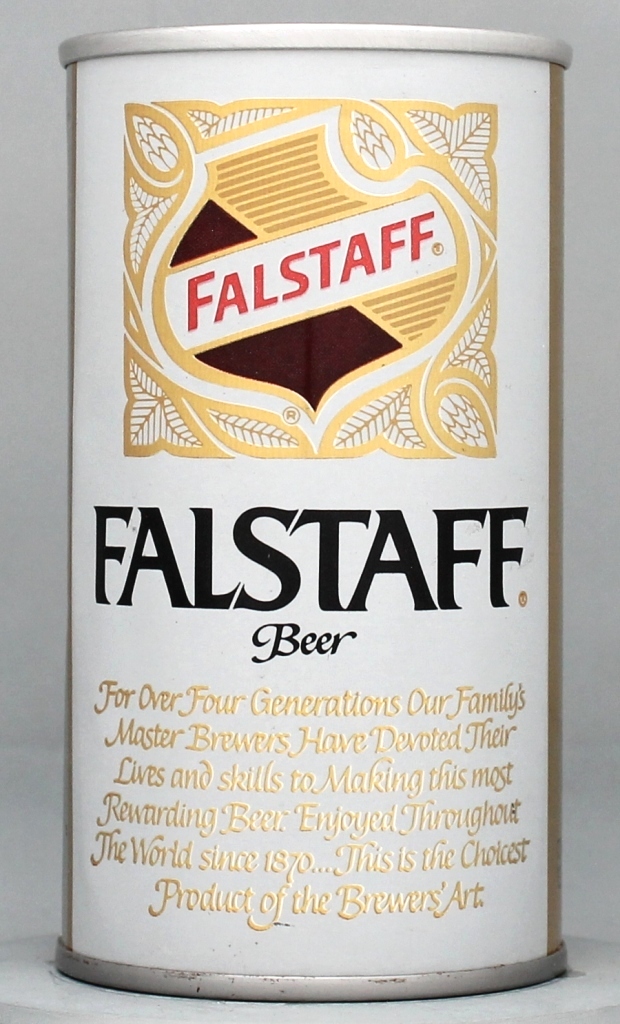
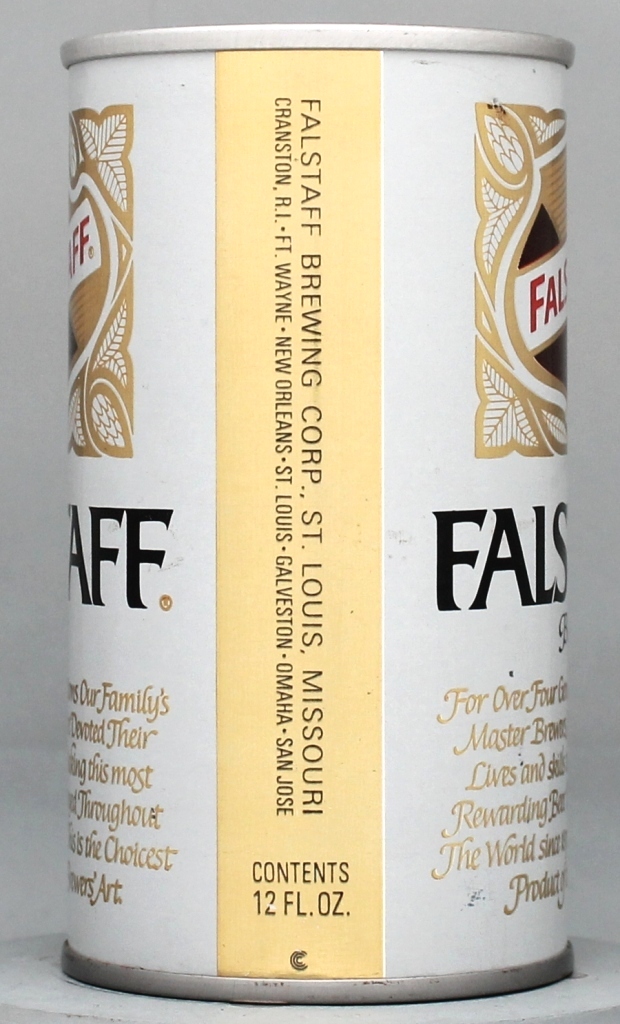
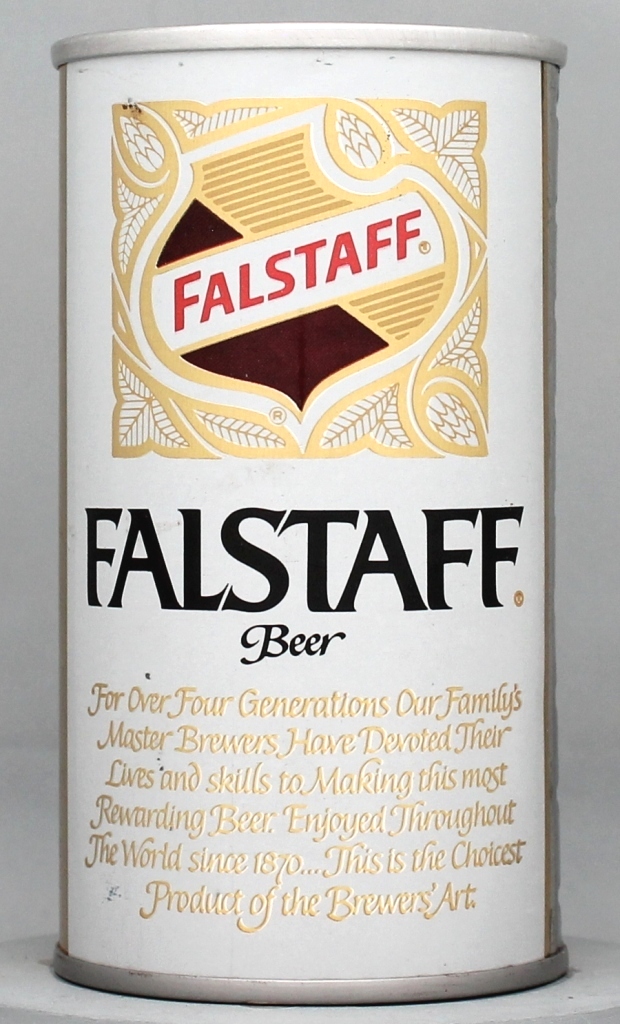
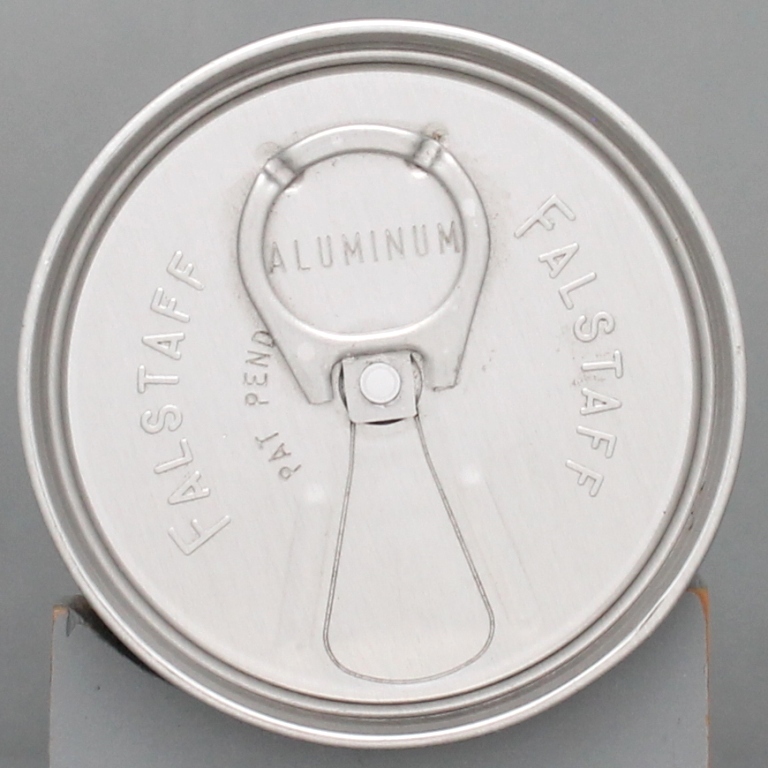
This twelve-ounce straight steel tab top container exemplifies Falstaff's packaging during the multi-plant era of the mid-twentieth century. This specific issue is distinguished by its reflective metallic gold ink and a mandatory side panel listing seven production cities, reflecting the company's decentralized brewing footprint. While visually aligned with other releases of the same graphic design, this Continental Can Company production is separated from comparable American Can Company issues by subtle tonal variations in the gold background ink. A prominent feature on the can face is the elaborate gold script honoring generational family brewing tradition, arranged below the classic Falstaff shield emblem and bold black serif brand name.
The Brand
The Falstaff brand originated in 1870 under the Lemp Brewery in St. Louis, inspired by William Shakespeare's jovial, beer-loving character Sir John Falstaff. Promoted as a friendly, quality lager for everyday enjoyment, it was famously championed under the long-running motto, "The Choicest Product of the Brewers' Art". In the mid-twentieth century, Falstaff gained massive nationwide visibility through aggressive marketing and prominent sports sponsorships, notably across radio and television broadcasts of Major League Baseball. Squeezed by national industry consolidation in the latter half of the twentieth century, the brand gradually lost market ground before disappearing from shelves in the 2000s.
The Brewery
Falstaff Brewing Corporation's modern lineage began with Joseph "Papa Joe" Griesedieck, who purchased the Falstaff name and trademark from the Lemp family during the onset of Prohibition in 1920. Griesedieck kept the enterprise alive during the dry years by manufacturing near-beer, soft drinks, and cured bacon and hams. Following the repeal of Prohibition in 1933, the company launched an expansive acquisition program, opening or purchasing satellite plants in Omaha, New Orleans, San Jose, Fort Wayne, Galveston, and El Paso. By the 1960s, Falstaff had grown to become the third-largest brewer in the United States. However, fierce price competition and corporate overextension prompted steep financial downturns in the 1970s. In 1975, industrialist Paul Kalmanovitz acquired the company, leading to progressive closures that ended with the shutdown of the historic St. Louis facility in 1977.
Collecting Context
Straight-steel tab tops from major post-Prohibition brewing powerhouses offer rich historical depth for collectors. Cans from this era document the complex logistical reality of mid-century brewing, where differing can manufacturers, printing ink formulations, and evolving city mandatory statements create subtle variations that chart a brewery's industrial trajectory.
* Descriptions are AI-assisted and may include edits from our team. Verify key details.
Can Details
Similar Cans
Price Statistics
Price Estimator
Price History
Not enough sales data to display a chart.
Sold Listings
| Price | Title | Platform | Date |
|---|---|---|---|
| $10.00 | Falstaff Metallic Gold 7 Cities Tab Top Vol II 63-31 | Beer Cans Plus | 10/24/2021 |
| $5.00 | Falstaff 7 Cities Tab Top Vol II 63-31 | Beer Cans Plus | 9/19/2021 |