Falstaff Beer Test Can
Falstaff • St. Louis, MO
Falstaff Straight Steel Test Can
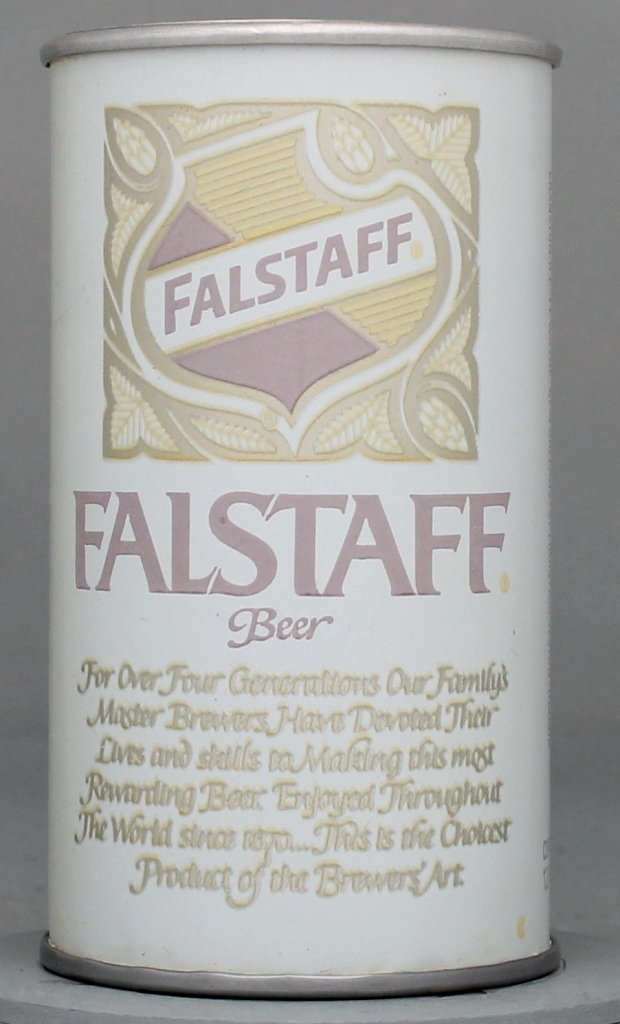
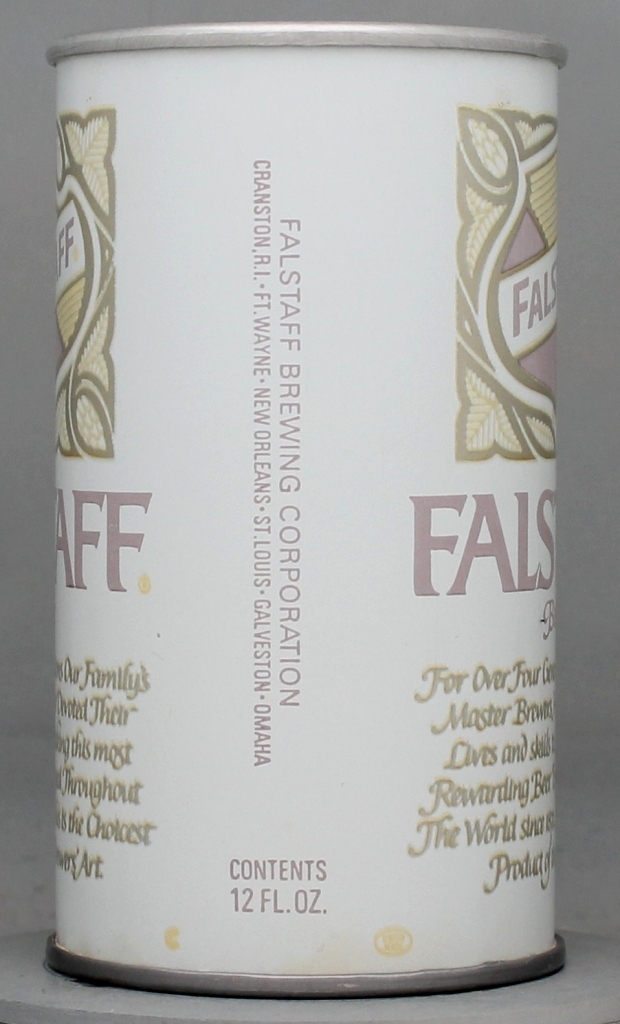
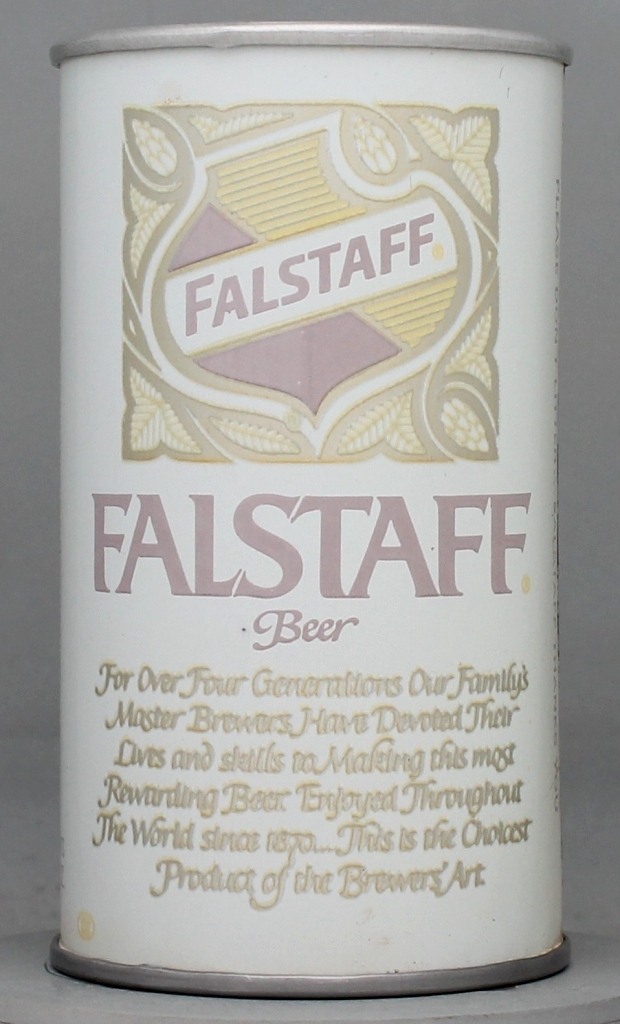
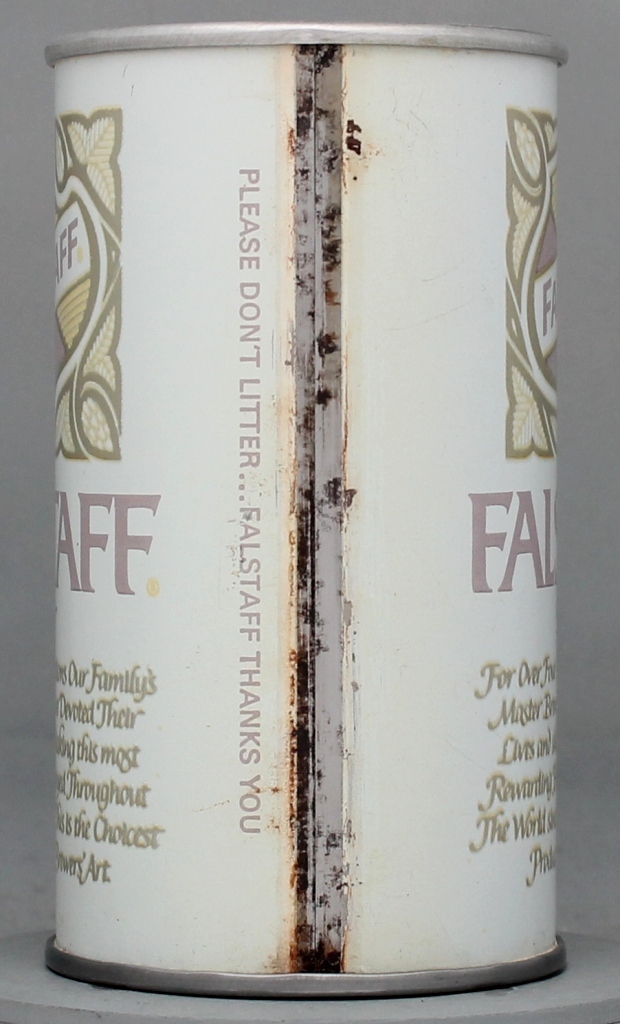
This straight steel tab top container represents an experimental packaging run produced for the Falstaff Brewing Corporation of St. Louis, Missouri. Configured as a 12-ounce can listing six brewing cities on its mandatory panel, this sample is notable for its lavender-toned lettering on the primary Falstaff wordmark and matching pastel shading within the central shield. Beneath the emblem, an elaborate script statement highlights that four generations of family master brewers devoted their craft to producing the beverage since 1870 as the choicest product of the brewer's art. Prototype cans of this nature were manufactured in sample quantities in collaboration with can manufacturers to evaluate lithography, ink tones, and visual presentation prior to commercial adoption.
The Falstaff brand name was originally created in the late nineteenth century and trademarked in 1903, drawing inspiration from William Shakespeare's jovial character Sir John Falstaff. Positioned as a flagship American lager, the brand was promoted heavily through print, radio, and sports sponsorships, frequently using celebrated slogans such as "America's Premium Quality Beer" and "The Choicest Product of the Brewers' Art". By the 1950s and 1960s, Falstaff had grown into one of the country's dominant beer labels, ascending to become the third-largest brewing operation in the United States.
The modern Falstaff Brewing Corporation was built by the Griesedieck family in St. Louis, who acquired the Falstaff brand rights following the decline of the Lemp Brewing Company. The firm navigated Prohibition by producing near-beer, carbonated beverages, and cured meats before aggressively expanding after Repeal. Over the following decades, Falstaff acquired production plants across the nation, operating facilities in cities such as Omaha, New Orleans, San Jose, Fort Wayne, and Cranston. Increasing competition from mega-breweries and costly acquisitions led to financial strain in the 1970s, culminating in a buyout by Paul Kalmanovitz in 1975 and the gradual shutdown of its traditional brewing centers.
In breweriana collecting, test cans provide valuable historical documentation of brewery marketing campaigns and graphic design trials. Because sample press runs with alternate color palettes and layout concepts were produced exclusively for corporate review rather than public sale, these artifacts offer a direct window into the development of iconic American beer packaging.
* Descriptions are AI-assisted and may include edits from our team. Verify key details.
Can Details
Similar Cans
Price History
Not enough sales data to display a chart.
Sold Listings
No recent sales data available for this can.