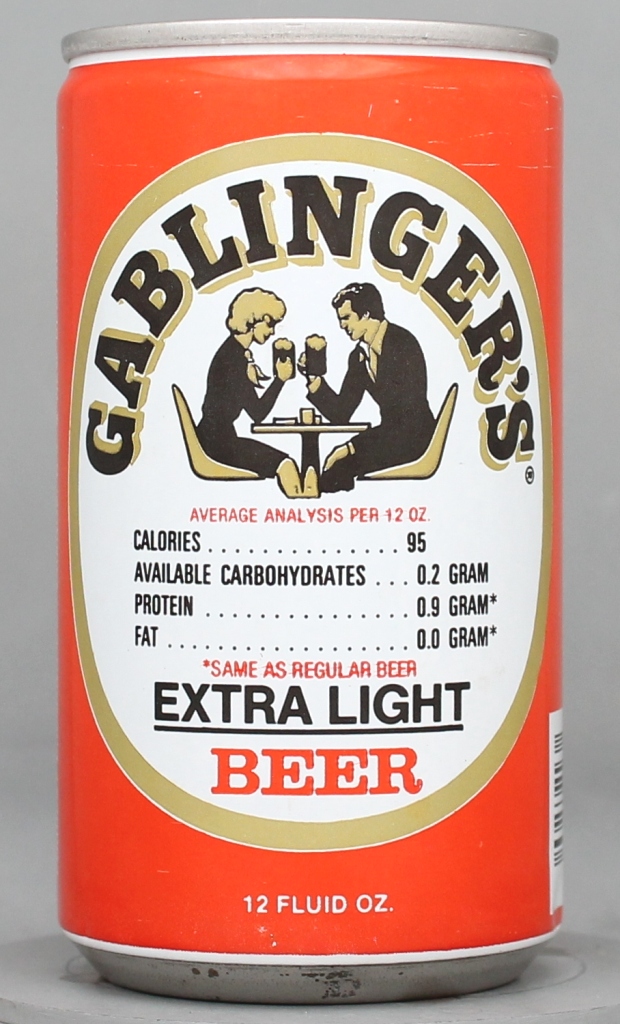
Gablinger's Extra Light Beer 12 Oz Tab Top Can
Forrest • Orange, NJ
Gablinger's Extra Light 12 Oz Can
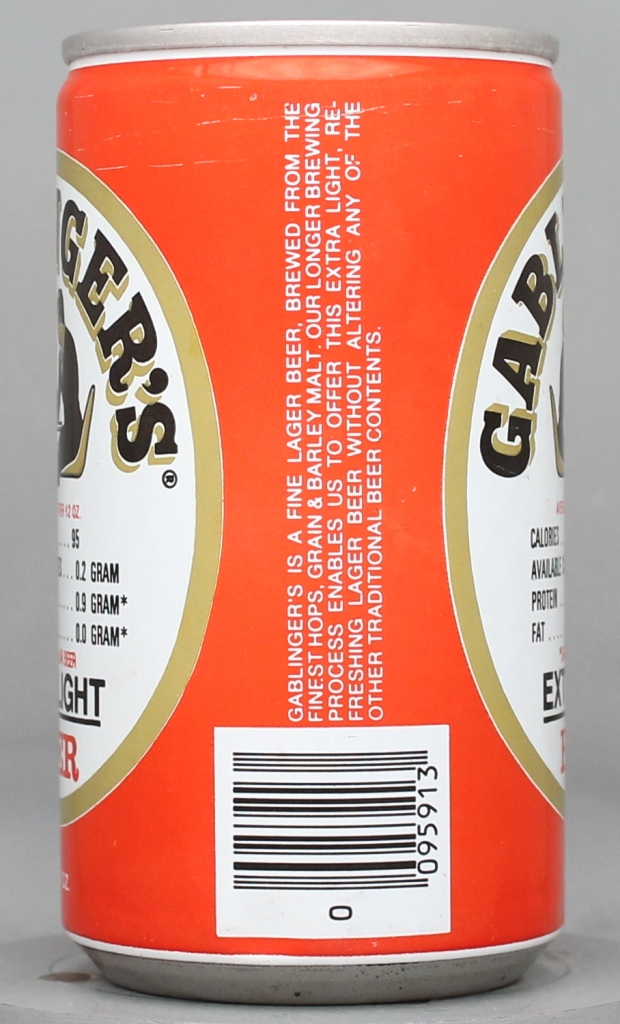
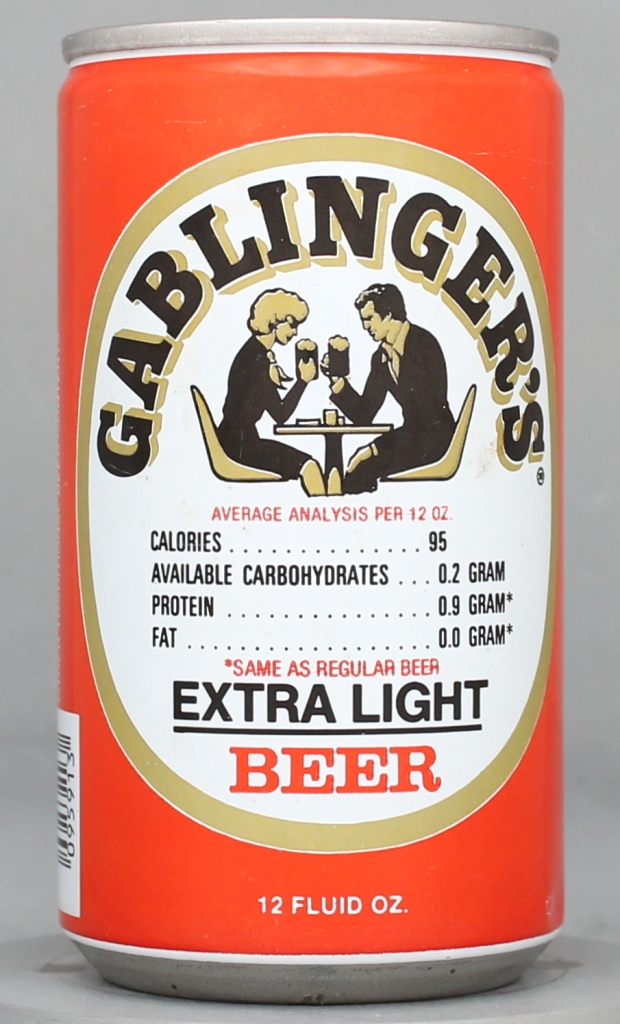
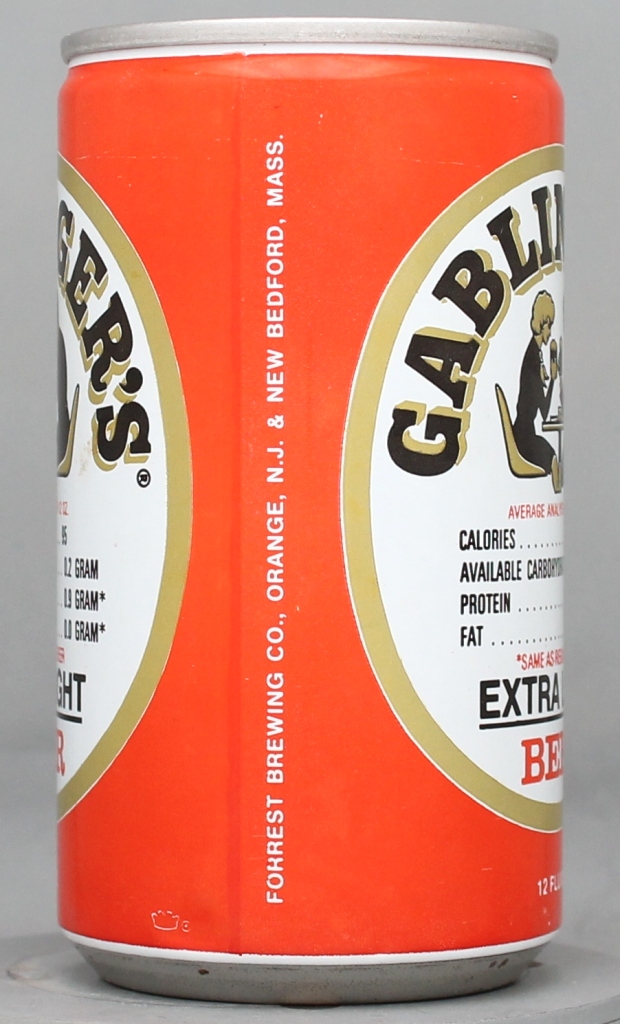
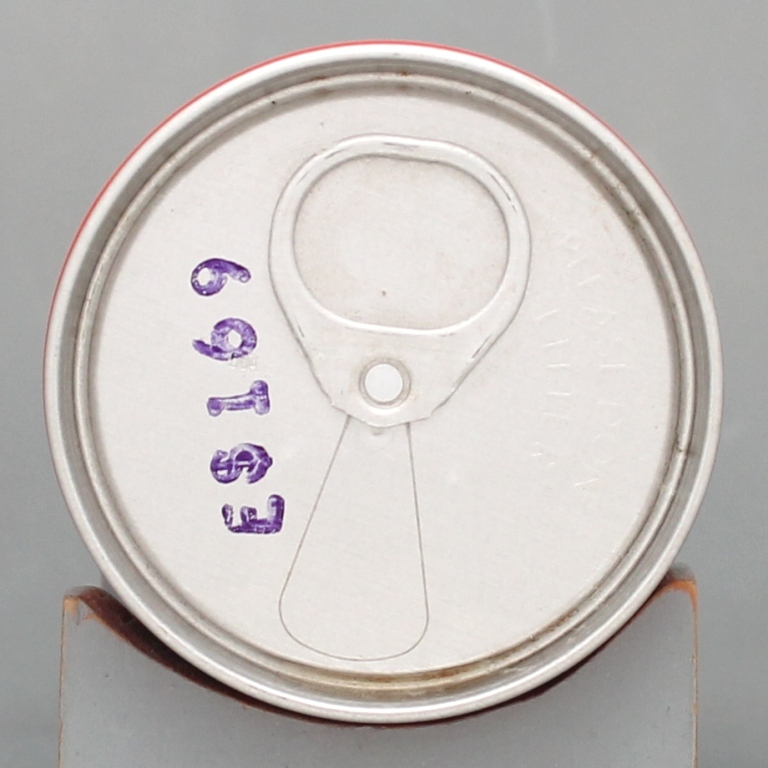
Manufactured as a drawn and ironed container with a tab top, this 12-ounce can dates to the latter half of the 1970s. Distinguishing this release from earlier issues is the inclusion of two packaging cities within the mandatory text alongside a Universal Product Code (UPC) barcode printed on the side panel. The central face highlights the brand's shift toward social lifestyle marketing, depicting an illustrated couple toasting with beer mugs inside a prominent oval medallion. Above the "Extra Light Beer" designation sits a full nutritional disclosure panel, advertising 95 calories, 0.2 grams of carbohydrates, and zero fat.
The Brand
Gablinger's holds a historic place in brewing as the commercial pioneer of modern American light beer. In the mid-1960s, Swiss chemist Dr. Hersch Gablinger developed an enzymatic method using amyloglucosidase to break down unfermentable dextrins into fermentable sugars, drastically reducing carbohydrates. Rheingold acquired the rights to the method, and biochemist Joseph Owades formulated the beverage, debuting it in 1967 under the promotional slogan "Doesn't Fill You Up". While early marketing struggled to overcome consumer perceptions of diet beverages, the foundational recipe directly paved the way for Meister Brau Lite and, ultimately, Miller Lite. In 1976, Rheingold overhauled the recipe and presentation into "Gablinger's Extra Light," lowering the calorie count to 95 and replacing early portraits of Dr. Gablinger with contemporary social artwork.
The Brewery
Forrest Brewing Company functioned as an operating subsidiary and alternate trade name created by Rheingold Breweries, named in reference to Forrest Street in Brooklyn, home of Rheingold's primary facility. The Orange, New Jersey location responsible for this can was originally built and operated by John F. Trommer before Rheingold purchased the plant in 1950. Confronted with intense competition from nationwide mega-brewers, Rheingold shuttered its flagship Brooklyn plant in 1974 and moved remaining East Coast brewing to Orange. In 1977, Philadelphia-based C. Schmidt & Sons acquired Rheingold’s brand assets and permanently closed the Orange brewery, continuing to market the Gablinger's label until Schmidt ceased operations in 1987.
Collecting Context
For breweriana enthusiasts, Gablinger's cans represent the tangible genesis of the low-calorie beer phenomenon. This mid-to-late 1970s example captures a transitional era when regional brewers modernized both packaging mechanics and graphic identities to stay relevant amidst the unfolding light beer wars.
* Descriptions are AI-assisted and may include edits from our team. Verify key details.
Can Details
Similar Cans
Price History
Not enough sales data to display a chart.
Sold Listings
No recent sales data available for this can.