Heidel Brau Pilsner Beer 12 Oz Tab Top Can
G. Heileman • La Crosse, WI
Heidel Brau Pilsner Tab Top Can
The Can
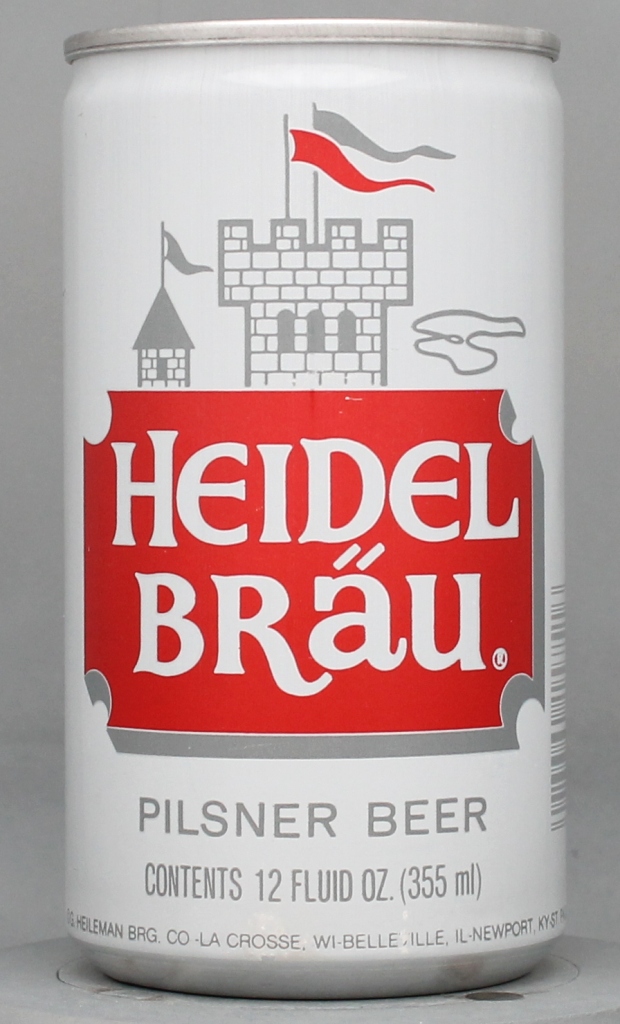
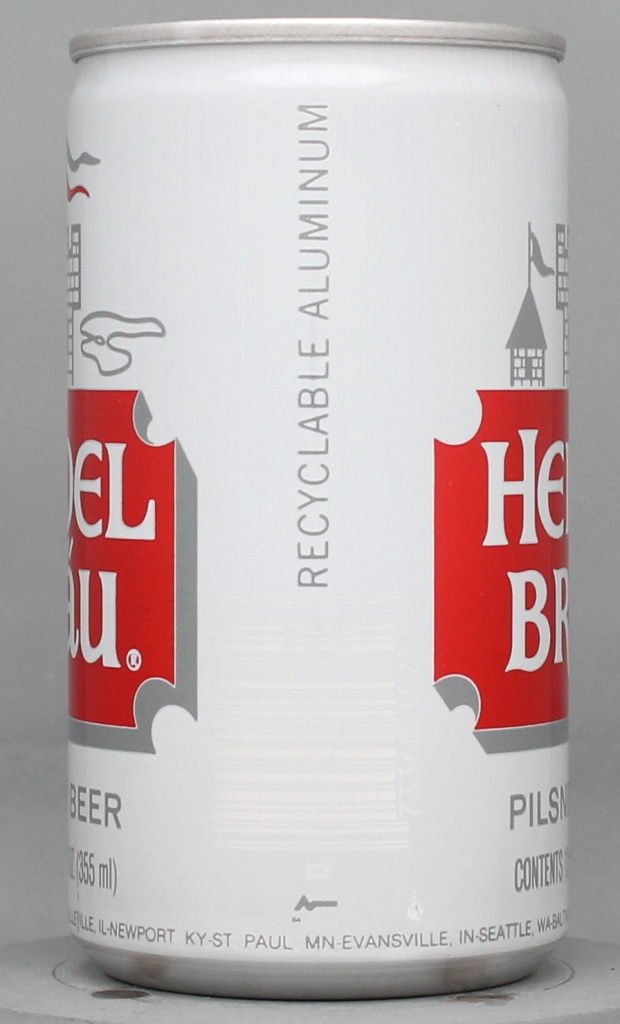
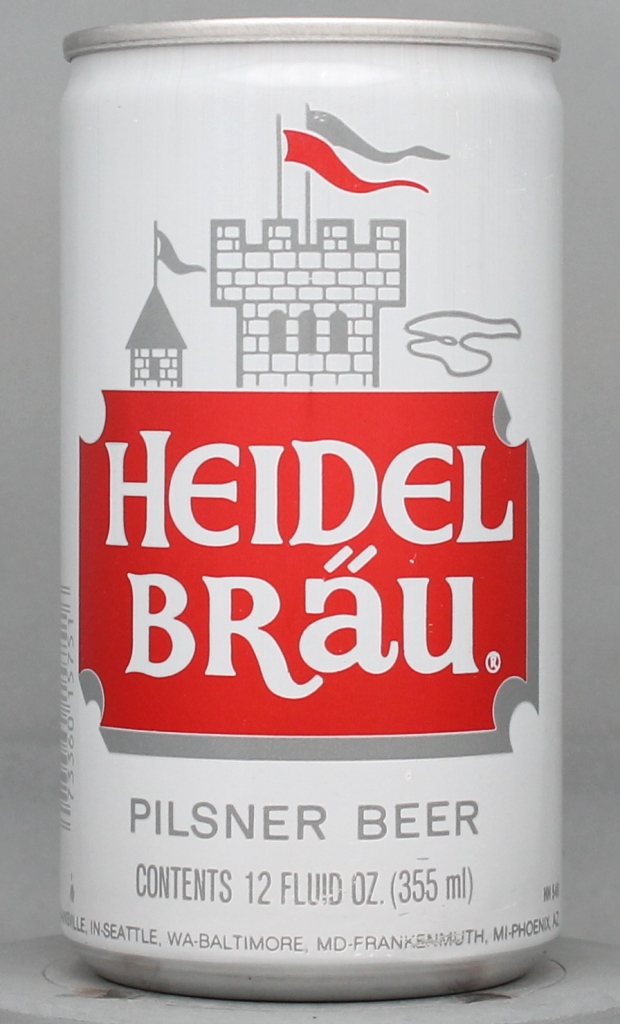
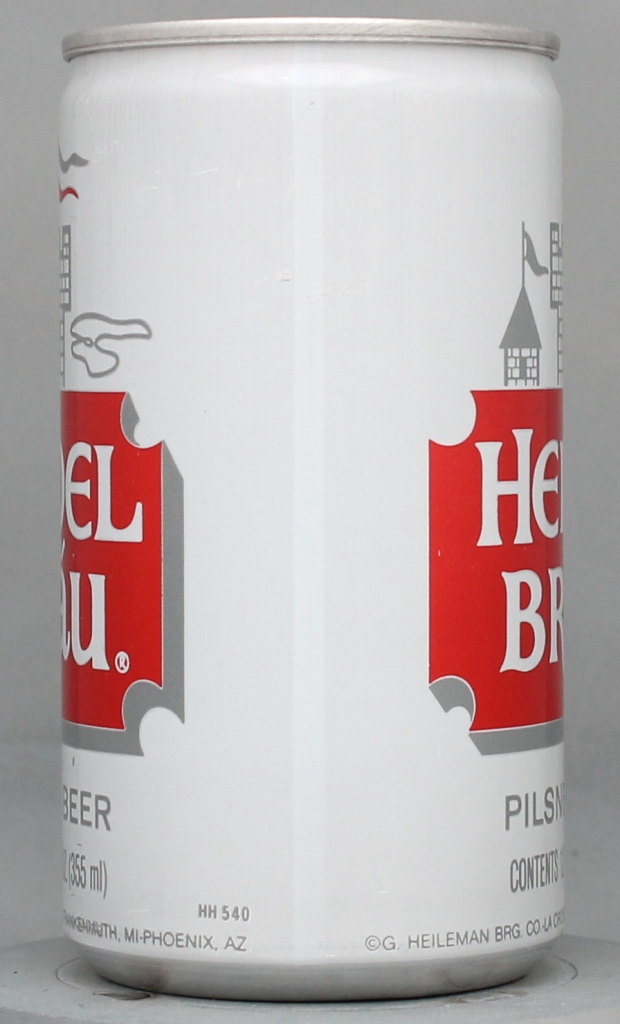
This all-aluminum twelve-ounce tab top container features the traditional Heidel Bräu branding set against a clean white backdrop, crowned by a fortress tower and pennant illustration. A defining characteristic of this production run is the extensive mandatory brewery statement along the bottom rim, listing nine brewing cities across the country, including La Crosse, Wisconsin; Belleville, Illinois; Newport, Kentucky; and St. Paul, Minnesota. The can incorporates both customary fluid ounces and metric volume measurements (355 ml), as well as a universal product code (UPC) barcode on the side panel, documenting the transition of regional packaging into modern computerized retail distribution.
The Brand
Heidel Brau was originally introduced shortly after the repeal of Prohibition by the Sioux City Brewing Company in Sioux City, Iowa. Positioned as an accessible, dependable Midwestern lager, it became an affordable grocery staple throughout Iowa, Nebraska, and surrounding states. The brand's local success led the Iowa brewery to adopt the Heidel Brau name as its corporate identity in the late 1940s. After Kingsbury Brewing acquired and subsequently shuttered the Sioux City operations around 1960, the brand was absorbed into the expanding portfolio of G. Heileman, who kept the label alive for decades as a regional favorite.
The Brewery
The G. Heileman Brewing Company was founded in 1858 in La Crosse, Wisconsin, by German immigrants Gottlieb Heileman and John Gund. The company survived the dry years of Prohibition by manufacturing non-alcoholic malt beverages, sodas, and baked goods, allowing it to quickly resume commercial brewing upon repeal. Beginning in the 1960s, Heileman pursued an aggressive acquisition strategy, purchasing dozens of struggling regional breweries and continuing to brew their established local brands. This approach propelled Heileman to become one of the top brewing enterprises in the United States before the company was eventually acquired by the Stroh Brewery Company in 1996.
Collecting Context
For breweriana enthusiasts, this can serves as a classic example of late-twentieth-century brand consolidation. It illustrates the era when historic regional labels were preserved and distributed through centralized multi-plant brewing networks, making it an engaging piece for collectors of Wisconsin breweriana and G. Heileman portfolio history.
* Descriptions are AI-assisted and may include edits from our team. Verify key details.

Can Details
Similar Cans
Price History
Not enough sales data to display a chart.
Sold Listings
No recent sales data available for this can.