Jacob Best Premium Light Beer 12 Oz Tab/Stay Top Can
Pabst • Milwaukee, WI
Pabst's Jacob Best Premium Light
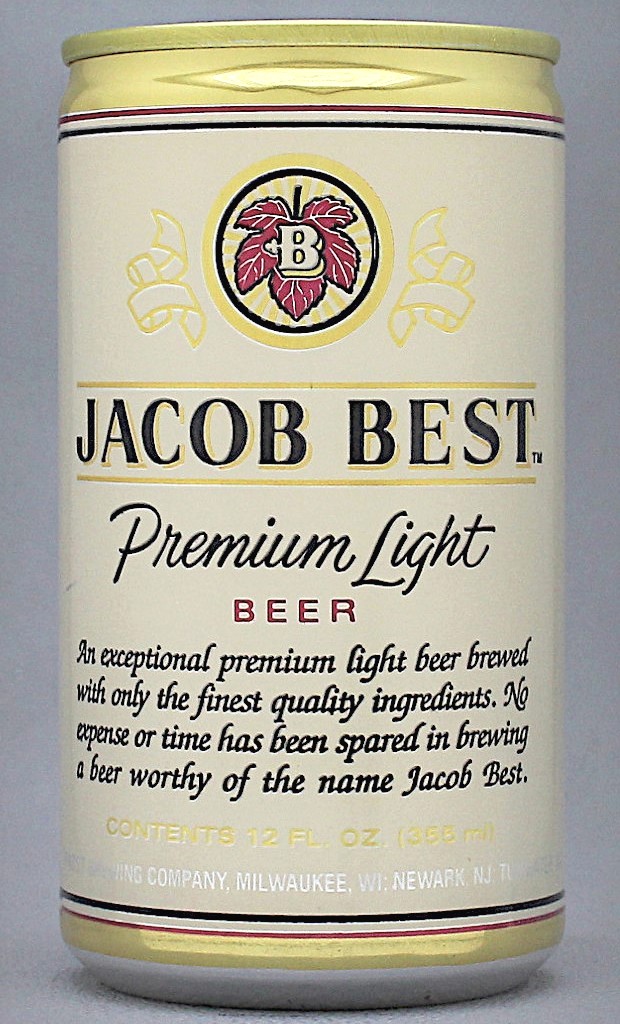
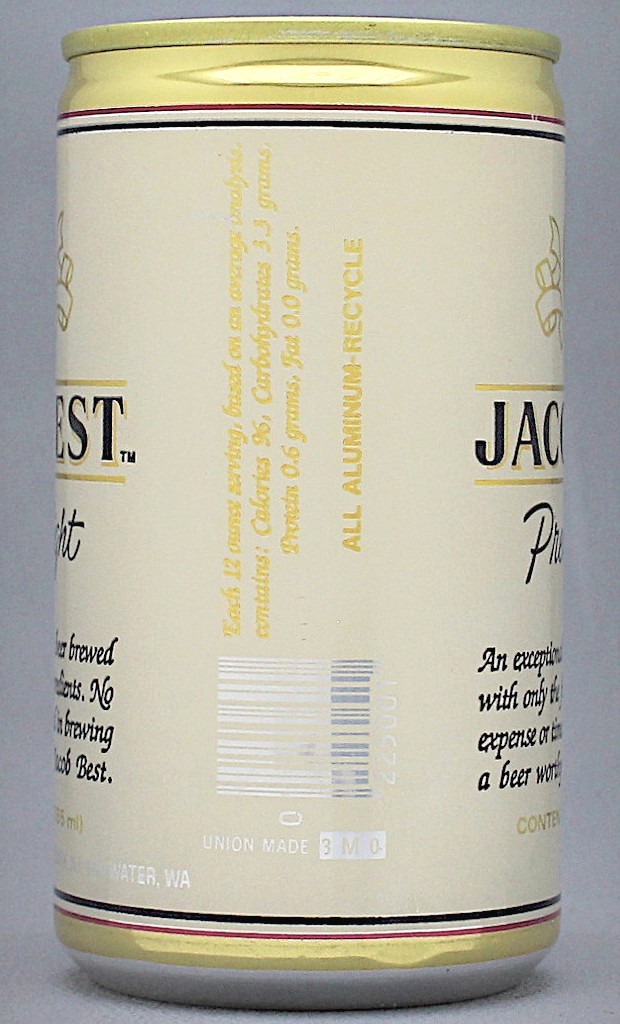
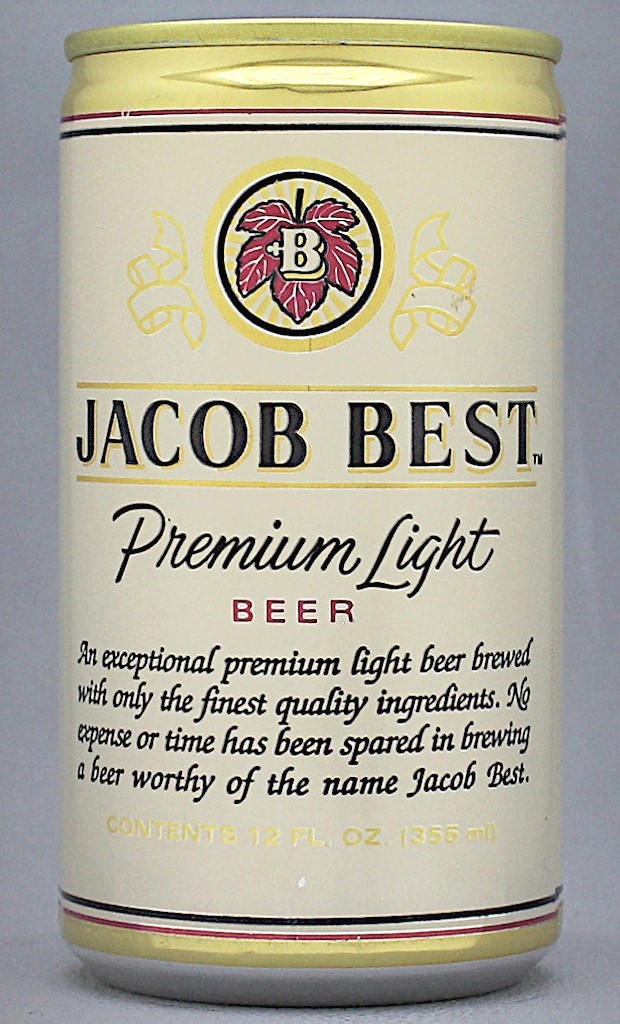
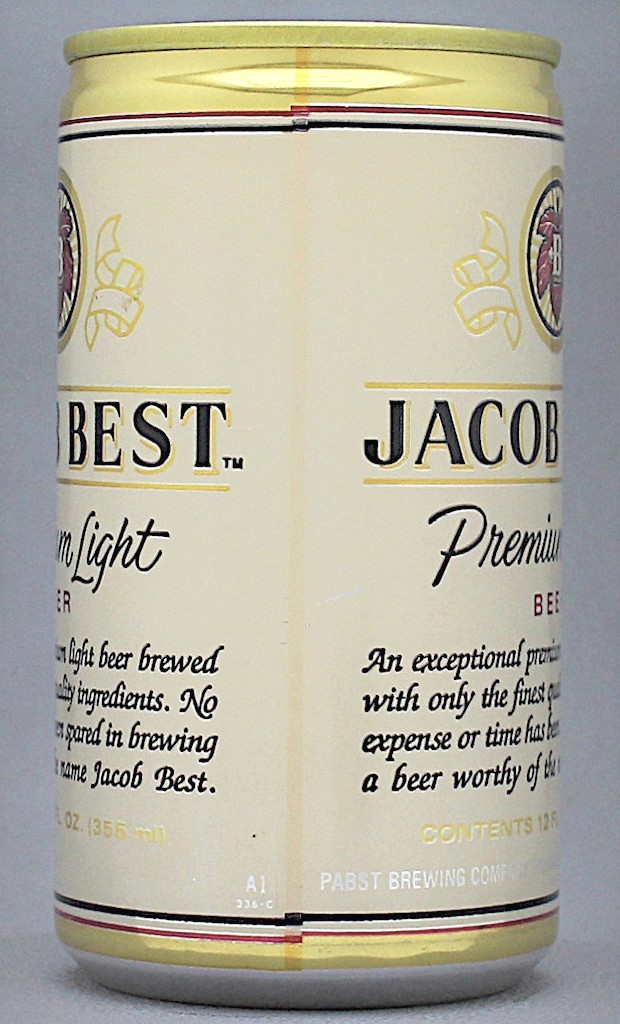
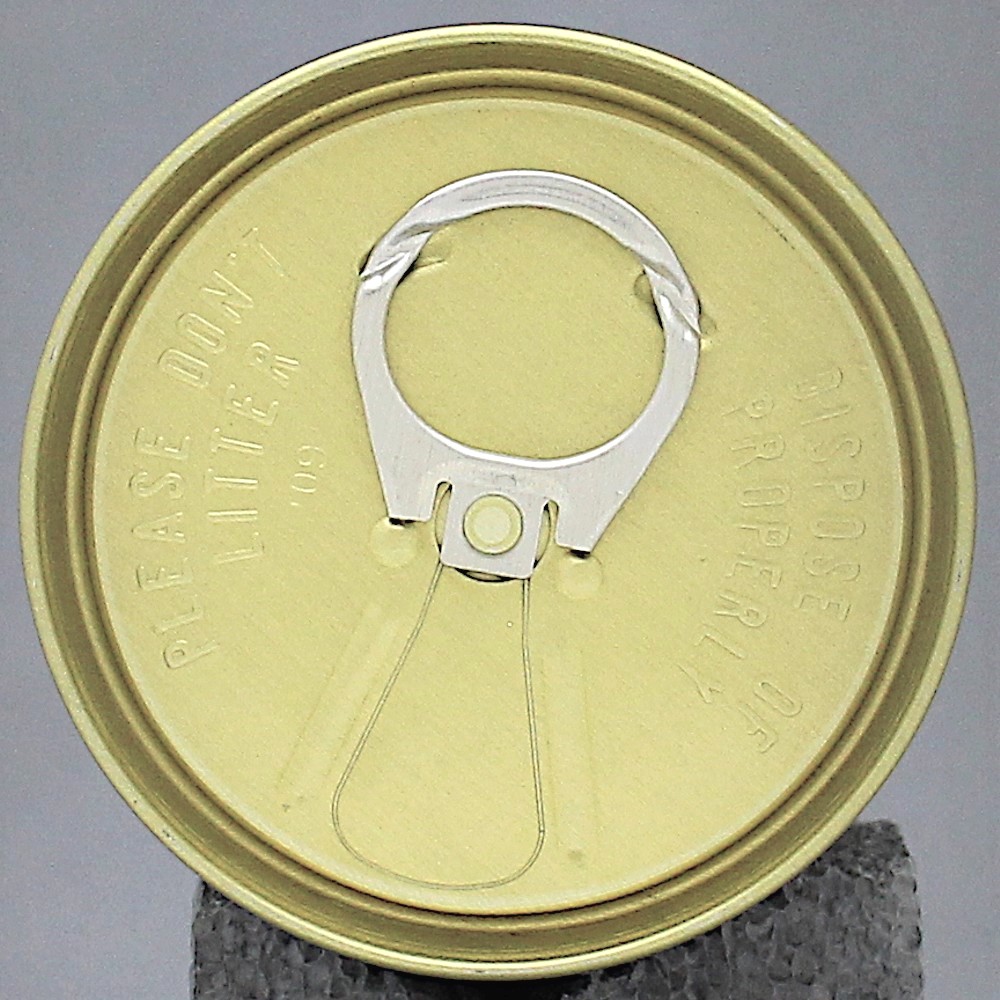
The Jacob Best Premium Light Beer can dates to the late 1970s and early 1980s, manufactured from lightweight aluminum. Reflecting modern packaging standards of the period, the face of the can incorporates dual imperial and metric volume statements alongside a Universal Product Code barcode. A mandatory plant statement along the lower rim cites three production cities, representing Pabst's expanded multi-brewery distribution network. While cataloged predominantly with pull tab tops, documented packaging runs also feature stay-on tab lids. Prominently set against an off-white background, the front displays a red hop-leaf crest centered on a sunburst and bearing a stylized letter "B", placed above a printed brewer's pledge assuring that no expense was spared in brewing a beer worthy of the Jacob Best name.
Pabst introduced the brand during the escalating light beer wars of the era, seeking to secure market share against low-calorie frontrunners. Rather than marketing it as an economy option, the brewery framed Jacob Best as a super-premium light lager steeped in corporate heritage. The label was a direct homage to Jacob Best Sr., the German immigrant who established the enterprise's original Milwaukee brewhouse. Despite wide distribution, branded barware, and print campaigns highlighting the connection to the company's roots, the label faced overwhelming competition and was discontinued during Pabst's portfolio reductions in the mid-1980s.
The brewery itself originated in 1844 when Jacob Best Sr. and his four sons founded the Empire Brewery on Milwaukee's Chestnut Street Hill. The operation was later renamed the Phillip Best Brewing Company, taking off significantly when steamship captain Frederick Pabst married into the family, joined the firm, and assumed leadership. Renamed the Pabst Brewing Company in 1889, it grew into one of the largest brewing dynasties in the world, renowned for Pabst Blue Ribbon. The business survived Prohibition by producing malt syrups, soft drinks, and processed cheese before swiftly reclaiming national dominance post-repeal. By the 1970s and 1980s, intense corporate consolidation triggered hostile takeovers, leading to the sale of the company in 1985 and the eventual closure of its historic Milwaukee plant in 1996.
For breweriana collectors, this can holds appeal as a direct tribute to Pabst's founding father during a transformational era in American beverage packaging. Its presence across the transitional divide between traditional pull tabs and modern stay tabs makes it a captivating inclusion for specialists in light beer history and Pabst memorabilia.
* Descriptions are AI-assisted and may include edits from our team. Verify key details.
Can Details
Similar Cans
Price History
Not enough sales data to display a chart.
Sold Listings
No recent sales data available for this can.