Mark V Slim-line Beer 12 Oz Tab Top Can
August Wagner • Columbus, OH
Mark V Slim-line Beer Tab Top Can
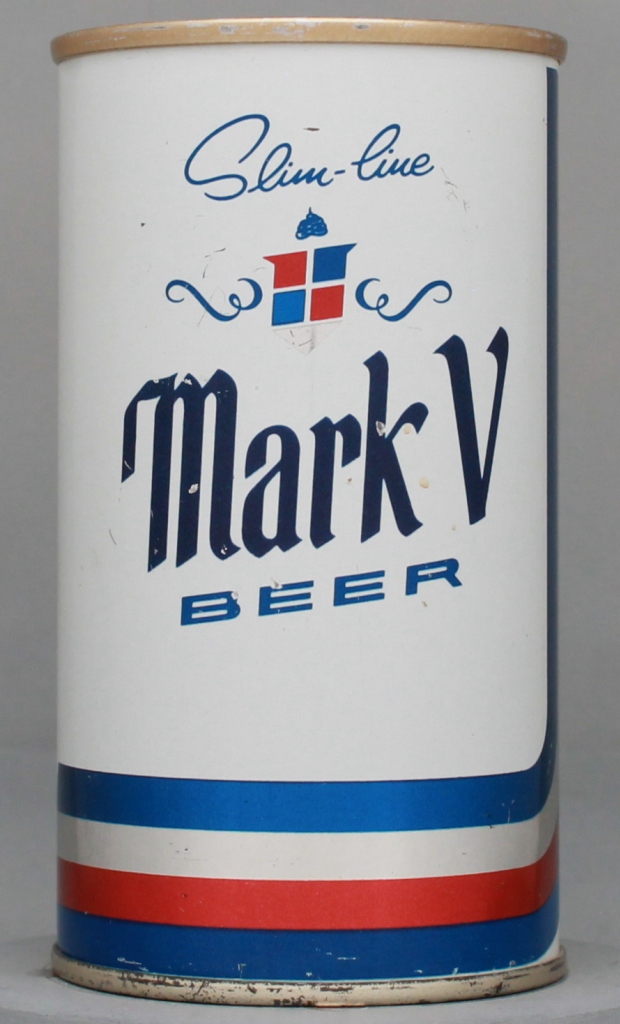
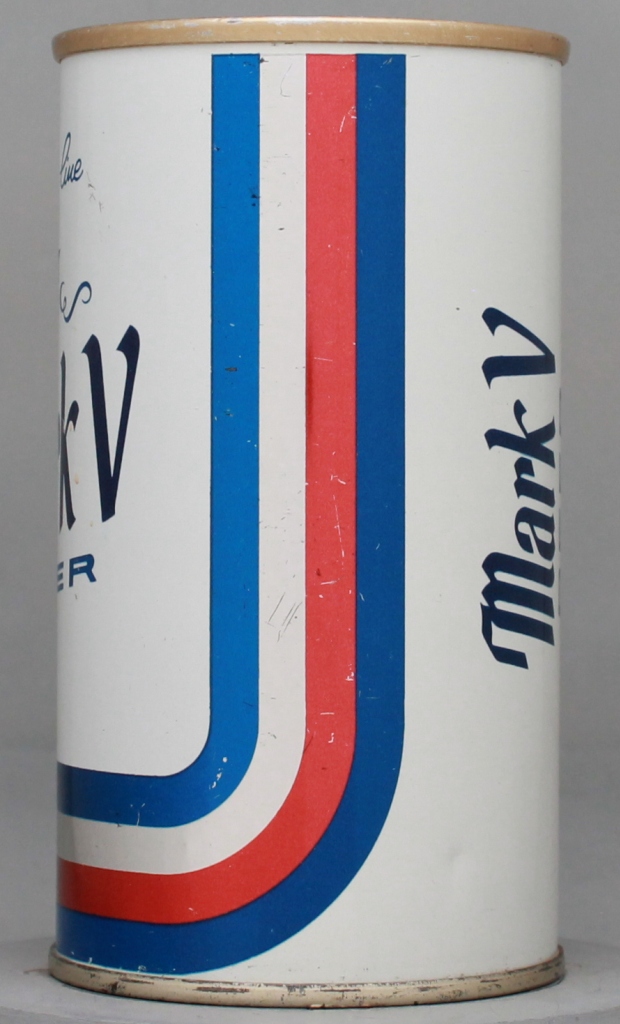
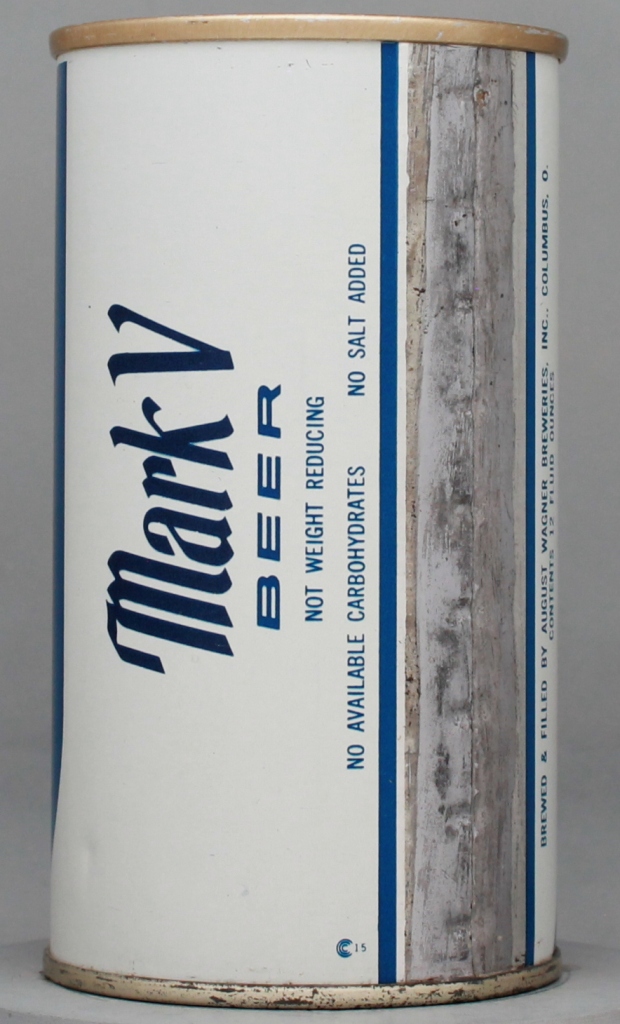
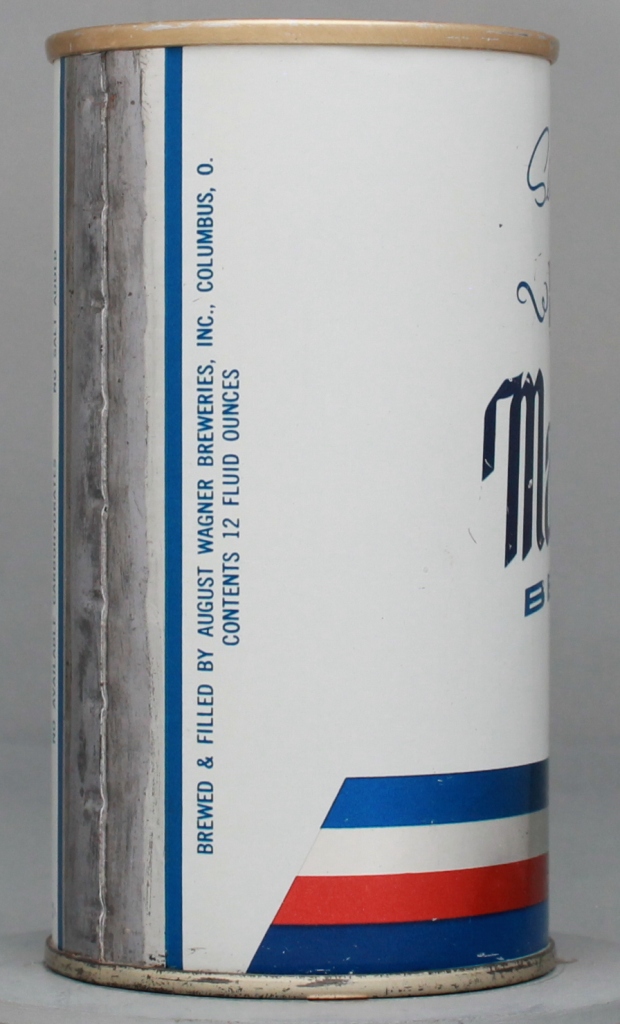
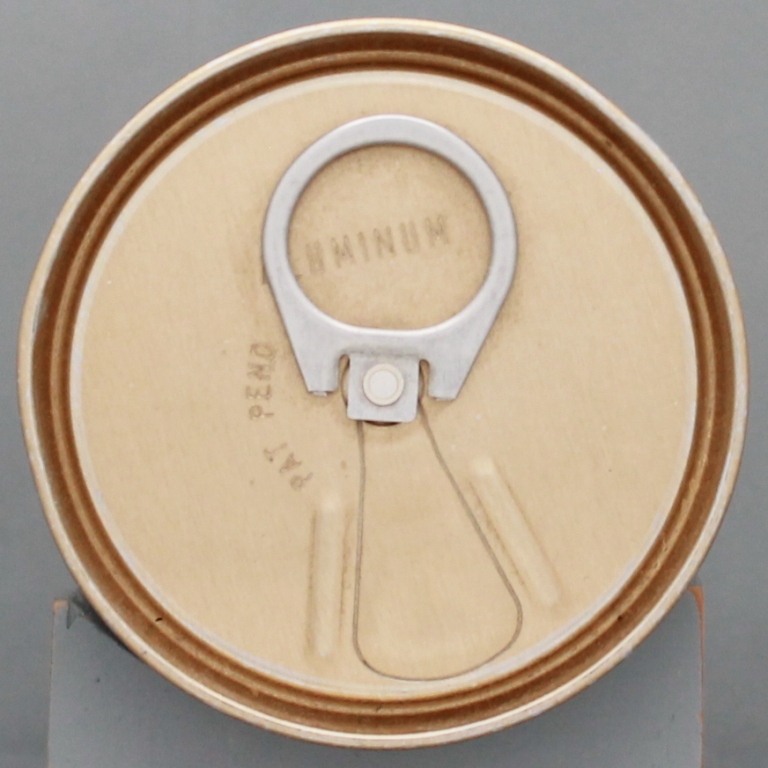
This straight steel, 12-ounce tab top can represents a pioneering entry into the emerging low-calorie beer market of the late 1960s. Produced by August Wagner Breweries of Columbus, Ohio, the container features the flowing "Slim-line" script positioned directly above a quartered heraldic crest and bold Gothic-style brand lettering. In compliance with early federal dietary labeling guidelines for reduced-calorie malt beverages, the can prominently carries mandatory disclaimer statements concerning its dietary profile, including "NOT WEIGHT..." and "NO AVAILABLE CARBO...".
Introduced in September 1967, Mark V Slim-Line arrived as one of the earliest commercially distributed diet-conscious light beers in the United States. The brewery utilized an enzyme process to break down residual carbohydrates and reduce overall calories, positioning Mark V alongside contemporaries like Gablinger's and Meister Brau Lite. Marketed toward consumers seeking a less filling option without sacrificing conventional lager characteristics, the brand became a prominent regional offering across the Midwest. Following the closure of the Columbus brewery, the Mark V brand rights were acquired by the Pittsburgh Brewing Company, which continued distribution for several years.
August Wagner Breweries was founded in Columbus, Ohio, in 1906 by Bavarian immigrant brewmaster August Wagner as the Gambrinus Brewing and Bottling Company. The business navigated Prohibition by producing near-beer and non-alcoholic beverages under the name August Wagner and Sons Products Company, resuming full-strength brewing following repeal in 1933. Renamed August Wagner Breweries, Inc. in 1937, the plant was a major fixture of the Columbus Brewery District, famous for brands like Augustiner, Robin Hood, and Gambrinus. The Wagner family maintained control until selling to an outside investor group in 1968. Amid mounting pressure from expanding national brewing conglomerates, the historic facility shuttered in early 1974.
In the breweriana community, this can is valued as an important artifact from the formative years of America's light beer revolution. It captures a transitional era when regional brewers experimented with modern diet marketing, making it an appealing crossover collectible for enthusiasts of Ohio brewing history and vintage tab top designs.
* Descriptions are AI-assisted and may include edits from our team. Verify key details.
Can Details
Similar Cans
Price History
Not enough sales data to display a chart.
Sold Listings
No recent sales data available for this can.