Oertel's Real Draft Draft Flat Top Can
Oertel • Louisville, KY
Oertel's Real Draft Flat Top Can
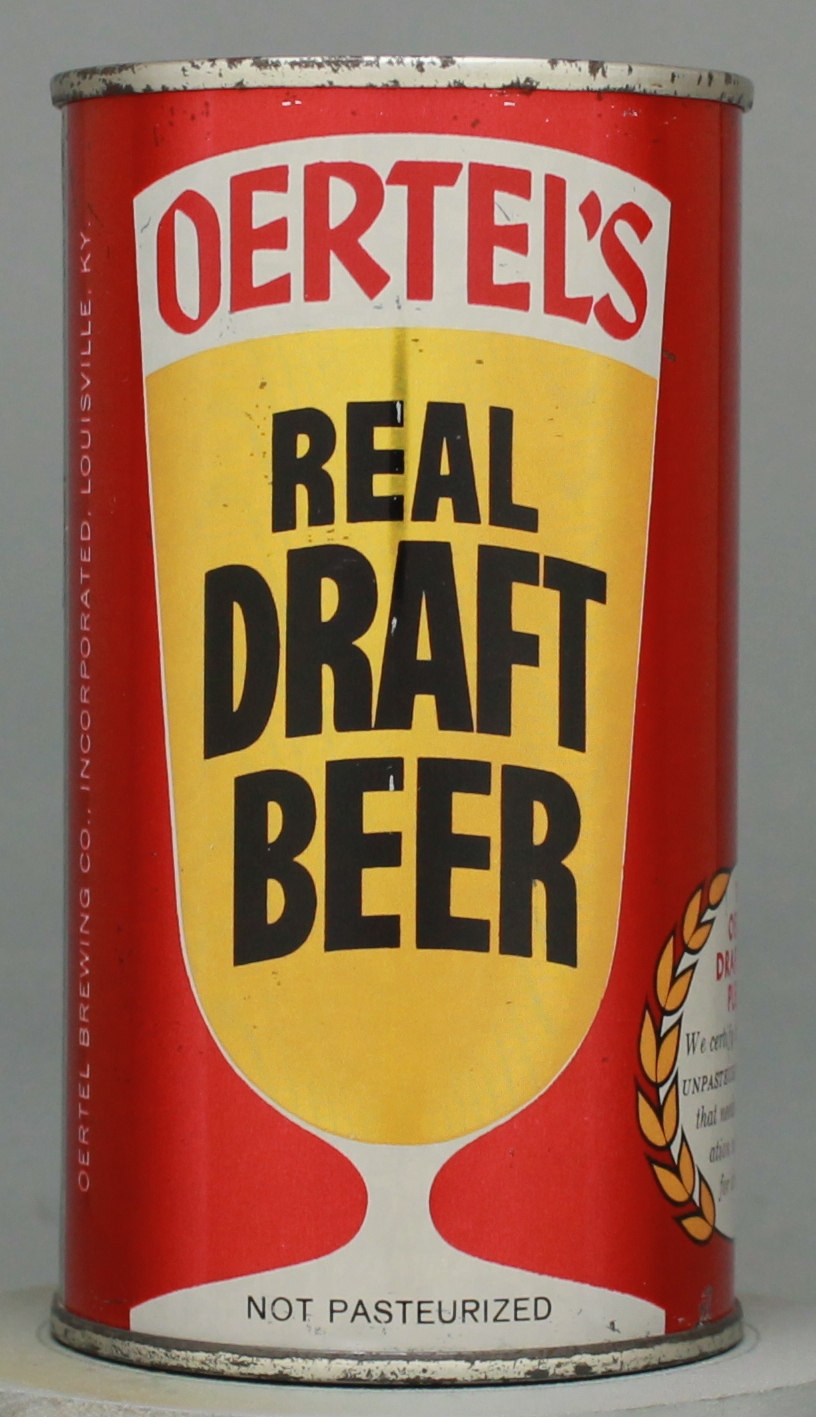
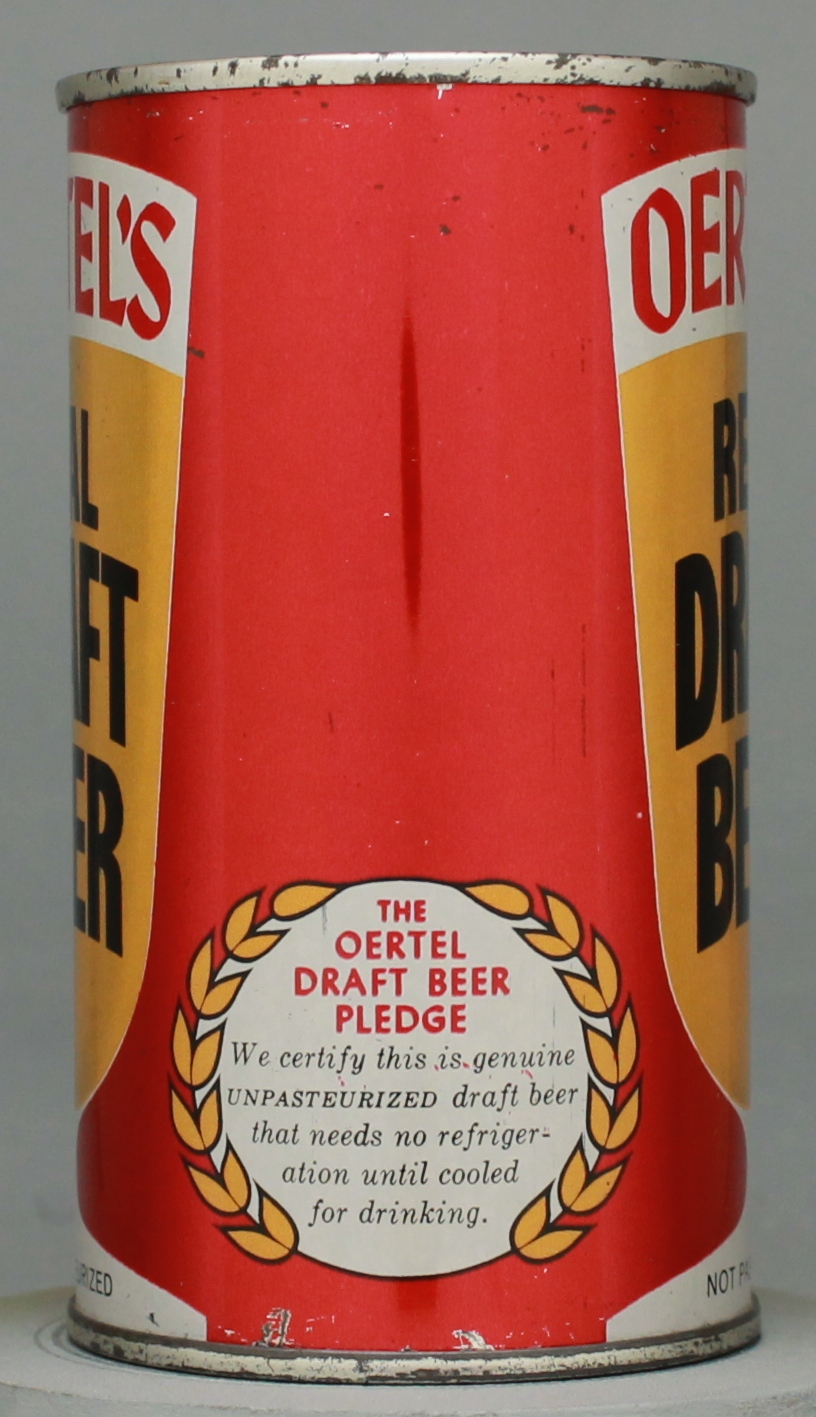
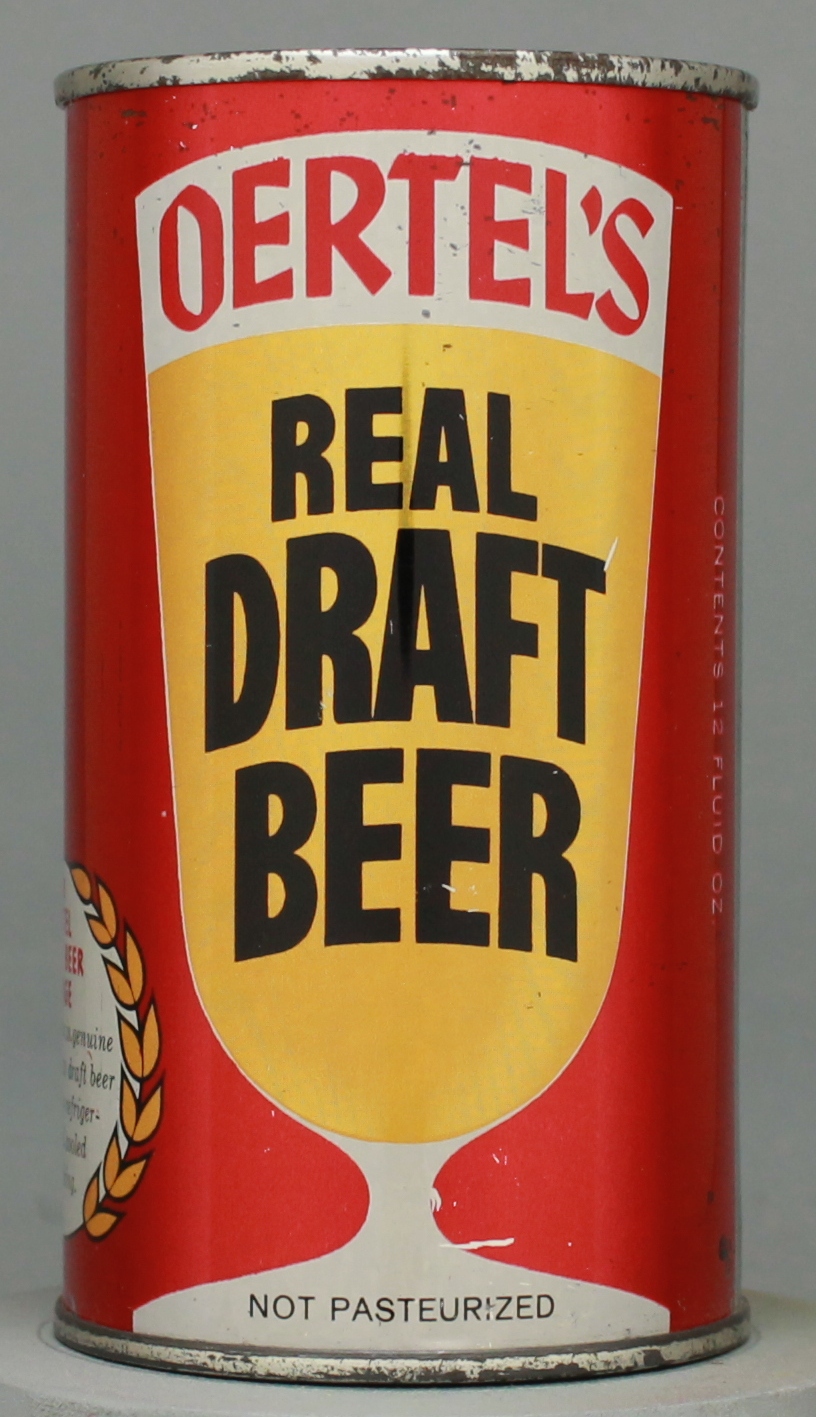
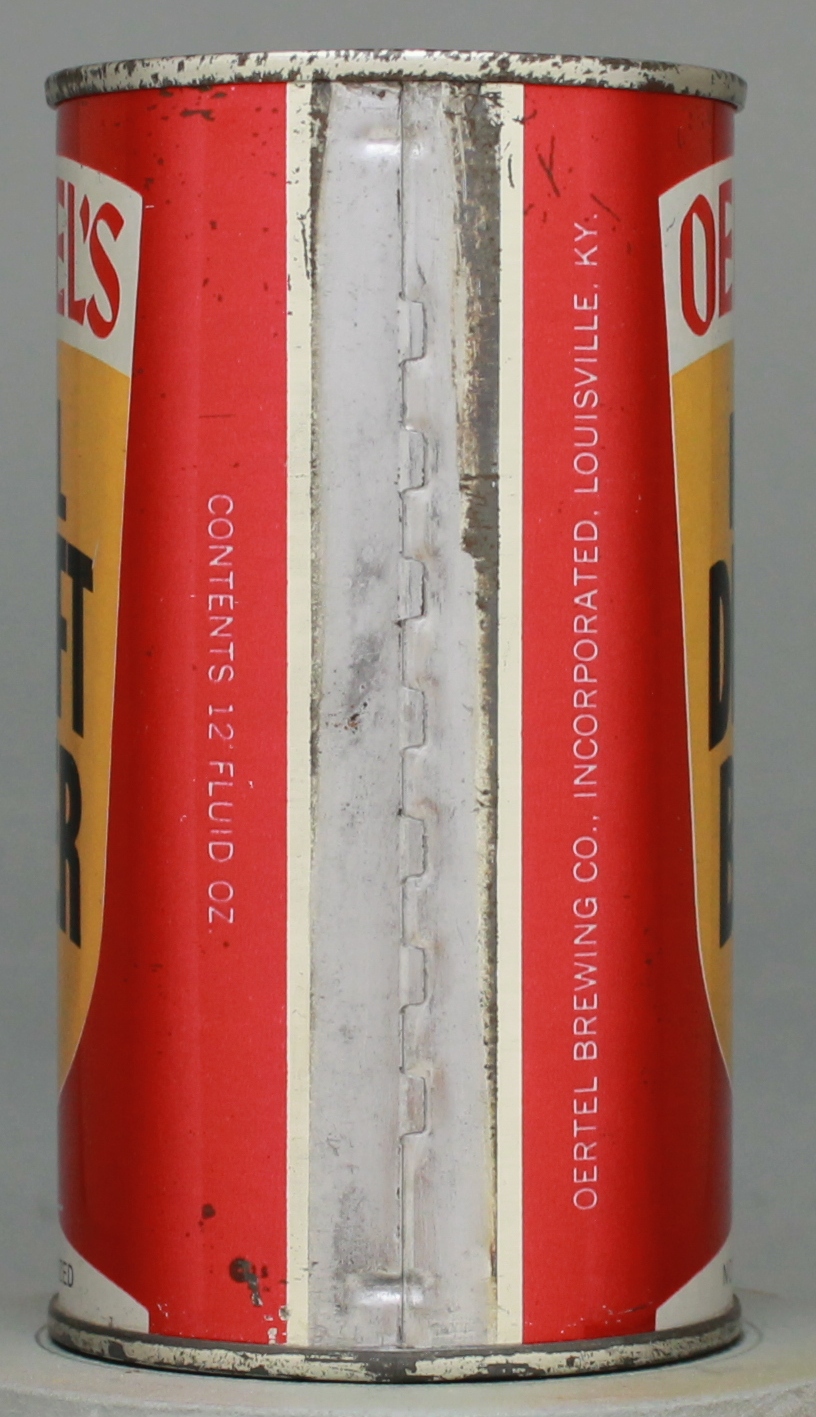
Dating from the mid-1960s, this 12-ounce flat top can represents a short-lived packaging format from an era when the brewing industry was rapidly transitioning to self-opening cans. The front graphic is centered on an oversized stemmed beer chalice, capped by an arched red banner bearing the brewery name. Prominently printed within the glass is the bold statement "REAL DRAFT BEER," while the lower rim features the mandatory notice "NOT PASTEURIZED." Adjacent to the goblet sits a golden laurel wreath emblem certifying that the contents delivered genuine, unpasteurized draft beer straight to the consumer.
Oertel's Real Draft emerged around 1964 to capitalize on a major industry trend of the decade: marketing cold-filtered, unpasteurized beer packaged for home consumption. Designed to capture the taste of freshly tapped tavern draught, the brand emphasized its lack of heat pasteurization to distinguish itself against traditional packaged lagers. Despite aggressive regional promotion highlighting draft authenticity, the brand had only a brief window on store shelves before the brewery ceased operations.
The Oertel Brewing Company was an essential fixture of Louisville, Kentucky's brewing history. Based in the neighborhood of Butchertown on Story Avenue, the facility's origins traced back to an 1865 brewery founded by Frank Rettig and later operated by Charles Hartmetz. John Fred Oertel, who served as brewmaster, took sole control of the operation in 1892 and incorporated the Oertel Brewing Company in 1906. The business navigated Prohibition by producing soft drinks and cereal beverages, returning to beer production after repeal and thriving on local favorites like Oertel’s '92. By the 1960s, severe market pressure from expanding national brewers weighed heavily on the regional plant. Brown-Forman Distillers Corporation acquired the brewery in 1964, but the operation remained unprofitable and closed for good in 1967.
For collectors, this can serves as an evocative cross-section of late flat top can production and 1960s brewing trends. Late flat tops produced during the dawn of the pull-tab era offer a tangible snapshot of a changing packaging landscape, and the can remains a sought-after piece representing Louisville's rich brewing heritage.
* Descriptions are AI-assisted and may include edits from our team. Verify key details.
Can Details
Similar Cans
Price History
Not enough sales data to display a chart.
Sold Listings
No recent sales data available for this can.