Old Milwaukee Beer 12 Oz Tab Top Can
Jos. Schlitz • Winston-Salem, NC
Old Milwaukee Winston-Salem Tab Top
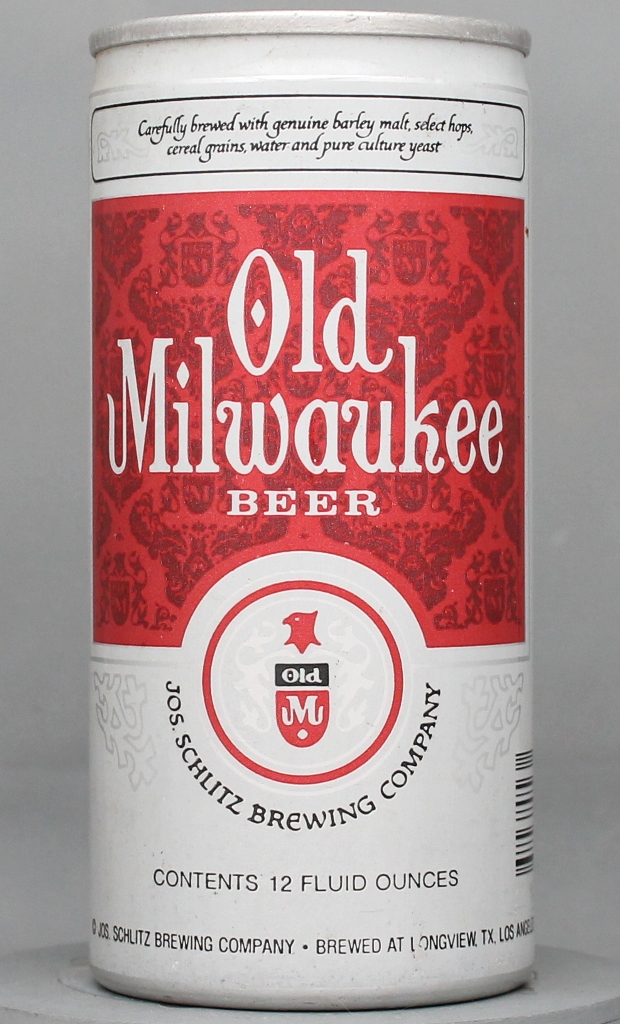
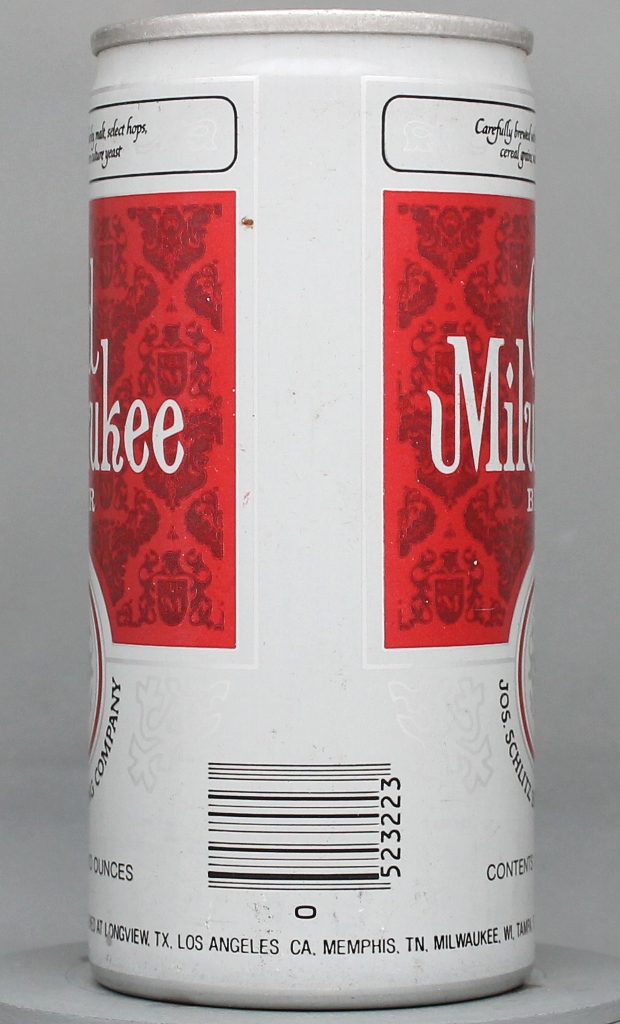
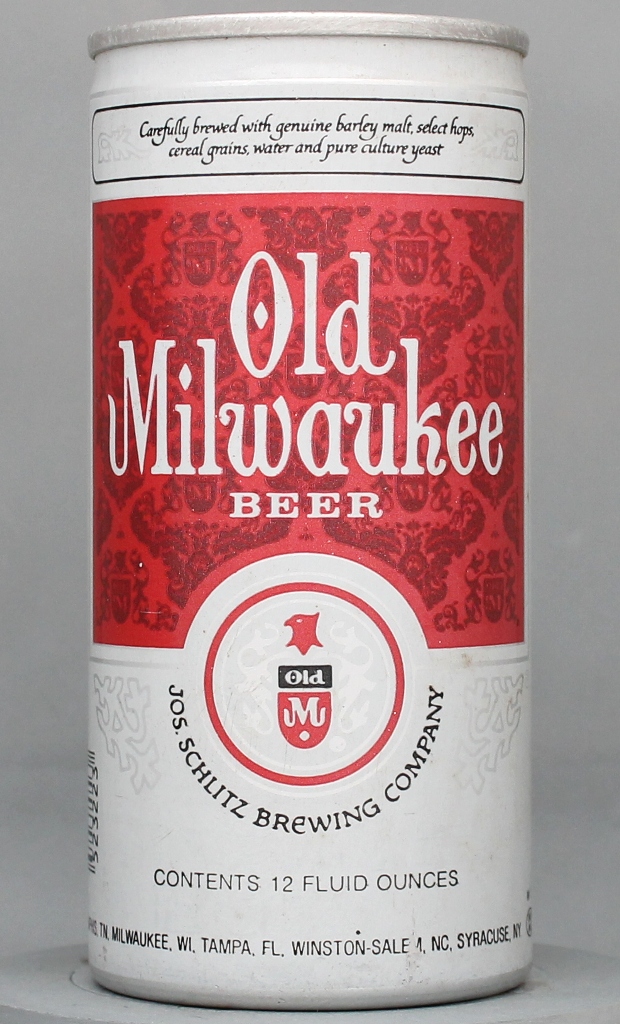
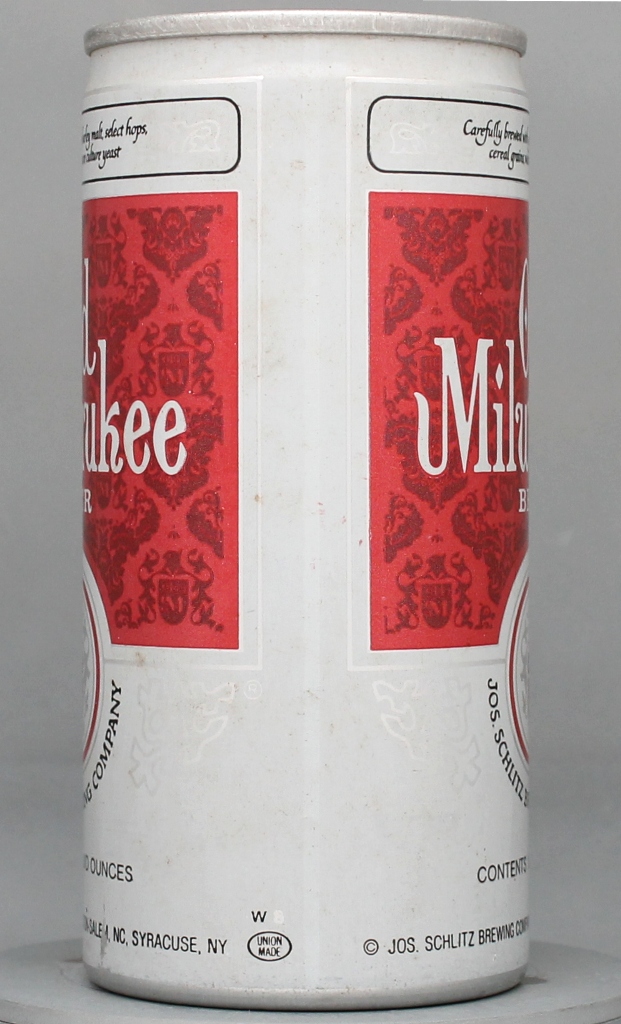
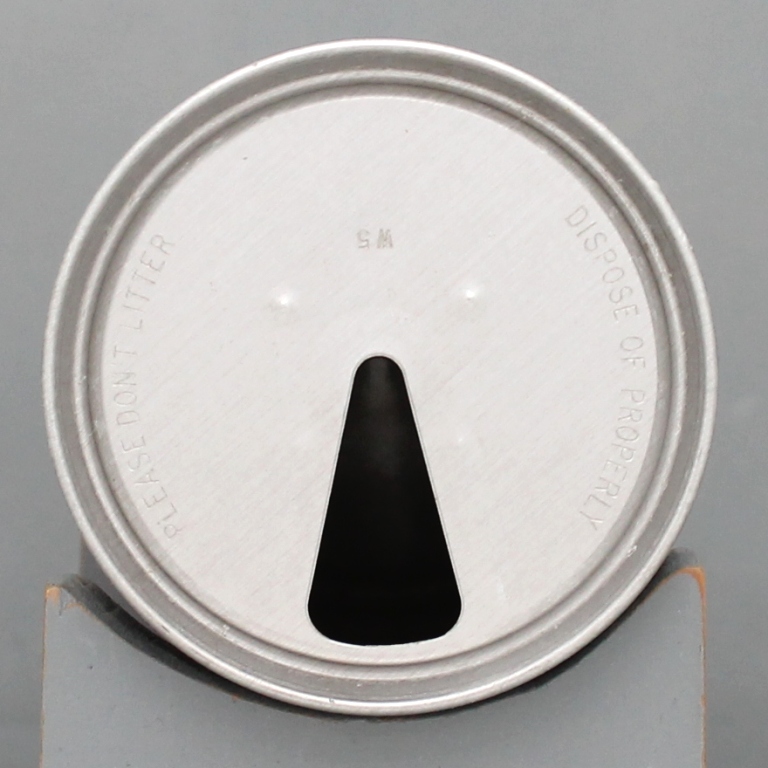
This all-aluminum 12-ounce tab top container features a tall can profile and dates to the mid-1970s, an era defined by modern manufacturing shifts and retail standardization. The can incorporates a Universal Product Code (UPC) barcode on the lower right flank and features the brand's classic ornate scrollwork band in deep red above the Jos. Schlitz Brewing Company crest. A boxed statement along the upper rim notes that the beer is carefully brewed with genuine barley malt, select hops, cereal grains, water, and pure culture yeast. Along the bottom rim, the mandatory text lists seven brewery locations, utilizing a dot indicator positioned directly over Winston-Salem, North Carolina, to designate the specific packaging plant of origin.
Old Milwaukee was originally introduced by the Jos. Schlitz Brewing Company in the late nineteenth century before being revived in the mid-twentieth century as a high-volume, popular-priced companion to the flagship Schlitz lager. Marketed extensively to value-conscious consumers with memorable slogans such as "Taste As Great As Its Name," Old Milwaukee grew into one of the top-selling economy beers across the United States. Following subsequent corporate shifts, the brand continued production under the Stroh Brewery Company and later the Pabst Brewing Company portfolio.
The Jos. Schlitz Brewing Company traces its roots to 1849, when August Krug established a small brewery in Milwaukee, Wisconsin. Following Krug's death, bookkeeper Joseph Schlitz took over operations in 1858. The firm grew exponentially after supplying beer to Chicago in the wake of the 1871 Great Chicago Fire, eventually adopting the famed slogan "The Beer That Made Milwaukee Famous" and becoming one of America's largest brewing powerhouses. To expand its national footprint, Schlitz opened a massive production facility in Winston-Salem in 1969. Cost-cutting recipe revisions and labor disputes in the 1970s eroded the company's dominance, leading to its acquisition by Stroh in 1982.
For breweriana enthusiasts, this can holds significance as a document of multi-plant macro-brewing operations during the 1970s. The dot-coding system used across Schlitz facilities makes these issues a popular focus for collectors seeking city-mandatory variations, while the tall can construction and early UPC implementation reflect pivotal milestones in beverage container design.
* Descriptions are AI-assisted and may include edits from our team. Verify key details.
Can Details
Similar Cans
Price History
Not enough sales data to display a chart.
Sold Listings
No recent sales data available for this can.