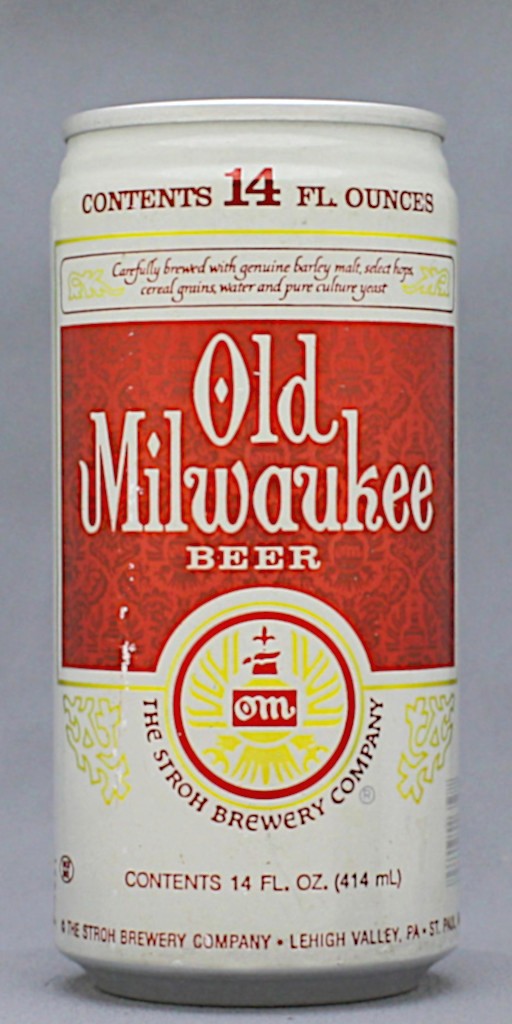
Old Milwaukee Beer 14 Oz Tab Top Can
Stroh • Lehigh Valley, PA
Stroh's 14 oz Old Milwaukee Can
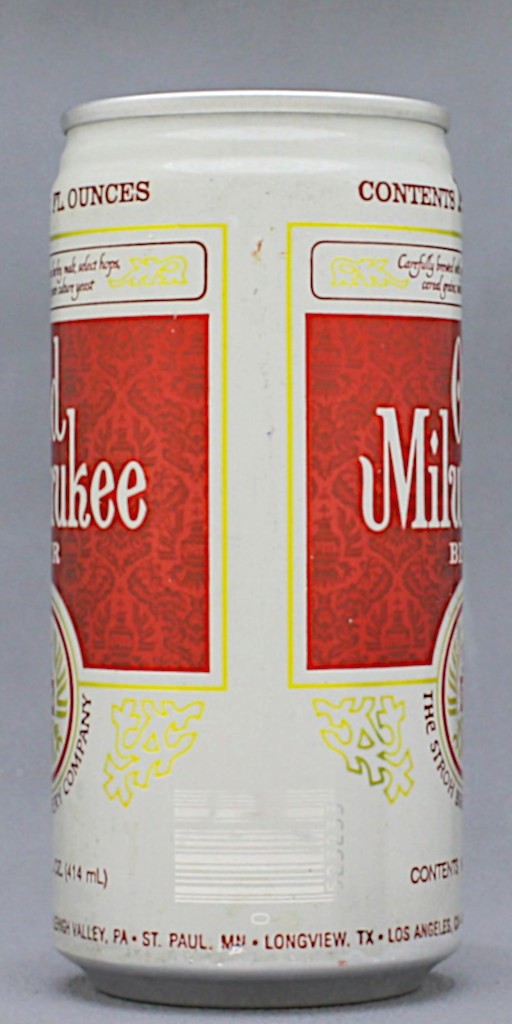
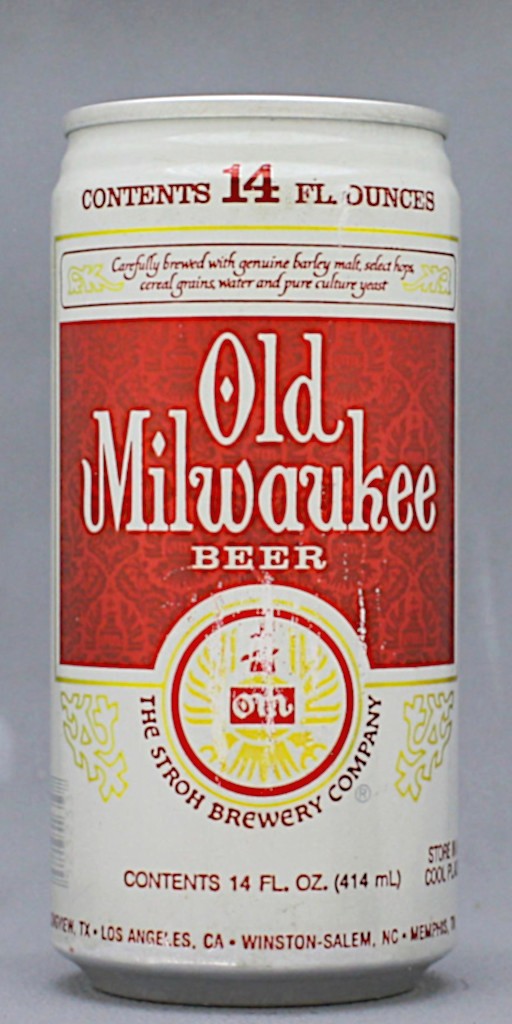
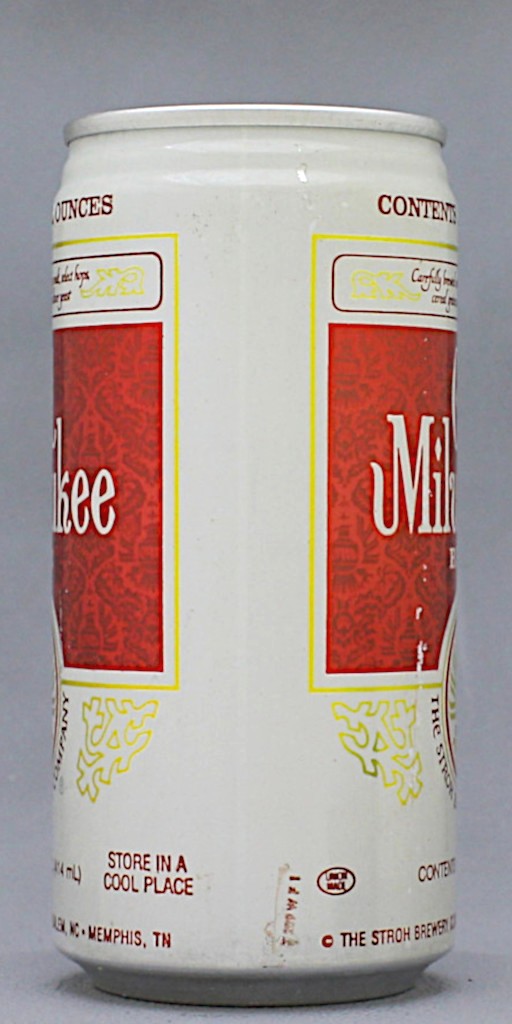
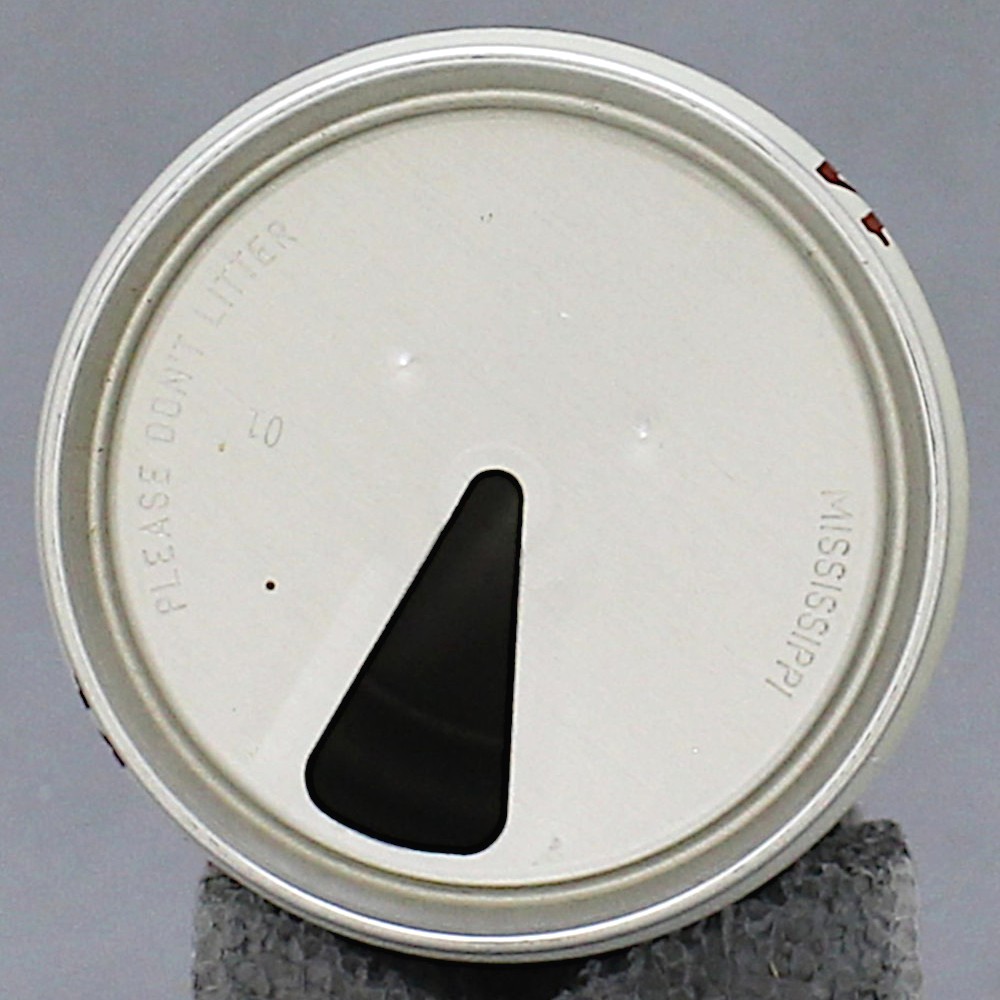
This aluminum tab top container for Old Milwaukee Beer represents an interesting era in American brewing history, specifically showcasing the uncommon 14-ounce capacity rather than the ubiquitous standard 12-ounce volume. Bearing a mandatory listing associated with Stroh's Lehigh Valley, Pennsylvania facility, the can includes six listed brewing cities alongside modern packaging features such as a Universal Product Code (UPC) barcode and metric volume measurements. These design elements place its manufacturing in the post-1970s era when packaging standards evolved to accommodate computerized retail scanning and national distribution across multiple regional facilities.
Old Milwaukee was originally introduced during the 1930s by the Joseph Schlitz Brewing Company as an economical, value-oriented lager. Schlitz revived and expanded the brand nationally in the late 1950s to compete in the growing budget-friendly beer segment. Positioned as an honest, working-class beverage offering premium character without the premium price tag, the brand achieved widespread recognition through memorable advertising campaigns and popular catchphrases such as "Taste As Great As Its Name" and "It Doesn't Get Any Better Than This." Following corporate acquisitions in the 1980s, the brand transitioned to Stroh before eventually joining the Pabst Brewing Company portfolio.
The Stroh Brewery Company traced its origins back to 1850 when German immigrant Bernhard Stroh established a brewery in Detroit, Michigan. Known for its signature fire-brewing process, the family-run enterprise navigated the challenges of national competition and successfully outlasted Prohibition by pivoting to ice cream, soft drinks, and malt syrup. In the late 20th century, Stroh embarked on an aggressive national expansion, acquiring the modern Lehigh Valley brewery in Pennsylvania along with the rival Jos. Schlitz Brewing Company in 1982. However, heavy debt loads from industry consolidation eventually forced the historic company to dissolve and sell its operations around the turn of the millennium.
For breweriana enthusiasts, this can holds significant appeal within the niche of non-standard mid-sized containers. The 14-ounce format was produced in far fewer numbers than conventional 12-ounce or 16-ounce cans, making it a standout addition to brand-specific shelves. Furthermore, the combination of multi-plant city listings, metric conversion text, and early UPC markings provides collectors with a fascinating tangible record of corporate consolidation and packaging evolution during the late twentieth century.
* Descriptions are AI-assisted and may include edits from our team. Verify key details.
Can Details
Similar Cans
Price History
Not enough sales data to display a chart.
Sold Listings
No recent sales data available for this can.