Pabst Blue Ribbon Beer 12 Oz Tab Top Can
Pabst • Milwaukee, WI
Pabst Blue Ribbon Five-City Can
The Can
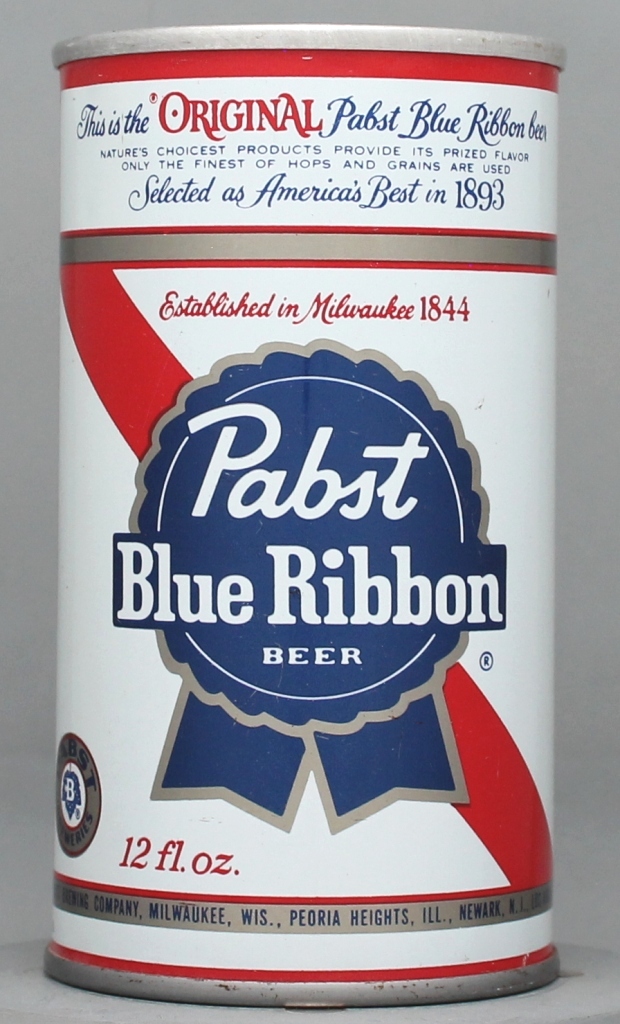
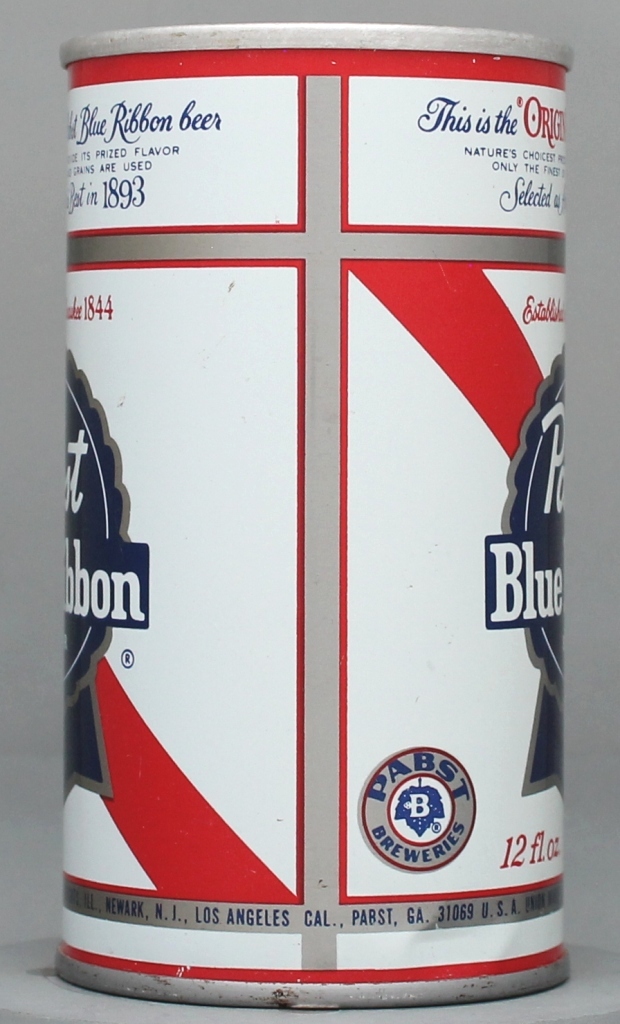
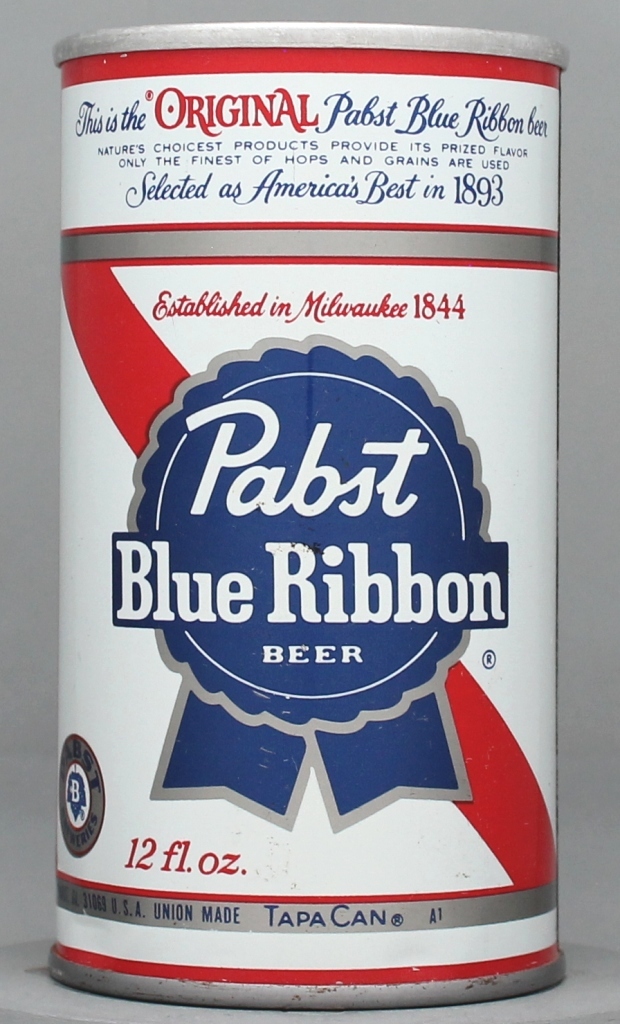
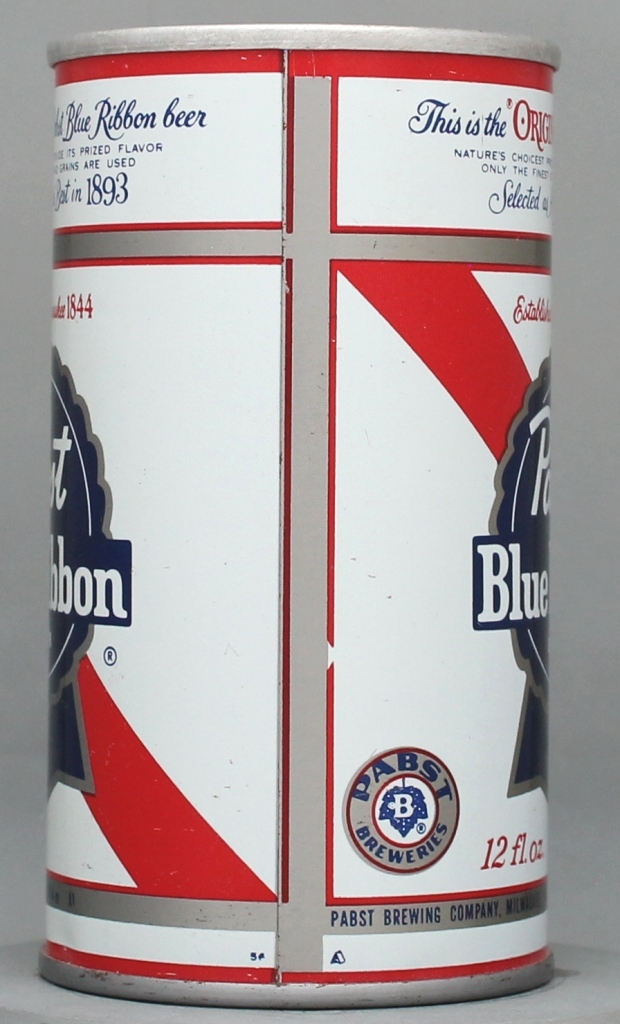
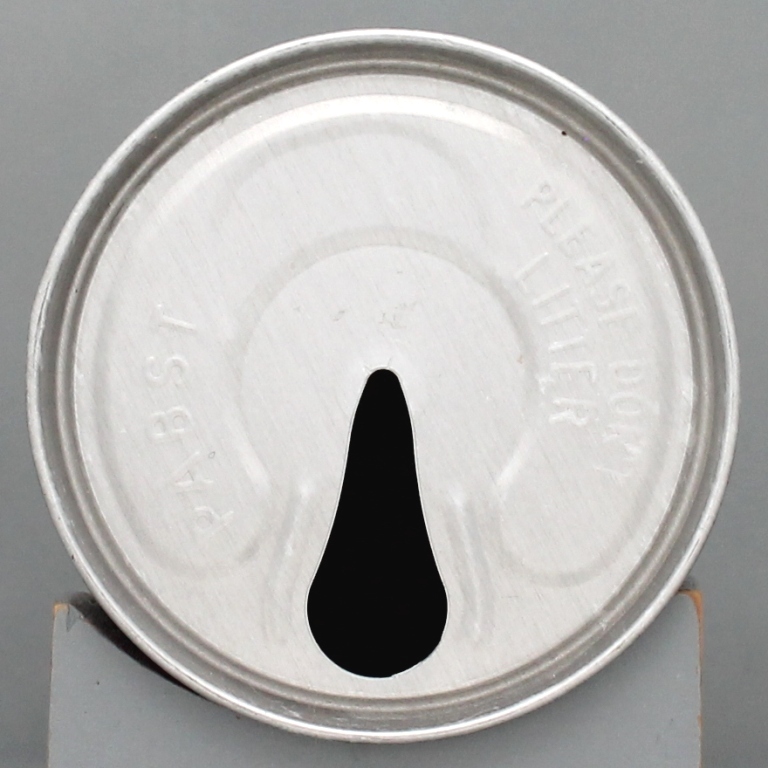
Constructed from straight steel and sealed with a tab top, this twelve-ounce can dates to the early 1970s pull-tab era. A key distinguishing detail is the mandatory brewery statement printed along the lower rim, which lists five production cities: Milwaukee, Wisconsin; Peoria Heights, Illinois; Newark, New Jersey; Los Angeles, California; and Pabst (Perry), Georgia. The can prominently displays traditional brand claims, including the statement "This is the ORIGINAL Pabst Blue Ribbon beer," an establishment date noting "Established in Milwaukee 1844," and "Selected as America's Best in 1893," honoring the company's award at the Chicago World's Columbian Exposition.
The Brand
Pabst Blue Ribbon traces its roots to the brewery's flagship lager, initially marketed as Best Select. Beginning in 1882, the brewery tied blue silk ribbons around the necks of its bottles after earning medals at various expositions. Following its high-profile honors at the 1893 World's Columbian Exposition, customer demand for the "blue ribbon beer" led the company to officially change the brand's name to Pabst Blue Ribbon in 1898. Heavily promoted throughout the twentieth century through sports broadcasts, television commercials, and slogans highlighting its historic awards and grain quality, the brand grew into a blue-collar staple before enjoying a notable revival as a retro cultural favorite.
The Brewery
The brewing company originated in Milwaukee in 1844 when Jacob Best Sr. and his sons founded the Empire Brewery. Steamship captain Frederick Pabst married into the Best family, acquired an interest in the business in 1864, and expanded output dramatically, formally renaming the operation the Pabst Brewing Company in 1889. During Prohibition, the brewery remained solvent by producing near-beer, malt syrup, and a proprietary processed cheese known as Pabst-ett. In the post-World War II period, Pabst grew into a nationwide brewing giant by opening and acquiring facilities across the country. Following intense market competition, ownership changes, and the closure of its historic Milwaukee plant in 1996, Pabst evolved into a virtual brewer relying on contract production.
Collecting Context
Pull tab cans from major national breweries offer rich historic value for collectors, as subtle mandatory text changes map the geographic expansion and consolidation of American brewing plants. Variations defined by multi-city listings, such as this five-city format, provide collectors with clear physical records of Pabst's mid-century manufacturing reach.
* Descriptions are AI-assisted and may include edits from our team. Verify key details.
Can Details
Similar Cans
Price Statistics
Price Estimator
Price History
Sold Listings
| Price | Title | Platform | Date |
|---|---|---|---|
| $11.00 | 1971 Pabst Blue Ribbon Beer 12oz T106-28.2 Bank Top Can Milwaukee Wisconsin | Tavern Trove | 12/15/2024 |
| $3.00 | 1971 Pabst Blue Ribbon Beer 12oz T106-28.1 Bank Top Can Milwaukee Wisconsin | Tavern Trove | 12/15/2024 |
| $???.?? | Hidden sold listing | Auction | ??/??/???? |
| $???.?? | Hidden sold listing | Auction | ??/??/???? |
| $???.?? | Hidden sold listing | Auction | ??/??/???? |
See every sold listing for this can, with links to the original auctions.
Unlock sold listings