Pabst Blue Ribbon Beer Flat Top Can
Pabst • Milwaukee, WI IRTP era, 1935 to 1950
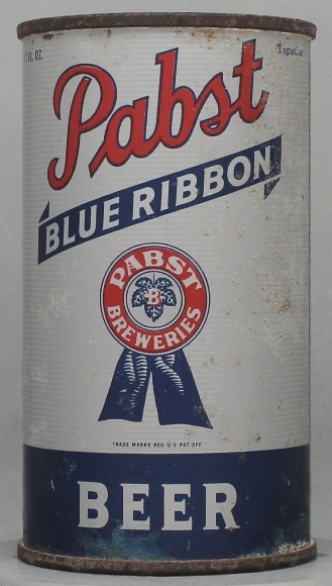
Mid-Century Pabst Blue Ribbon TapaCan
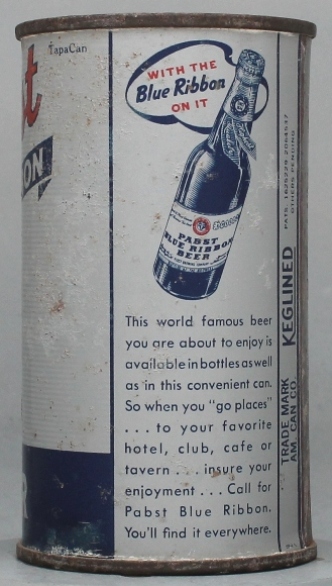
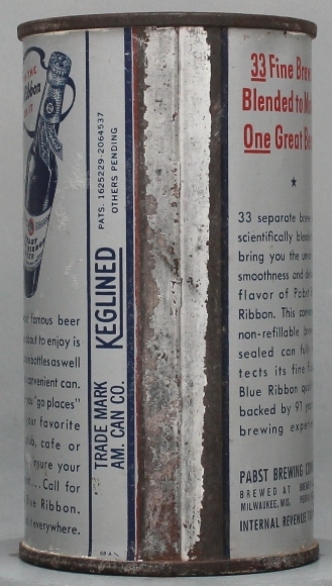
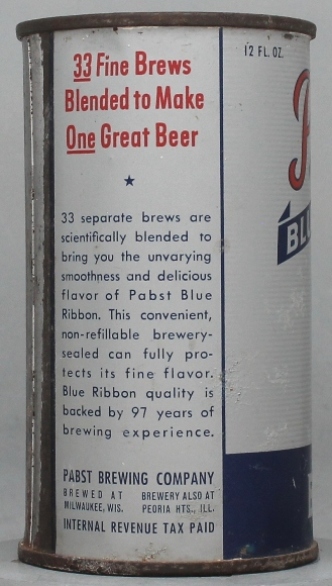
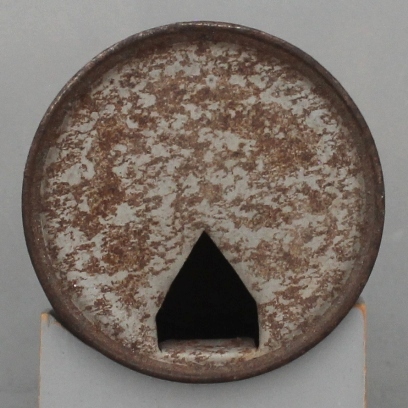
This 12-ounce flat top container dates from the era when canned beer carried the mandatory Internal Revenue Tax Paid (IRTP) statement. Manufactured with American Can Company specifications, it features the proprietary "TapaCan" trademark printed in the upper right corner, a moniker closely tied to Pabst's early canned offerings. Distinguished by its dull gray metallic background finish, the front displays the red script Pabst wordmark over a diagonal blue ribbon banner, anchored by the circular Pabst Breweries crest with its hop leaf centerpiece and descending ribbon tails.
The Blue Ribbon brand originated in the late 19th century, originally marketed as Best Select. In 1882, the brewery began tying genuine blue silk ribbons around the necks of its award-winning bottles. After receiving top honors at the 1893 World's Columbian Exposition in Chicago, public demand for the "blue ribbon beer" prompted the company to officially rename the brew Pabst Blue Ribbon in 1898. Promoted through major radio broadcasts, mid-century television shows, and memorable print slogans, Blue Ribbon became one of the defining mainstream lagers of twentieth-century America.
The company was established in Milwaukee, Wisconsin, in 1844 when German immigrant Jacob Best founded the Empire Brewery. Following his marriage into the Best family, steamship captain Frederick Pabst took over leadership and transformed the operation into America's largest brewing company, formally renaming it the Pabst Brewing Company in 1889. The business survived Prohibition by shifting production to malt extracts and cheese products, quickly reemerging as an industry titan following repeal. Although industry consolidation and shifting market dynamics led to the closure of the flagship Milwaukee complex in 1996, the brand maintained its enduring national presence.
For breweriana enthusiasts, mid-century flat tops bearing the TapaCan branding and the pre-1950s tax-paid wording provide an essential link to the early days of metal canning. Examples featuring the dull gray ground capture a distinctive moment in the evolution of American brewing graphics.
* Descriptions are AI-assisted and may include edits from our team. Verify key details.
Can Details
Similar Cans
Price History
Not enough sales data to display a chart.
Sold Listings
No recent sales data available for this can.