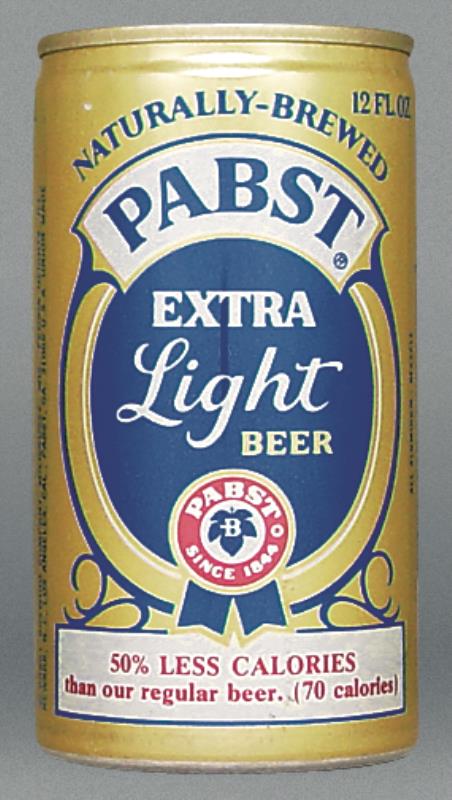
Pabst Extra Light Beer 12 Oz Tab Top Can
Pabst • Los Angeles, CA
Pabst Extra Light 12 Oz Can
This all-aluminum twelve-ounce tab top can represents Pabst's foray into the ultra-low-calorie market during the late 1970s. The face prominently features the banner declaring "50% LESS CALORIES than our regular beer. (70 calories)" anchored beneath Pabst's traditional hop-and-leaf emblem and ribbon. Across the upper arch, the label proclaims the beverage as "NATURALLY-BREWED." In breweriana references, this issue is distinguished by its mandatory brewery text listing five production cities, including Los Angeles, California, reflecting Pabst's expansive manufacturing network during the era.
Pabst introduced Pabst Extra Light in the late 1970s to compete in the rapidly expanding light beer category ignited by Miller Lite. While standard light lagers of the period generally hovered around 96 calories, Pabst positioned Extra Light as an even leaner option boasting just 70 calories. Television commercials starred actor John Beck explaining "the facts of light" to bar patrons, pitching the lower calorie count as an appealing choice for moderation. Despite the heavy marketing campaign, consumer appetite for ultra-low-calorie lagers shifted over time, and Pabst eventually discontinued Extra Light in favor of standard Pabst Light and later recipe reformulations.
The Pabst Brewing Company traces its origins to 1844, when Jacob Best and his sons established the Empire Brewery in Milwaukee, Wisconsin. Under the leadership of Best's son-in-law, steamship captain Frederick Pabst, the enterprise took the Pabst name in 1889 and expanded into one of the country's largest brewing operations, famously tying blue silk ribbons around its flagship bottles. Pabst survived Prohibition by manufacturing malt syrup, soft drinks, and processed cheese before resuming commercial brewing in 1933. In the post-World War II boom, Pabst added facilities across the country, including a Los Angeles facility opened in 1948. Escalating corporate battles and industry consolidation in the late twentieth century eventually forced the closure of Pabst's flagship Milwaukee brewery in 1996, transforming the historic company into a contract-brewed operation.
For collectors, this can provides a tangible artifact from the fiercely competitive light beer wars of the 1970s. Packaging featuring multi-city brewery rosters is particularly popular among collectors tracking the geographic expansion and facility changes of America's major mid-century brewing dynasties.
* Descriptions are AI-assisted and may include edits from our team. Verify key details.
Can Details
Similar Cans
Price History
Not enough sales data to display a chart.
Sold Listings
No recent sales data available for this can.