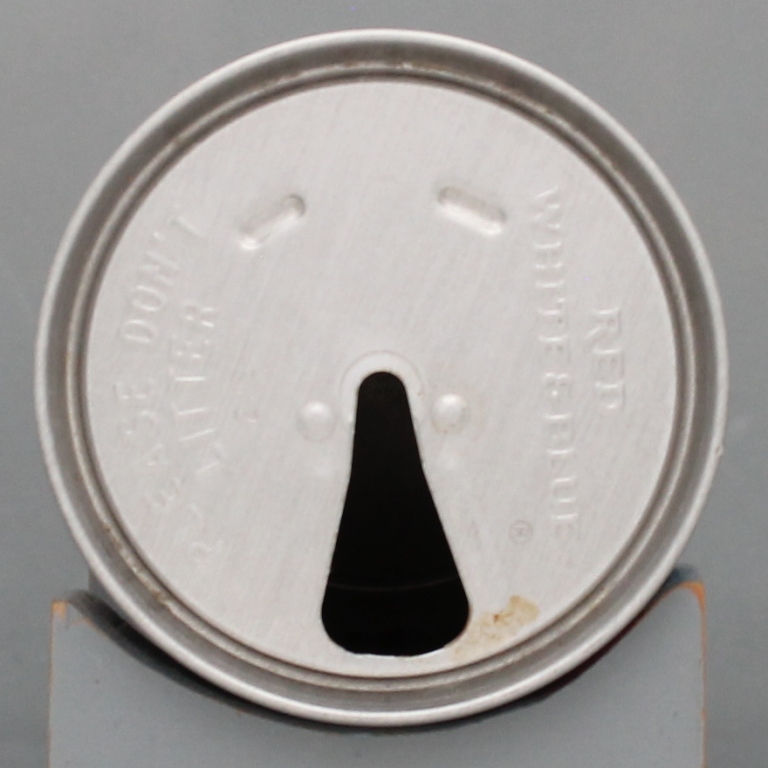
Red White & Blue Special Lager Beer 12 Oz Tab/Stay Top Can
Pabst • Pabst, GA
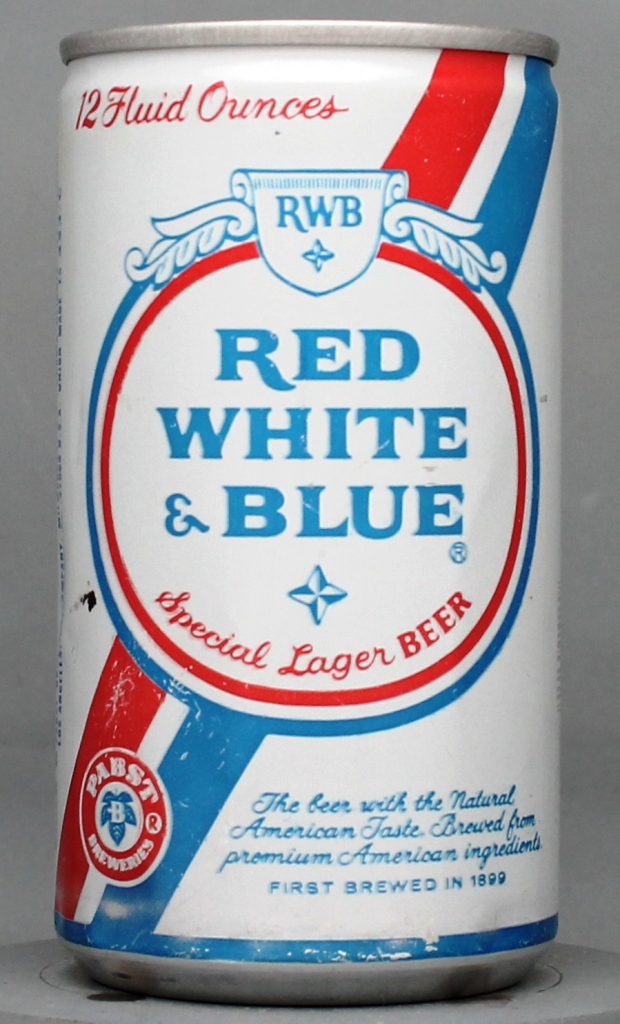
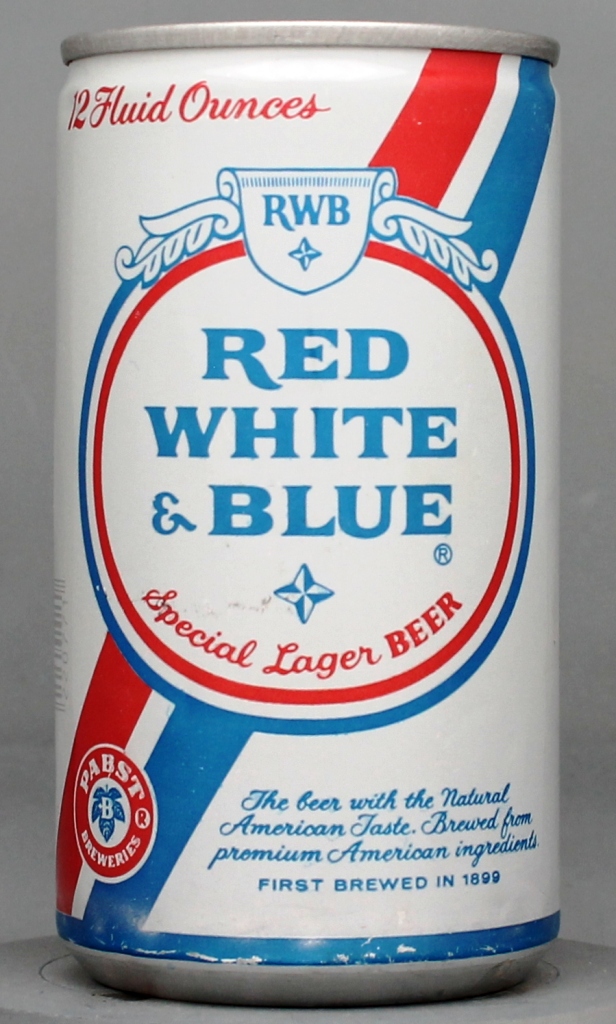
Pabst Red White & Blue Lager Can
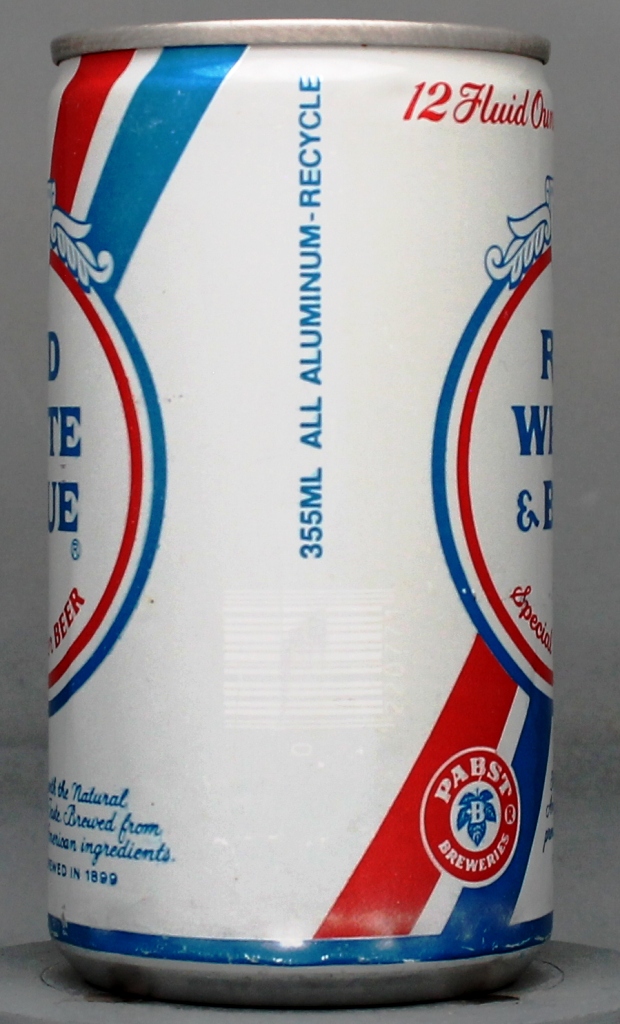
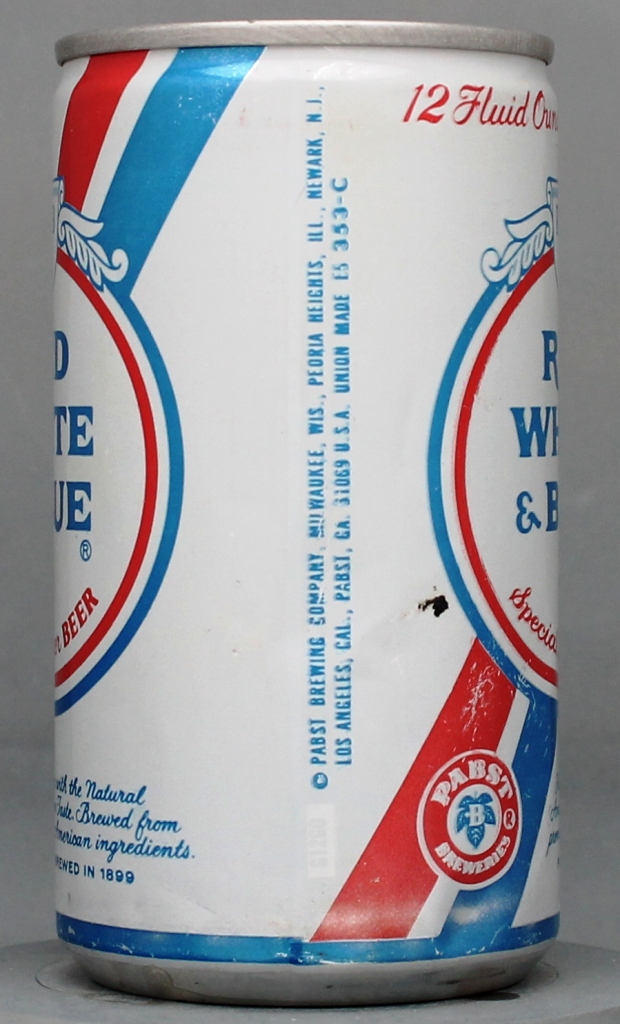
This 12-ounce all-aluminum can represents a transitional era in American packaging during the late 1970s. It incorporates then-modern packaging standards, including a UPC barcode and metric volume measurements alongside the traditional "12 Fluid Ounces" script along the upper rim. The mandatory brewery statement lists five production cities, prominently including Los Angeles, California, and Pabst, Georgia—the purpose-built facility established near Perry. While this specimen features a traditional pull tab, collector documentation confirms that versions with stay-tab openers were also produced.
Pabst originally introduced the Red White & Blue label in 1899 as an affordable, patriotic session lager timed to celebrate the Fourth of July, a milestone commemorated by the "FIRST BREWED IN 1899" inscription beneath the front copy. Billed historically as an "honest beer for an honest price," the label served as a budget-friendly counterpart to the company's flagship Blue Ribbon. During the 1970s, Pabst gave the brand renewed attention, adorning the can with an RWB shield crest and the prominent promise: "The beer with the Natural American Taste. Brewed from premium American ingredients". The brand enjoyed strong sales in value-beer segments for several decades before fading from national distribution.
The brewery traces its roots to 1844, when Jacob Best established the original operation in Milwaukee, Wisconsin. Guided by Captain Frederick Pabst, the business expanded into one of the largest brewing empires in the world through innovative advertising and nationwide rail distribution. After navigating Prohibition through cheese production and non-alcoholic goods, Pabst embarked on rapid postwar expansion. By the early 1970s, the company established a sprawling manufacturing plant in Georgia, leading to the local designation of Pabst, Georgia. Although corporate acquisitions and facility closures altered the company's operations in later decades, its classic American brand portfolio endured.
For breweriana collectors, this can provides a vivid snapshot of late-twentieth-century industrial and design history. The five-city mandatory imprint documents Pabst at the height of its multi-plant geographic reach, while the coexistence of both pull-tab and stay-on top versions makes it a notable representative of a major manufacturing transition in beverage container history.
* Descriptions are AI-assisted and may include edits from our team. Verify key details.
Can Details
Similar Cans
Price History
Not enough sales data to display a chart.
Sold Listings
No recent sales data available for this can.