Regal Amber Beer Flat Top Can
Regal Amber • San Francisco, CA IRTP era, 1935 to 1950
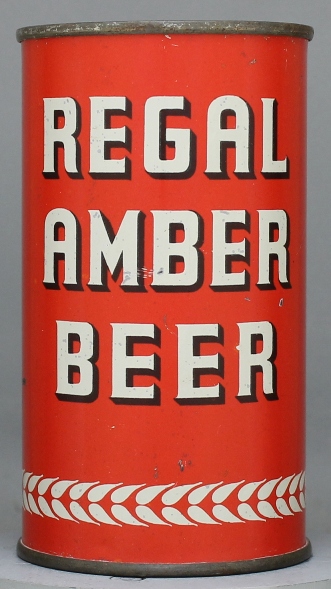
San Francisco Pre-War Regal Amber Can
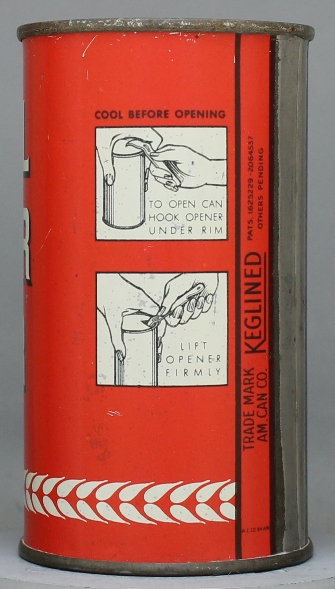
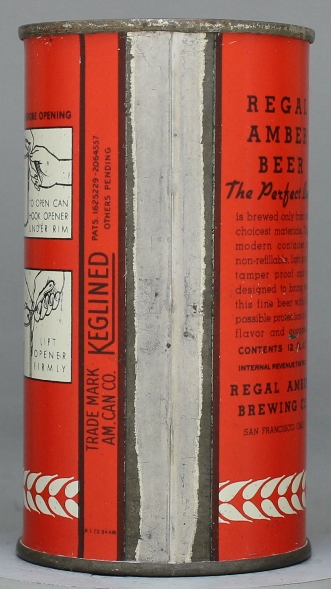
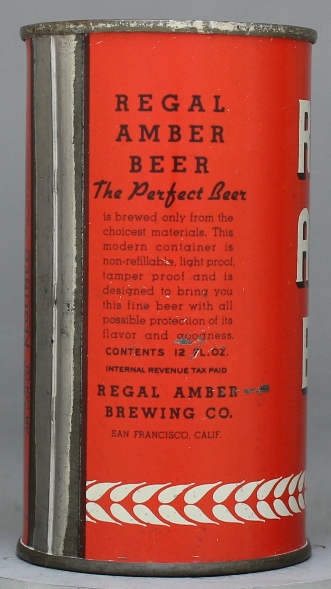
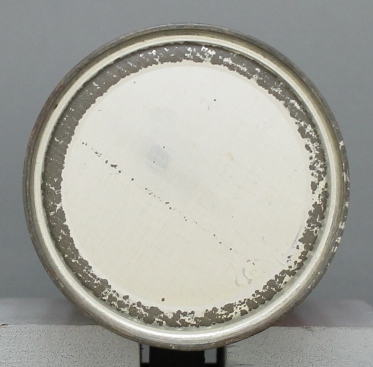
This 12-ounce flat top container dates to the late 1930s and was manufactured by the American Can Company using its trademarked "Keglined" process. Cataloged with an alternative tax statement and referenced under Lilek 729, the can represents an early era of West Coast canned beer packaging. A prominent feature on the side is the illustrated opening instruction panel detailing step-by-step how to hook and firmly lift a churchkey opener under the rim, bordered by patent notations, can company trade markings, and a repeating white grain wreath motif encircling the base.
Regal Amber was introduced following the repeal of Prohibition as a flagship regional brew designed for Northern California consumers. Positioned as a full-bodied, traditional lager, the brand achieved strong distribution across the Pacific Coast during the late 1930s. As consumer preferences gradually shifted toward lighter, crisper lagers around the onset of World War II, the brewery transitioned its advertising and marketing focus toward its Regal Pale label, which eventually superseded Regal Amber as the firm's marquee brand.
The beer was brewed by the Regal Amber Brewing Company, located at 3250 20th Street in San Francisco's historic Mission District. Emerging from the post-Repeal reorganization of the Regal Products Company on property formerly linked to Pacific Brewing & Malting, Regal Amber grew rapidly into one of California's largest brewing operations before the war. In 1954, the company officially adopted the name Regal Pale Brewing Company to match its dominant brand. Facing mounting competition and industry consolidation driven by national shipping giants in the post-war era, the historic Mission District brewery ultimately ceased operations in the early 1960s.
Opening-instruction flat top cans from the 1930s occupy a revered place in breweriana collecting. Pre-war packages from West Coast regional breweries are particularly sought after for their bold, early graphic layouts and connection to the nascent days of commercial canning. Preserved examples—including famous discoveries of forgotten vintage cans tucked into the ceilings of historic San Francisco homes—ensure this classic brand remains an important fixture of Pacific Coast brewing history.
* Descriptions are AI-assisted and may include edits from our team. Verify key details.
Can Details
Similar Cans
Price History
Not enough sales data to display a chart.
Sold Listings
No recent sales data available for this can.