Schlitz Beer Pint Can
Jos. Schlitz • Tampa, FL
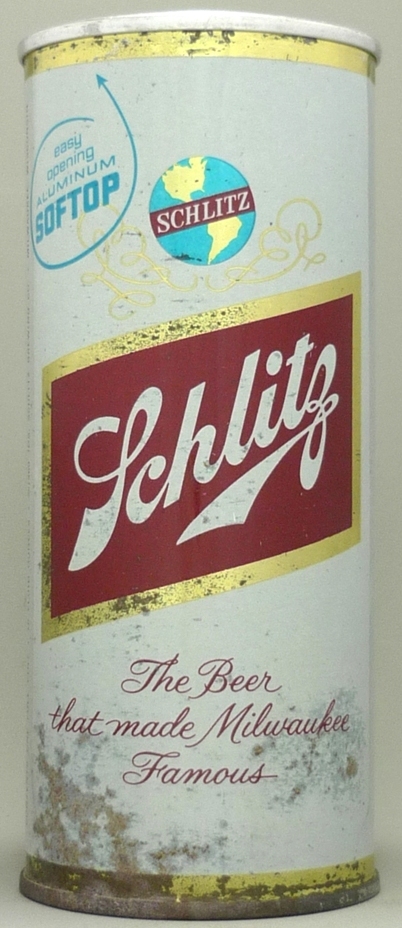
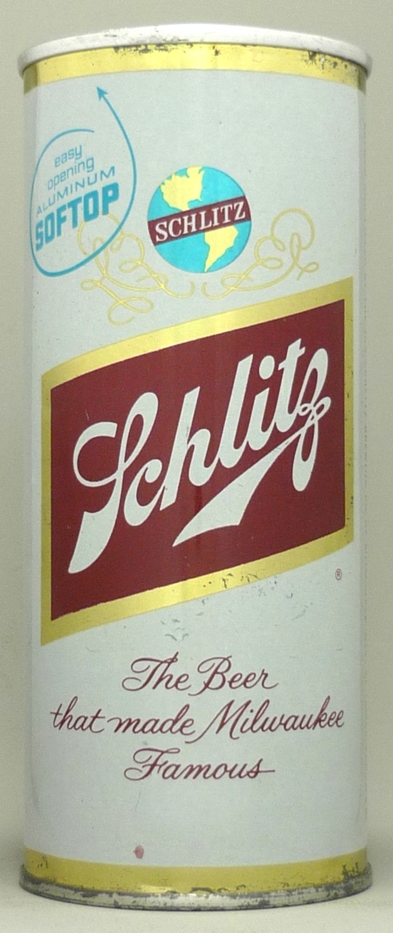
Schlitz Aluminum Softop Pint Can
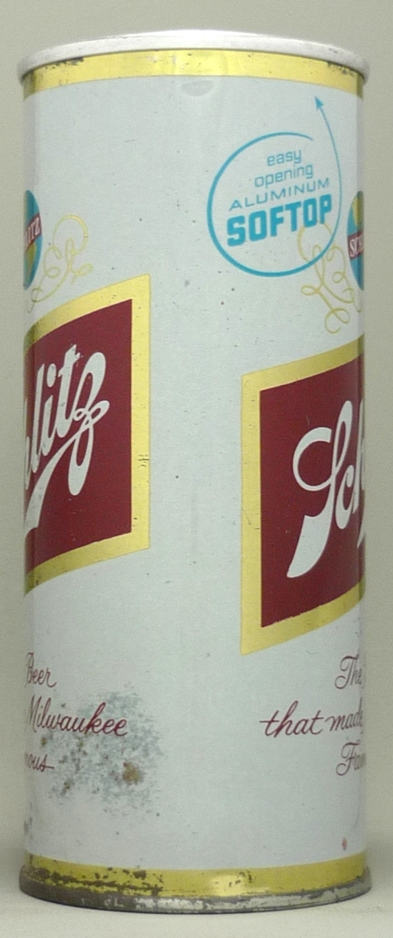
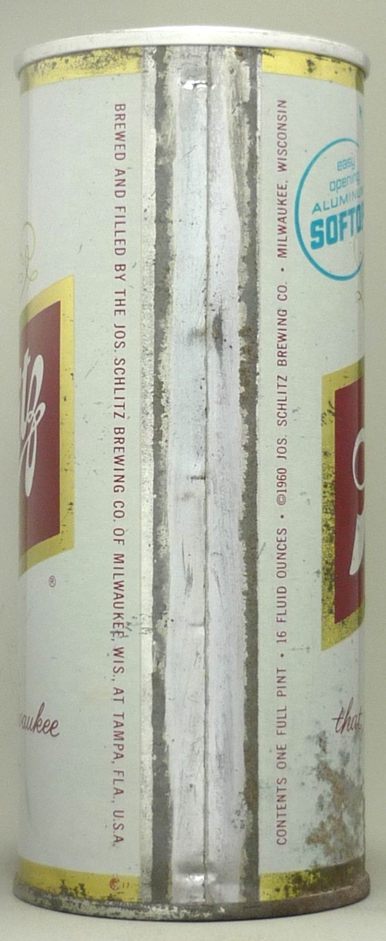
This 16-ounce pint container dates to the early 1960s, carrying a 1960 copyright date alongside a two-city mandatory statement representing Jos. Schlitz Brewing Company operations, including its facility in Tampa, Florida. A prominent graphic feature near the top rim is the circular directional emblem proclaiming the "easy opening ALUMINUM SOFTOP". During this transitional packaging era just prior to the widespread adoption of self-opening pull tabs, breweries introduced softer aluminum lids on steel bodies to make opening with a handheld piercer significantly easier. Schlitz was the first major national brewer to aggressively adopt and market this packaging innovation across its product line.
Schlitz was established as a flagship American lager that gained nationwide renown in the late 19th century. Marketed under the famous slogan printed across the bottom of the can, "The Beer that made Milwaukee Famous," the brand relied on heavy promotional campaigns emphasizing quality, purity, and modern lifestyle imagery. By the mid-20th century, it was one of the undisputed leaders in American brewing.
The brewery traces its roots to Milwaukee, Wisconsin, where August Krug established a small brewery in 1849. Bookkeeper Joseph Schlitz took over management following Krug's death, assuming ownership in 1858 and naming the Jos. Schlitz Brewing Company. Led for generations by the Uihlein family, the company survived Prohibition and expanded into a nationwide powerhouse, opening large regional facilities such as its Tampa plant in 1959. Schlitz regularly competed for the top sales spot in the United States until quality issues and labor disputes in the 1970s initiated a steep decline, ultimately leading to its acquisition by the Stroh Brewery Company in 1982 and the eventual sale of its trademarks to Pabst.
For breweriana enthusiasts, 16-ounce pint flat tops from this era are highly prized for their larger visual presence compared to standard cans. This specimen is especially notable as a tangible document of early 1960s canning technology that bridged the gap between heavy steel flat tops and modern pull tabs.
* Descriptions are AI-assisted and may include edits from our team. Verify key details.
Can Details
Similar Cans
Price History
Not enough sales data to display a chart.
Sold Listings
No recent sales data available for this can.