Schlitz Light Natural Pilsner Beer 12 Oz Tab Top Can
Jos. Schlitz • Winston-Salem, NC
Schlitz Light Natural Pilsner Can
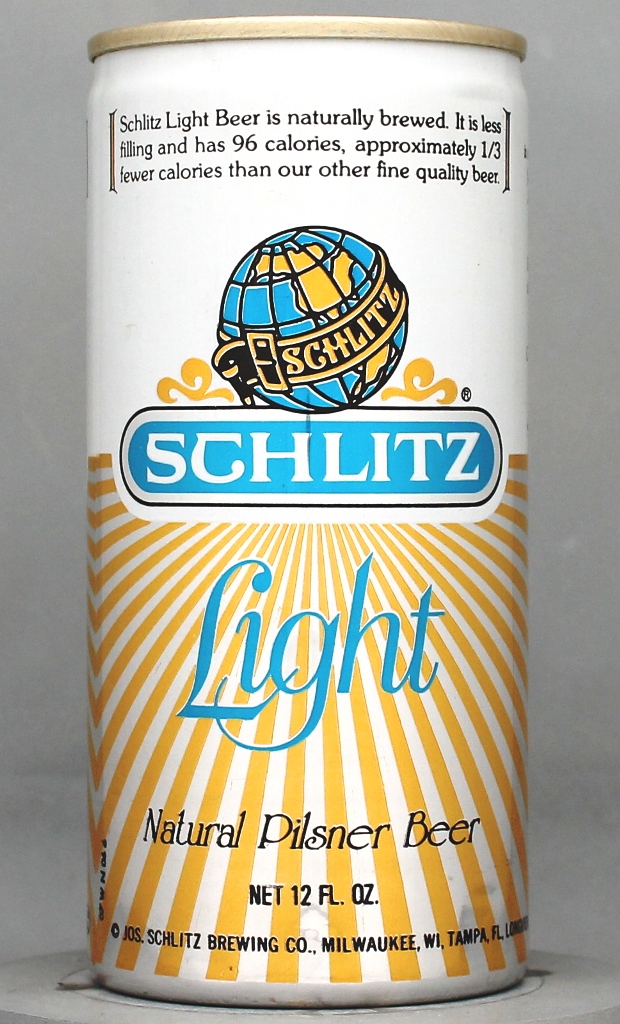
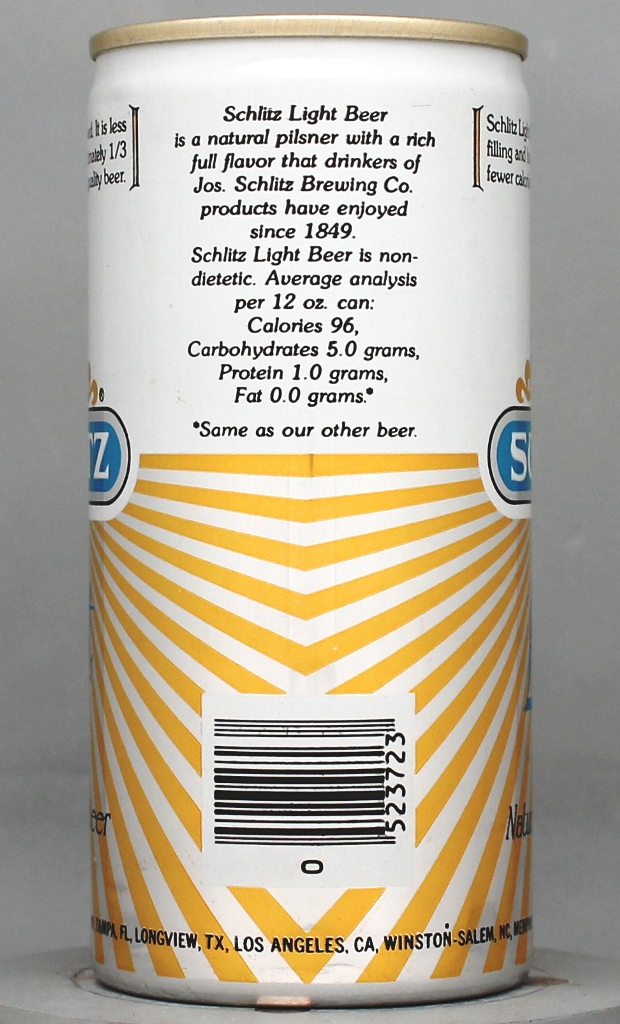
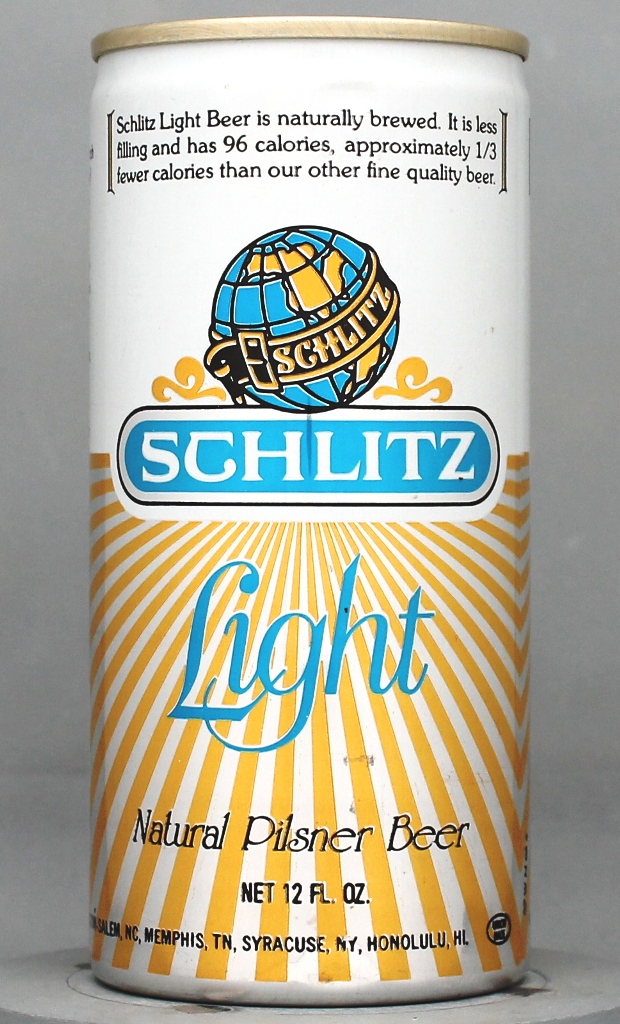
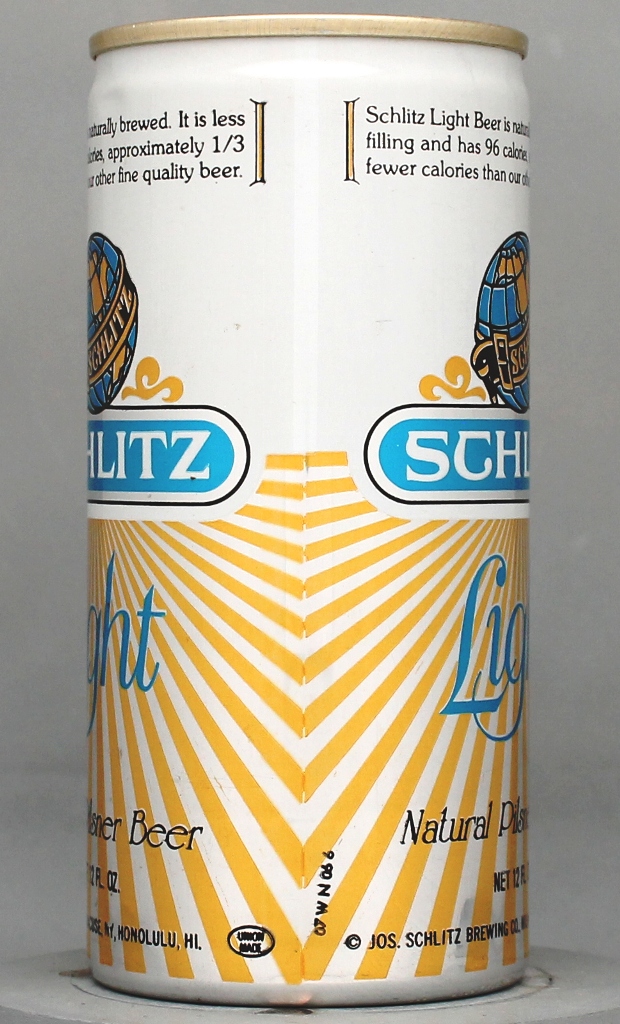
This all-aluminum 12-ounce tab top can highlights a pivotal moment in the American light beer revolution of the mid-to-late 1970s. Designed in a tall can format, the packaging features a vibrant burst of golden sunburst rays radiating outward beneath the brewery’s signature belted globe emblem. A framed text block at the top reads: "Schlitz Light Beer is naturally brewed. It is less filling and has 96 calories, approximately 1/3 fewer calories than our other fine quality beer." The bottom mandatory lists eight production cities, with an identifying dot placed over Winston-Salem to indicate its origin at the company's North Carolina facility, complemented by a white UPC panel on the side.
Jos. Schlitz Brewing Company introduced Schlitz Light in 1976 to counter the runaway success of Miller Lite and secure market share in the rapidly expanding low-calorie segment. Marketed under the tagline "The only light beer with Gusto," the brand was promoted aggressively through television commercials starring actor James Coburn, pitching a full-bodied alternative to standard dietary brews. Despite heavy promotion, the brand struggled against rivals in the fierce late-1970s light beer wars before the label was gradually phased out and reformulated under subsequent corporate owners.
Founded in Milwaukee in 1849 by August Krug and expanded by Joseph Schlitz, the Jos. Schlitz Brewing Company grew into an American industrial giant. Schlitz capitalized on the aftermath of the 1871 Great Chicago Fire by shipping relief shipments of beer southward, cementing its famous slogan, "The Beer That Made Milwaukee Famous". By the mid-20th century, Schlitz vied directly with Anheuser-Busch for the position of largest brewer in the country. To satisfy national demand, the company opened a massive, state-of-the-art production plant in Winston-Salem, North Carolina, in 1969. Production shifts and labor disputes triggered a decline in the late 1970s, culminating in the brewery's acquisition by the Stroh Brewery Company in 1982.
For breweriana enthusiasts, this can represents a significant artifact from the dawn of the national light beer craze. Collectors prize multi-plant packaging variations, where subtle printing indicators like dot markers distinguish regional brewery outputs across America.
* Descriptions are AI-assisted and may include edits from our team. Verify key details.
Can Details
Similar Cans
Price History
Not enough sales data to display a chart.
Sold Listings
No recent sales data available for this can.