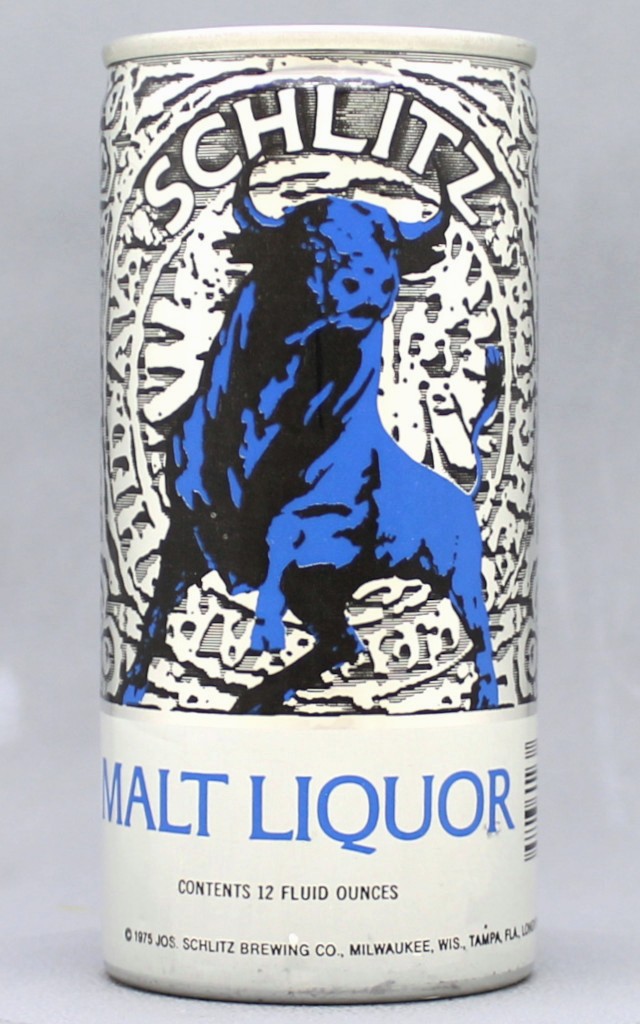
Schlitz Malt Liquor 12 Oz Tab Top Can
Jos. Schlitz • Tampa, FL
Schlitz Malt Liquor Tampa Dot Can
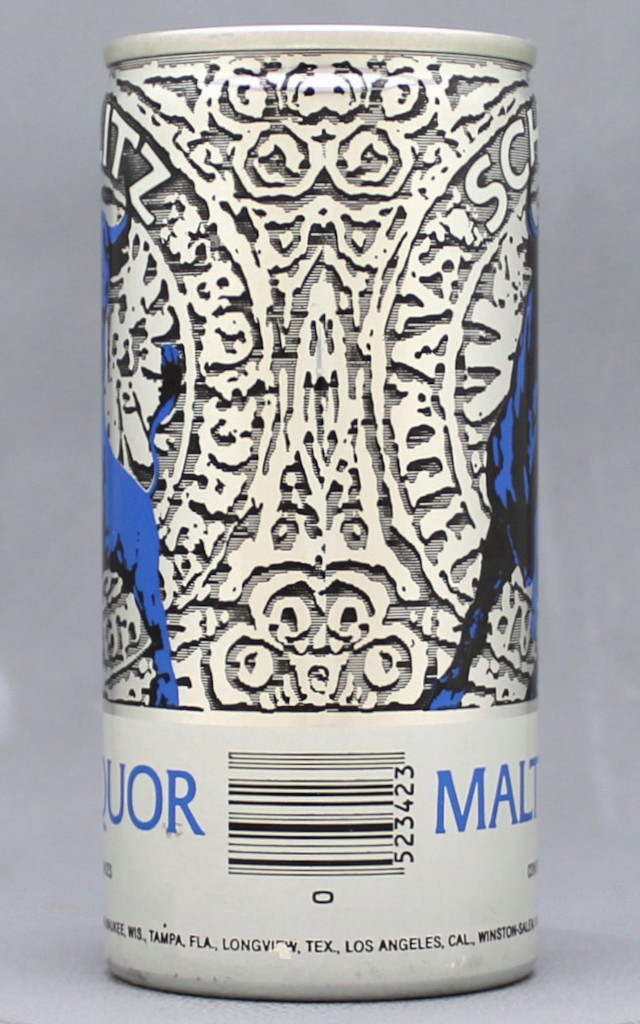
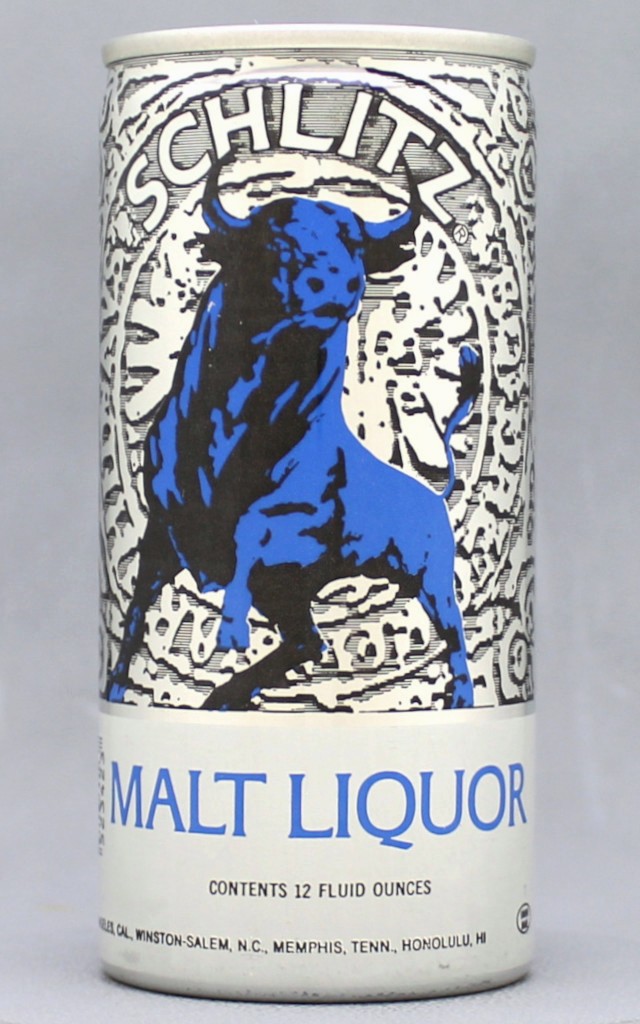
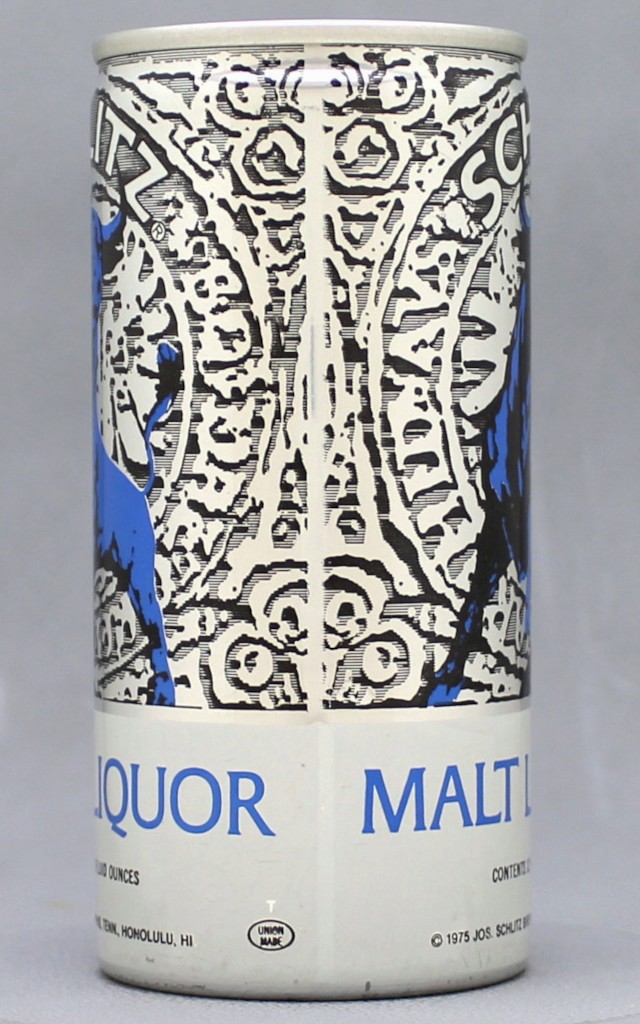
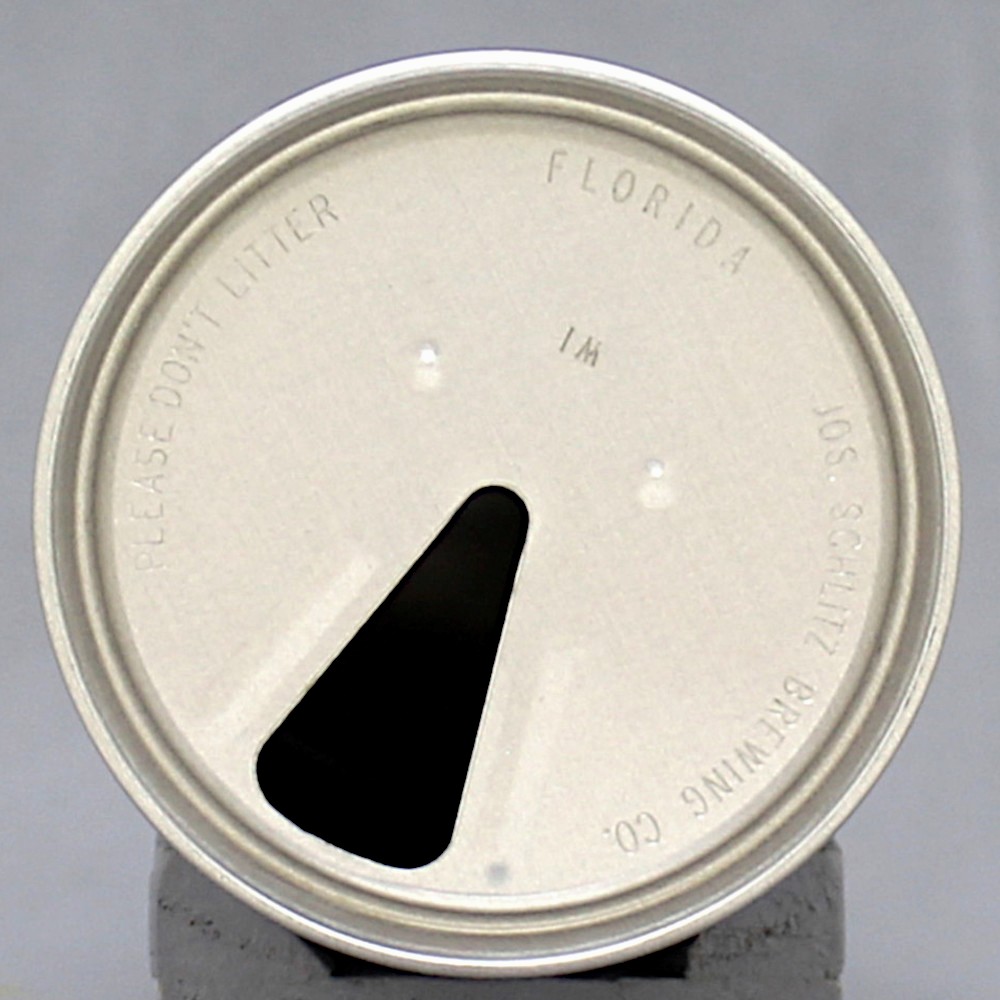
This all-aluminum twelve-ounce tab top container represents the mid-1970s packaging era for the Jos. Schlitz Brewing Company, bearing a 1975 copyright along the bottom rim. Graphically centered on the can face is the brewery's trademark blue charging bull set within an ornate circular crest, topped by an arched brand banner and anchored below by bold blue lettering. Along the lower margin, the mandatory brewery text lists seven production cities, with a distinguishing dot printed directly above Tampa, Florida, to identify the packaging facility associated with this distribution run. A Universal Product Code is also incorporated along the lower right border, marking the technological changes in retail packaging of the period.
Schlitz introduced its malt liquor in 1963 to establish a strong foothold in the rapidly expanding American malt liquor segment. While initial marketing attempted an upscale, cocktail-style positioning, the brewery quickly pivoted toward a bolder persona centered around its energetic bull mascot. Television campaigns throughout the 1970s and early 1980s famously featured live Brahma bulls bursting through walls and crashing various settings, reinforced by memorable slogans such as "Look out for the bull!" and "Don't say beer, say bull!" The memorable mascot resonated with consumers, cementing the bull as an enduring advertising icon that outlived many of its contemporaries.
The Jos. Schlitz Brewing Company traced its origins to 1849 in Milwaukee, Wisconsin, beginning with August Krug and later steered to national prominence by Joseph Schlitz. Known as "The Beer That Made Milwaukee Famous," Schlitz cemented widespread brand loyalty after shipping beer south following the 1871 Great Chicago Fire. The company successfully weathered Prohibition through diversification, eventually developing a massive multi-plant brewing empire across the United States. By the early 1970s, Schlitz stood as the second-largest brewing company in the country. However, cost-cutting production changes later in the decade eroded consumer trust, leading to financial decline and the brewery's eventual acquisition by the Stroh Brewery Company in 1982.
For breweriana enthusiasts, this can represents an intriguing period in beverage packaging history. It captures the transition toward all-aluminum construction and computerized inventory barcoding, all while showcasing one of the most recognizable graphic emblems of the era. The presence of regional brewery city lines with plant-specific punctuation dots makes containers from this run a classic focus for collectors tracking packaging variations.
* Descriptions are AI-assisted and may include edits from our team. Verify key details.
Can Details
Similar Cans
Price History
Not enough sales data to display a chart.
Sold Listings
No recent sales data available for this can.