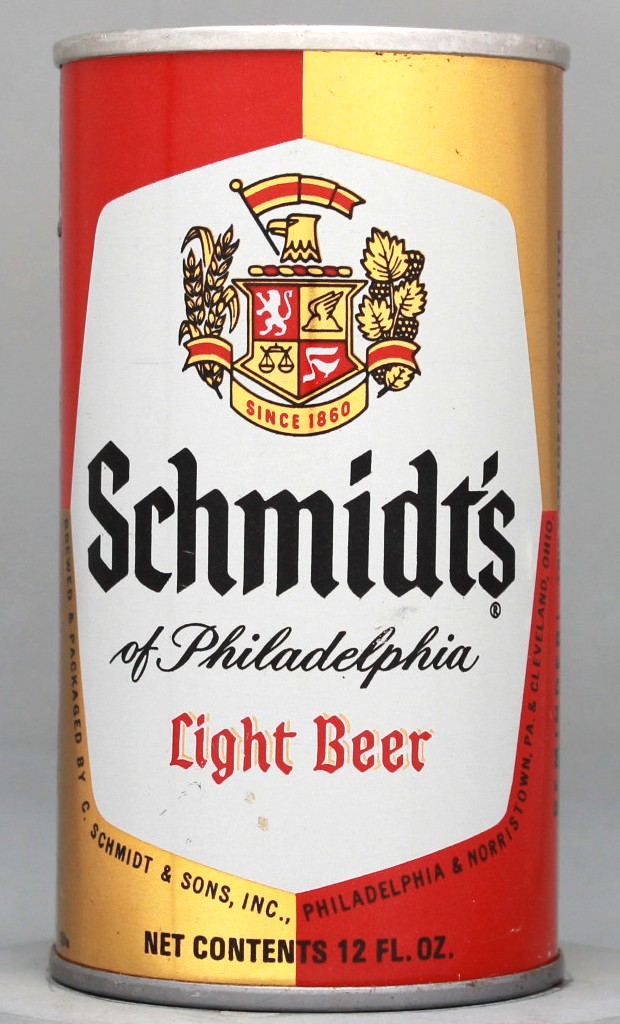
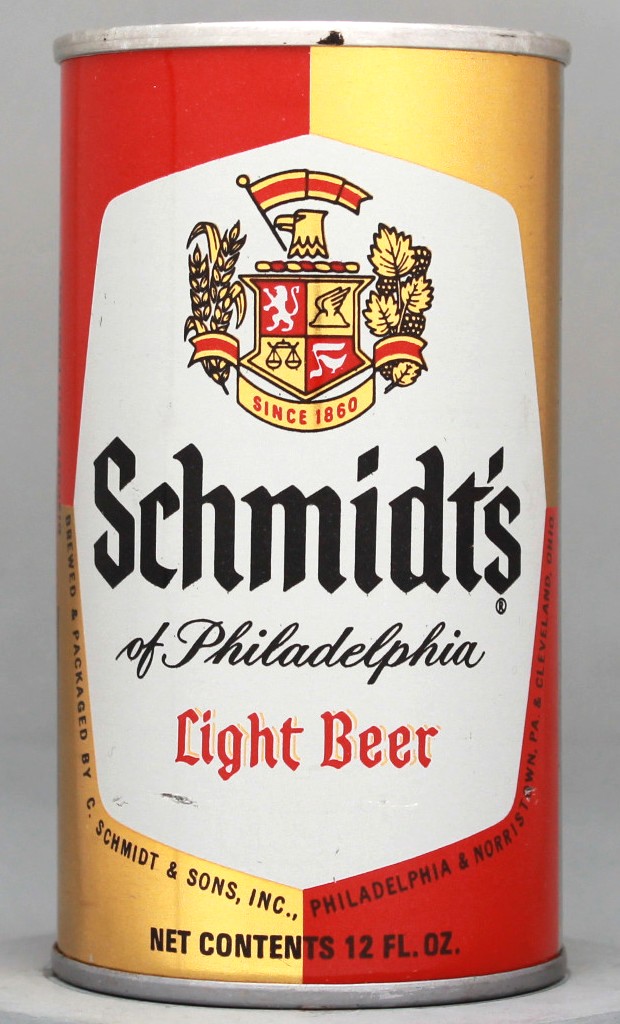
Schmidt's Of Philadelphia Light Beer 12 Oz Tab Top Can
C. Schmidt & Sons • Philadelphia, PA
Schmidt's Light Beer Tab Top Can
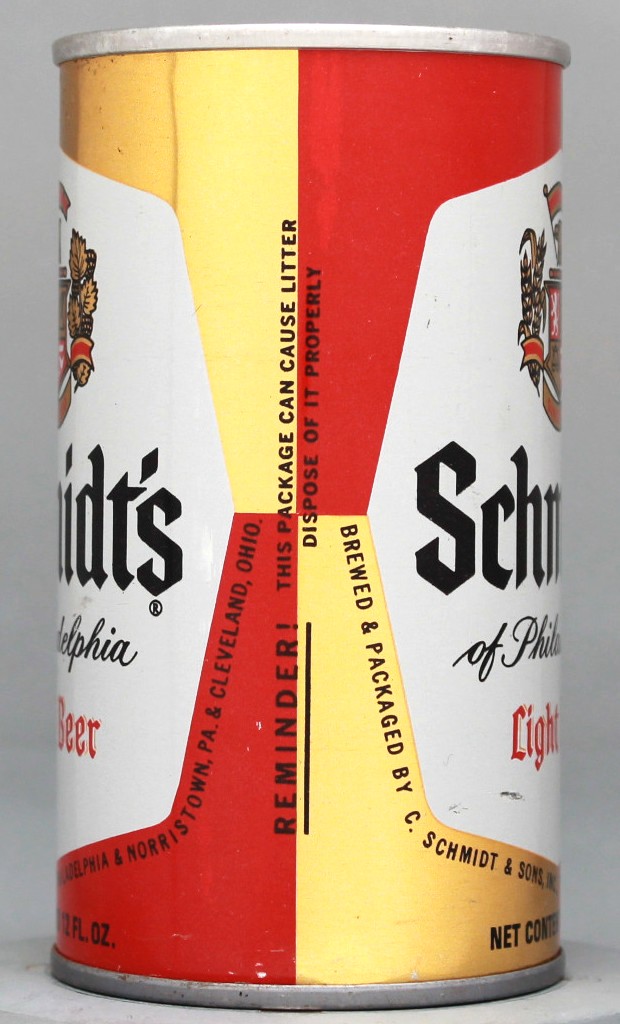
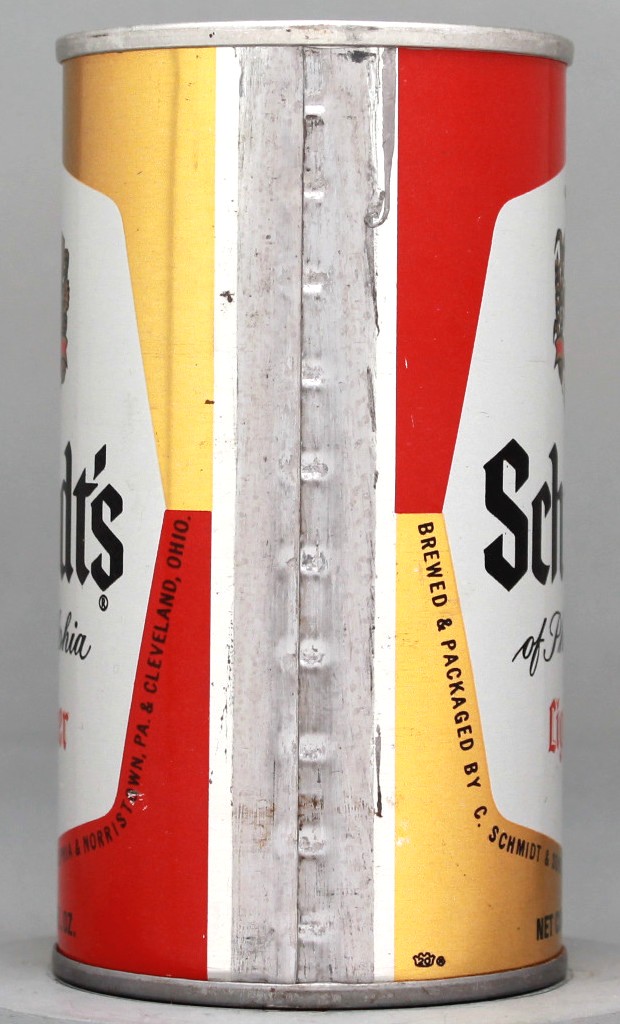
Produced during the pull-tab era, this straight steel container represents a distinct chapter in East Coast packaging history. The front face showcases the traditional heraldic crest above bold blackletter lettering, while the lower perimeter carries a three-city mandatory statement listing Philadelphia and Norristown, Pennsylvania, along with Cleveland, Ohio. This manufacturing credit highlights the firm's multi-plant footprint following mid-century plant acquisitions. Fabricated with a wide side seam, the can body also features an early environmental advisory—a vertical "REMINDER..." notice warning consumers about package litter—which predated the standardized recycling and anti-litter symbols that became universal later in the 1970s.
Schmidt's of Philadelphia served as the venerable flagship label for the brewery, maintaining deep roots as a working-class staple throughout the Mid-Atlantic and Northeast. Marketed as an approachable, crisp light lager, the brand was reinforced through heavy advertising on local radio, television, and sports broadcasts. Promotional campaigns celebrated regional identity, frequently emphasizing Schmidt's deep Pennsylvania ties and proclaiming it "the beer that grew with the great Northeast." The brand enjoyed immense market loyalty before shifting corporate hands and eventual phaseouts after the brewery's operations ceased.
The company was founded in 1860 when German immigrant Christian Schmidt purchased the Robert Courtenay brewery in Philadelphia. Incorporating as C. Schmidt & Sons, the enterprise navigated Prohibition by producing near beer and soft drinks, leaving it well-capitalized to modernize upon Repeal. As regional brewing shifted toward consolidation, Schmidt expanded outward, acquiring Norristown's Adam Scheidt plant in 1954 and a production facility in Cleveland, Ohio, in 1964. By the 1970s, Schmidt's had expanded into one of the ten largest brewing companies in the nation. However, pressure from monolithic national macro-brewers led to financial decline, culminating in the closure of the flagship Philadelphia brewery in 1987 and ending more than three centuries of continuous commercial brewing in the city.
For breweriana collectors, tab-top issues from this period provide a clear visual record of American brewing consolidation. Variations in city listings, mandatory phrasing, and early public-service text illustrate both the operational reach of regional giants and the technological transitions of twentieth-century canning lines.
* Descriptions are AI-assisted and may include edits from our team. Verify key details.

Can Details
Similar Cans
Price History
Not enough sales data to display a chart.
Sold Listings
No recent sales data available for this can.