Stag Beer 12 Oz Tab Top Can
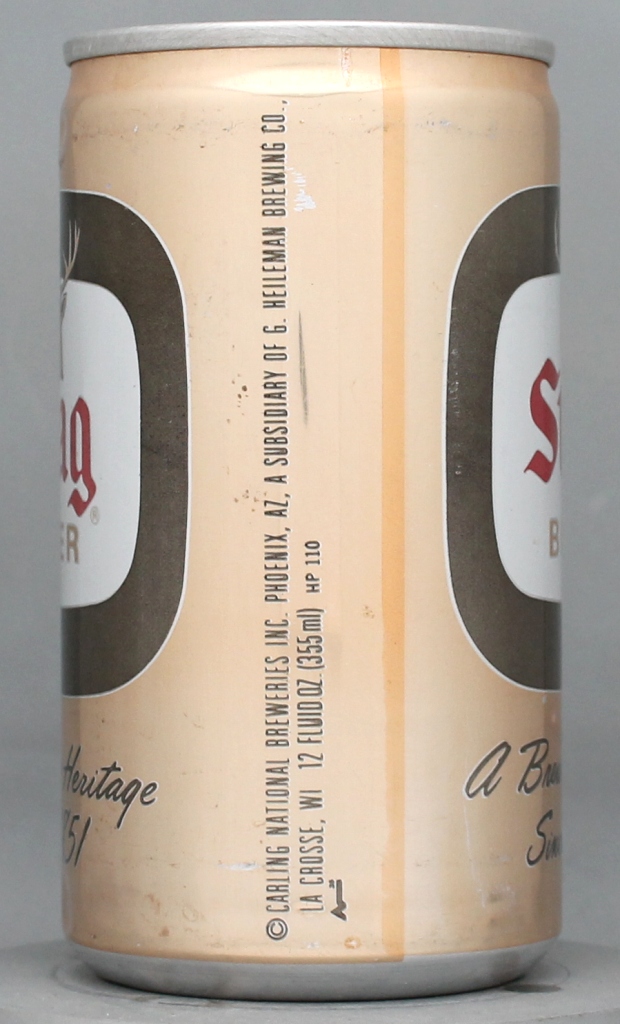
Carling National subsid. G. Heileman • Phoenix, AZ
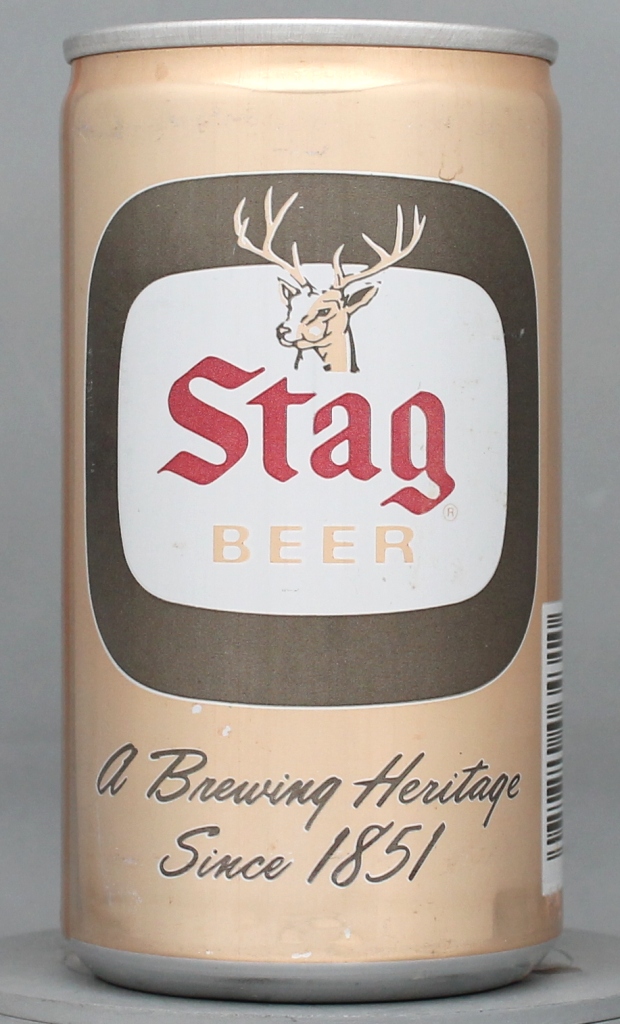
Stag Beer Heritage Tab Top Can
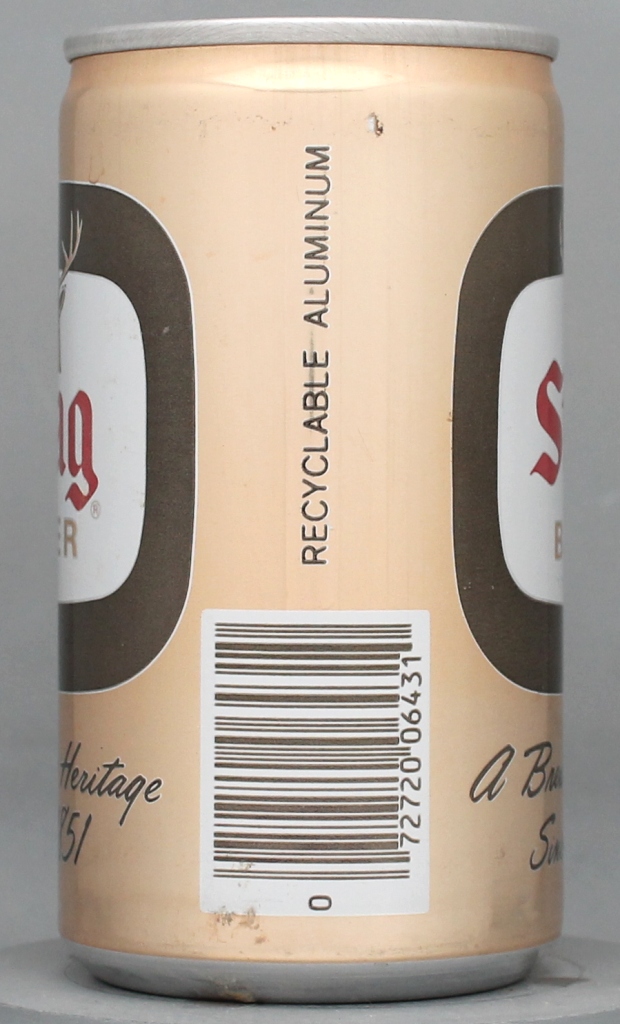
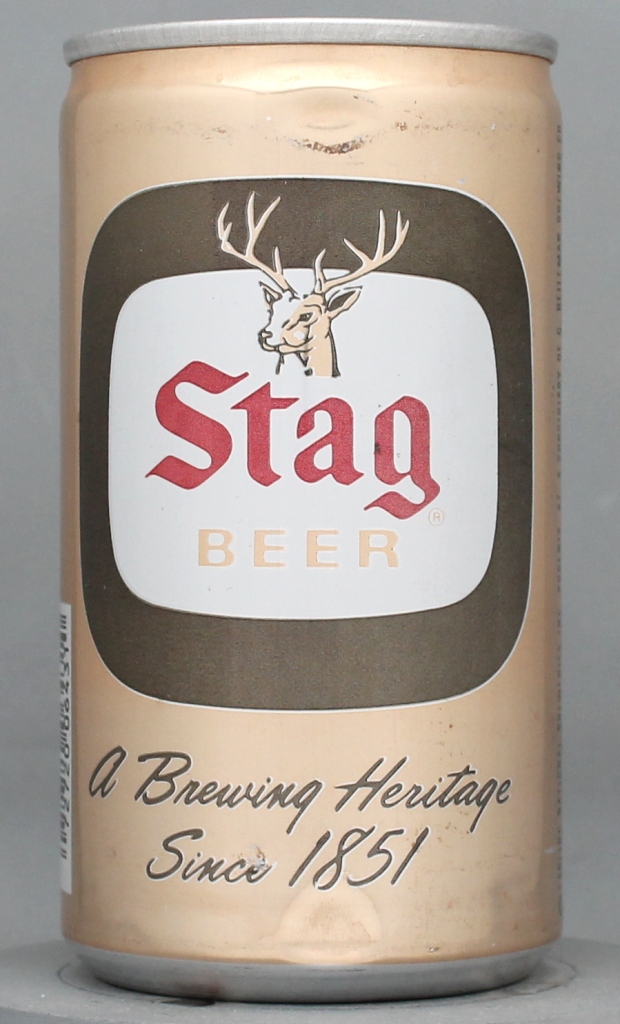
This 12-ounce aluminum tab top container dates from an era of major industry consolidation in the late 1970s and early 1980s. Produced under the Carling National name as a subsidiary of the G. Heileman Brewing Company, this can incorporates consumer packaging standards of the period, including dual metric volume measurements, the HP110 code, and a universal product code (UPC) barcode printed along the side panel. Centered prominently on the body is the traditional Stag emblem—an antlered deer head set against a rounded dark shield—underlined by the flowing cursive script slogan, "A Brewing Heritage Since 1851". The label text also reflects its distributed production network by citing two brewery cities.
The Stag brand originated at the Western Brewery in Belleville, Illinois. While the brewery established its foundation in 1851 under Philip Neu and Peter Gintz, the Stag name debuted around 1906 following a public naming contest. Positioned as a dependable, everyday American lager, Stag grew into an iconic Midwestern brand. During the mid-twentieth century, the label gained widespread fame through prominent advertising campaigns, including television commercials featuring cartoon character Mr. Magoo, alongside slogans highlighting its crisp finish and heritage. The brand outlasted its original brewing plant and eventually became part of the Pabst brewing portfolio.
The Phoenix facility associated with this can has its own deep regional heritage. Established in 1933 following the repeal of Prohibition, the Arizona Brewing Company operated downtown and became famous across the Southwest for its flagship A-1 Beer. As regional consolidation intensified across the United States, the Phoenix plant was sold to Carling in 1964, transitioned into the merged Carling-National Breweries by the mid-1970s, and was ultimately acquired by Wisconsin-based G. Heileman in 1979. Heileman utilized the Arizona facility to produce a broad roster of regional and national labels until closing the brewery doors in 1985.
For breweriana collectors, this can serves as an interesting artifact from a pivotal transition period in American brewing history. It captures the era when expansive brewing conglomerates maintained regional brand identities across decentralized production networks.
* Descriptions are AI-assisted and may include edits from our team. Verify key details.

Can Details
Similar Cans
Price History
Not enough sales data to display a chart.
Sold Listings
No recent sales data available for this can.